
Agent 89: Who Is Steve Smith Sr. and Why His Story Still Matters
Steve Smith Sr. retired in 2016 with 14,731 receiving yards, 1,031 receptions, and 81 touchdowns. He is 5 feet 9 inches tall. He spent 13 of his 16 seasons in Carolina, got released at age 34, then produced four more years of competitive football in Baltimore. In 2025, he became a first-time finalist for the Pro Football Hall of Fame. None of that would have been the safe bet on any of it when he was working the counter at Taco Bell after practice at Santa Monica College in the late 1990s.
Early Life: Los Angeles, Track Spikes, and a Complicated Classroom Record
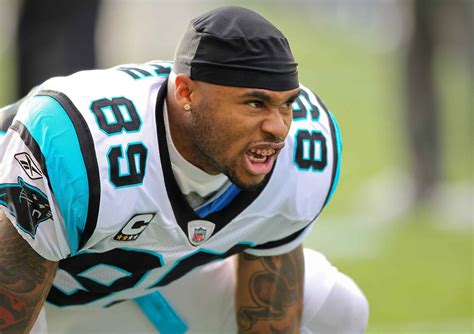
Stevonne Latrall Smith was born May 12, 1979, in Los Angeles. He went to University High School in West L.A., where he played running back and defensive back, and also ran track – high hurdles, the triple jump, the 300-meter hurdles. He earned All-Metro League and All-California Interscholastic Federation honors in 1997. His offensive coordinator Gifford Lindheim later told Sports Illustrated he never imagined Smith lasting sixteen years in professional football. The fights, the classroom issues, the general volatility of a kid from L.A. who didn’t quite fit the mold of a future Pro Bowler.
He enrolled at Santa Monica College, where he became an All-American receiver and shared the field with Chad Johnson – who would go on to six Pro Bowl appearances of his own. What surprises me about this stretch of Smith’s story is less the talent and more the timing: these two future NFL stars playing junior college ball together, both needing a second chance just to get on a four-year campus.
He transferred to Utah in 1999. He’d never seen snow. His teammates started calling him “Steve” because nobody at Utah could pronounce Stevonne. He was a two-time All-Mountain West selection for the Utes, playing both receiver and returner – the same dual role that would define his rookie NFL season.
The 2001 Draft and an Immediate Impact in Carolina
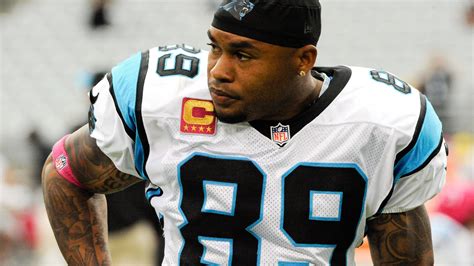
Carolina took him in the third round of the 2001 Draft, 74th overall. That pick now looks like one of the better value selections in Panthers franchise history, but at the time a 5-foot-9 receiver from Utah going to a team that finished 1-15 the previous year wasn’t exactly a marquee moment. He made it one.
In his rookie season, Smith became the only player that year to return both a punt and a kickoff for a touchdown. He earned All-Pro recognition as a kick returner. The Panthers had a Hall of Fame receiver hiding in a special teams package, and it took everyone outside the building a few years to fully notice.
By 2003 he was helping lead Carolina to Super Bowl XXXVIII – a loss to New England, 32-29, decided in the final minute. Smith’s postseason average of 91 yards per game compares favorably to Torry Holt (63) and Reggie Wayne (59.7), two receivers who got more votes for Canton earlier in the process. He never had a Hall of Fame quarterback throwing to him. Jake Delhomme. Cam Newton. Jimmy Clausen. Joe Flacco in Baltimore during some rough years. He built his numbers against those headwinds.
The 2004 Injury and the 2005 Triple Crown
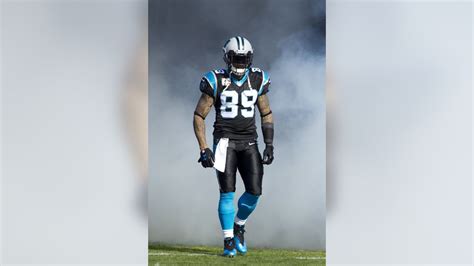
He suffered a severe leg injury in 2004 that cost him nearly the entire season. The comeback in 2005 is where the myth solidifies into record.
That year Smith led the NFL in receptions (103), receiving yards (1,563), and receiving touchdowns (12). The Triple Crown. Only 16 players in NFL history have done it in a single season. He won the Associated Press Comeback Player of the Year. The Panthers were a functional team around him – but functional, not dominant. The production came mostly from Smith refusing to be covered.
He earned five Pro Bowl selections total (2001, 2005, 2006, 2008, 2011) and was named First-Team All-Pro twice (2001, 2005). By 2011 he had crossed 10,000 receiving yards, becoming the 35th player in NFL history to hit that number.
Steve Smith Sr. Career Stats
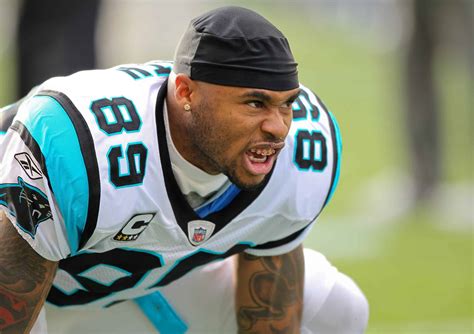
The full career picture:
| Category | Total | All-Time Rank (at retirement) |
|---|---|---|
| Receiving yards | 14,731 | 7th |
| Receptions | 1,031 | 12th |
| Receiving touchdowns | 81 | 25th |
| All-purpose yards | 19,180 | 7th |
| Return yards | 4,055 | – |
| Games played | 219 | – |
He crossed 1,000 all-purpose yards in eleven different seasons. Four of his first five years in the league he went above 1,900. He played 16 seasons and never showed up just to collect a paycheck – his worst statistical seasons came when he was injured or when the team around him was genuinely bad, not when he stopped competing.
His Carolina records: 12,197 receiving yards (franchise record), 67 receiving touchdowns (franchise record), 836 receptions with the Panthers alone.
The Baltimore Ravens and “Ice Up, Son”
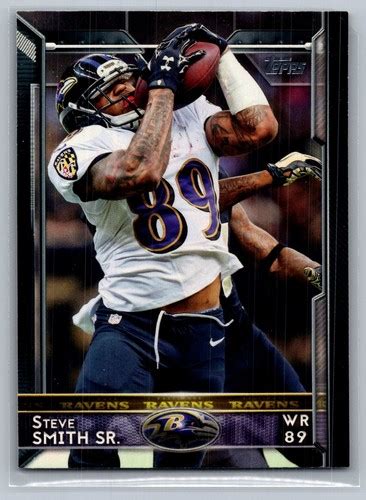
Carolina released him after 2013. He was 34. Most teams would pass. The Ravens signed him.
In his first game against the New England Patriots, cornerback Aqib Talib held him to a quiet day. After the game, Smith told reporters Talib had said something to him and that he’d remember it. The Ravens and Patriots met again. Smith caught six passes for 139 yards and two touchdowns. His post-game quote to Talib – “Ice up, son” – became one of the more repeated trash-talk lines in recent NFL history. It’s the kind of moment that, honestly, only works because he backed it up with the stats.
He played three seasons in Baltimore, continued producing at a respectable rate in his mid-30s, and was nominated for the NFL’s Walter Payton Man of the Year award in both 2015 and 2016. He announced his retirement after the 2016 season.
The Fiery Personality: What It Actually Was
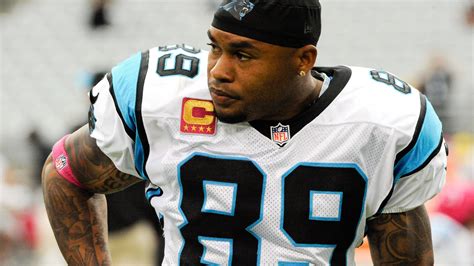
“I came out of the womb trash-talking,” Smith once said. He said it publicly, and nobody who watched him play disagreed.
In 2008 training camp, he broke teammate Ken Lucas’s nose during a fight. The Panthers suspended him two games. It is, to put it plainly, not the kind of incident most player bios linger on – but it’s part of the record, and it fits. Smith was competitive to a degree that occasionally made no distinction between opponent and teammate. The same drive that produced six All-Pro seasons also made him genuinely difficult to be around when things weren’t going well.
Dallas Cowboys rookie corner Anthony Brown played against him in 2015 and afterward said he’d lost his respect for Smith entirely. Brown also then continued talking about Smith for several more minutes. That’s probably the most accurate summary of the effect Smith had on people who played against him.
His route running was precise and physical in a way that doesn’t show up cleanly in the stats. He ran routes into contact, fought for position, and blocked downfield more consistently than most receivers at his size were expected to. He wasn’t just fast. He was nasty about it.
Steve Smith Sr. and the Hall of Fame
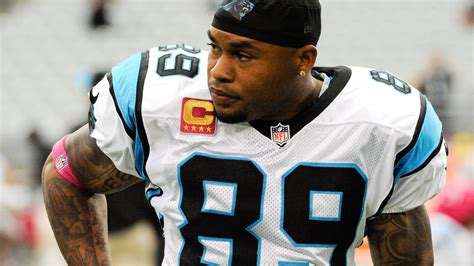
He became a first-time Hall of Fame finalist for the Class of 2025. Of the seven players ahead of him in all-time receiving yards, six are already in Canton. The seventh is Larry Fitzgerald, who doesn’t become eligible until 2026.
The argument against him is real, if not especially compelling: he never won a Super Bowl, receiver is one of the more competitive positions in HOF voting, and the annual limit of five modern-era inductees creates a backlog. Cris Carter waited. Tim Brown waited. Art Monk waited. Waiting is not the same as not belonging.
The argument for him is cleaner. His 2005 Triple Crown puts him in a group of 16 players ever. His postseason productivity beats several receivers already enshrined. He produced those numbers behind quarterbacks who, with no disrespect intended, were not making his job easier. He is eighth all-time in receiving yards. You do not end up eighth all-time by accident.
Whether the Class of 2025 got him in or not, the question of his Hall of Fame case has effectively been settled by the numbers. It’s a timing question now, not a credentials question.
NFL Network and Broadcasting Career
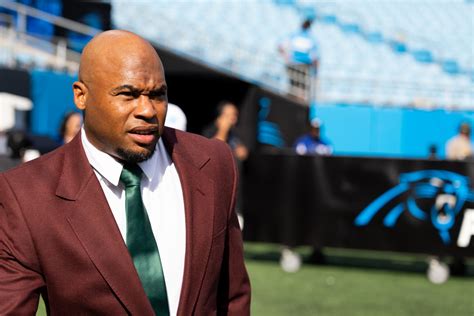
He signed with NFL Network on February 2, 2017 – Super Bowl LI week in Houston – on a multi-year deal. He appears on NFL GameDay First, NFL Total Access, Good Morning Football, and Thursday Night Football broadcasts. He also joined the Carolina Panthers’ television broadcast team as a color analyst.
His television work carries the same personality his playing career did. He says things other analysts won’t. He named his top five wide receivers heading into the 2024 NFL Scouting Combine and was not diplomatic about the rankings. He has, on at least one occasion, had Panthers owner David Tepper crash one of his on-field interviews, which went as chaotically as you’d expect.
The Depression, the Foundation, and the Wellness Center
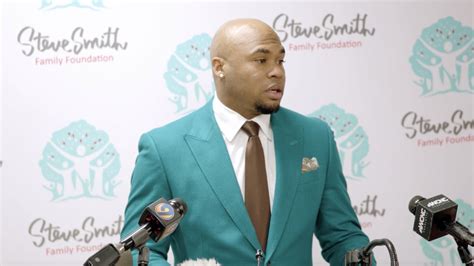
In 2018, Smith wrote about his personal struggle with depression for NFL.com – in his own words, not filtered through a PR statement. He described sixteen seasons of performing at an elite level while privately beating himself up at a rate that eventually required counseling. He first saw a sports psychologist in 2002. What he got from those sessions helped him on the field; he described being unable to apply the same tools to his life outside football for years afterward.
“I’ve always been able to beat my opponent, but for 16 NFL seasons, I also beat up on myself,” he wrote. He framed going public about it not as a confessional but as a correction – depression was something he’d spent years treating as shameful, and the point of the essay was to say that was the wrong call.
His Steve Smith Family Foundation opened the Smith Family Wellness Center in Charlotte in 2016, in partnership with Project 658. He funded it with $1 million of his own money. In its first three years, the center – which provides free medical and counseling services to uninsured and underinsured patients – scheduled 7,541 medical appointments, 3,312 counseling sessions, and served 3,380 unique patients. The fourth year was the busiest yet. Smith has described the management of the center as collaborative; he specifically said he doesn’t want “yes people” around him, that he wants to be told when an idea is bad.
His NFL Man of the Year nominations in 2015 and 2016 came for this work. The award went to other players, but the nominations pointed to something real happening in Charlotte that wasn’t connected to football at all.
Steve Smith Sr. Quick Reference
| Detail | Information |
|---|---|
| Full name | Stevonne Latrall Smith Sr. |
| Born | May 12, 1979, Los Angeles, CA |
| Height / Weight | 5 ft 9 in / 195 lbs |
| College | Santa Monica College (1997–1998), University of Utah (1999–2000) |
| NFL Draft | 2001, 3rd round, 74th overall pick, Carolina Panthers |
| Teams | Carolina Panthers (2001–2013), Baltimore Ravens (2014–2016) |
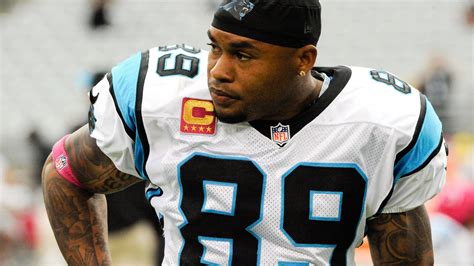
| Jersey number | 89 |
| Nickname | Agent 89 |
| Career span | 16 seasons (2001–2016) |
| Current role | NFL Network analyst; Panthers color analyst |
| Foundation | Steve Smith Family Foundation; Smith Family Wellness Center, Charlotte |
| HOF status | First-time finalist, Class of 2025; not yet inducted |
Comments