
Steve Gleason: Saints Career, the 2006 Blocked Punt, and the Life That Followed
An Undrafted Player Who Built a Career on Special Teams
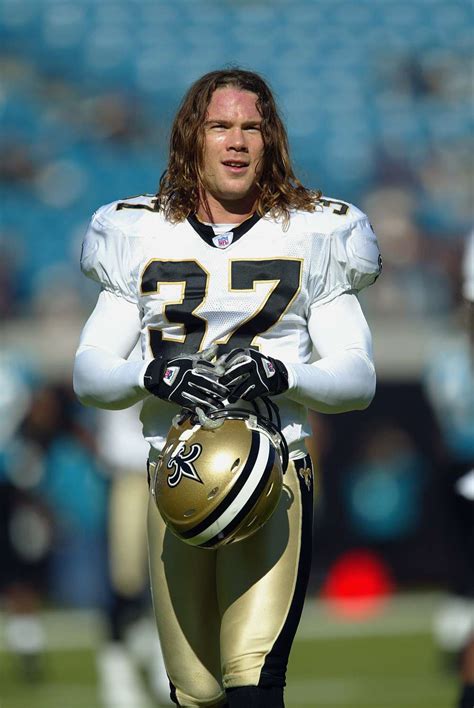
Steve Gleason was not supposed to have a long NFL career. Born March 19, 1977 in Spokane, Washington, he played college ball at Washington State, earned second-team All-Pac-10 honors in 1999, and then went unclaimed in the 2000 draft entirely. The Indianapolis Colts signed him as a free agent that summer, cut him before the regular season started, and that looked like it might be the end of it.
The Saints signed him to their practice squad in December 2000. He never left. Over the next seven seasons he appeared in 83 regular season games, recorded 71 total tackles, two fumble recoveries, and four blocked kicks. In 2001 he played for the Rhein Fire in NFL Europe. He was placed on injured reserve in July 2007 and retired as a free agent in 2008.
Those are not Hall of Fame numbers. On a roster sheet from 2004, nothing about Gleason’s line would catch your eye. He was a special teams player, a safety who earned his paycheck doing things that don’t show up on highlight reels most weeks. And then, on a Monday night in September 2006, one thing he did showed up on every reel anyone could find.
September 25, 2006: What Happened in the Superdome That Night
The context matters more than the play itself, and the context was this: Hurricane Katrina had hit New Orleans on August 29, 2005. The Superdome – the same building where 75,000 people would soon pack in for Monday Night Football – had spent five days as a shelter of last resort for tens of thousands of people with no power, no working toilets, and no reliable way out. The roof partially tore away. The city lost roughly 1,800 people and nearly flooded entirely. The Saints played their entire 2005 home schedule split between Baton Rouge, San Antonio, and Giants Stadium in New Jersey. They went 3-13.
The 2006 home opener was the first Saints game inside the Superdome since before Katrina. Sean Payton was in his first season as head coach. Drew Brees was playing his first Superdome game as a Saint. U2 and Green Day performed before kickoff. A national television audience was watching.
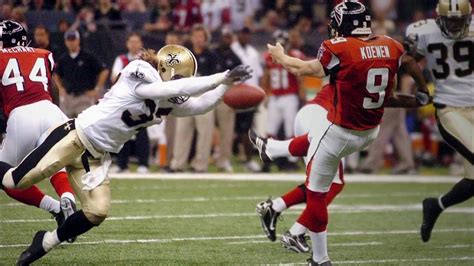
Gleason has described the moment before the national anthem: standing on the field, looking across at the Atlanta Falcons, looking up at the crowd, and thinking it was impossible for the Saints to lose that night. Early in the first quarter, Gleason broke through the line and blocked a punt by Atlanta’s Michael Koenen. The ball went into the end zone. Cornerback Curtis DeLoatch recovered it for a touchdown. The Saints won 23-3 and didn’t look back – they finished that season 10-6 and reached the NFC Championship Game.
What’s harder to explain is the sound the Superdome made when that punt hit Gleason’s hands. Longtime Superdome manager Doug Thornton, who had managed the building through the storm, was there. Opposing coach Jim Mora said years later that nobody who hadn’t lived in New Orleans could understand what that night meant. Drew Brees put it more simply: “That started it all, that’s for sure.”
The Rebirth Statue Outside the Superdome
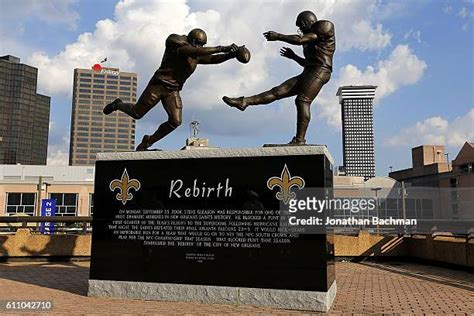
In July 2012, sculptor Brian Hanlon’s bronze statue went up outside the Superdome. It depicts Gleason at full extension, blocking the punt. Saints owner Tom Benson commissioned it.
Gleason’s own take on the statue is worth knowing. He said he didn’t want it to be about him or that play specifically. “I want it to be about what the play symbolized, which was a commitment by this community to rebuild. This statue is about coming through adversity. It’s about finding your heroes. It’s about commitment and a rebirth for all.” The statue is titled, accordingly, “Rebirth.”
There’s a version of Steve Gleason’s story where the blocked punt is a footnote – one good play by a journeyman special teamer on a memorable night. The statue makes clear that New Orleans never saw it that way. Neither did Gleason, though for reasons that only became apparent five years later.
The ALS Diagnosis – and What He Did Next
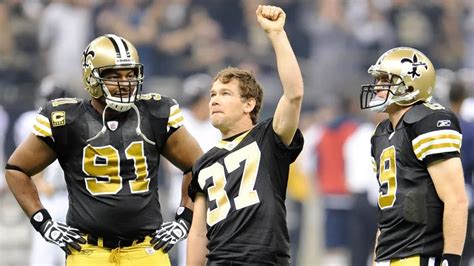
On September 25, 2011 – exactly five years after the blocked punt – Gleason publicly announced he had been diagnosed with amyotrophic lateral sclerosis, also known as ALS or Lou Gehrig’s disease. He was 34 years old. He and his wife Michel Varisco were expecting their first child.
ALS kills the motor neurons that carry signals from the brain and spinal cord to the muscles. The body progressively loses the ability to move, speak, swallow, and eventually breathe, while the mind typically remains intact. There is no cure. Most people diagnosed with ALS live two to five years after diagnosis.
Gleason has now lived with ALS for more than 14 years. That’s not typical.
What he chose to do with the diagnosis is the part the stat sheet really can’t capture. The Saints gave him a Super Bowl ring – the one from their 2009 championship, which he didn’t win because he had already retired – at a surprise party organized by Sean Payton. They also made him honorary captain for a game against Houston. He received a key to the city. None of that was the response he gave to the disease. His response was to build something.
Team Gleason: What the Foundation Actually Does
Steve and Michel Varisco Gleason founded Team Gleason in September 2011, the same month he went public with his diagnosis. The organization provides technology, equipment, adventure programming, and care services to people living with ALS. As of 2026, Team Gleason has distributed more than $55 million in support to ALS patients and families.
In 2014, Steve and Michel starred in Microsoft’s first-ever Super Bowl commercial, alongside their son Rivers. Seven months after the ad aired, Gleason challenged Microsoft directly: develop a way to drive his wheelchair using only eye movements. By 2019, that eye-tracking wheelchair technology existed and was in use. That is the kind of specific, concrete change that’s easy to describe and hard to overstate for someone who can no longer move their hands.
The 2014 ALS Ice Bucket Challenge – which Gleason participated in and amplified – raised more than $220 million globally for ALS research. His name and platform were part of why that campaign spread as far as it did. Pearl Jam’s Eddie Vedder has mentioned Gleason at concerts for years. The foundation has been covered by NBC, ESPN, HBO, ABC, CBS, Fox, CNN, GQ, Forbes, and Rolling Stone.
Gleason once told a friend who’d also been diagnosed with ALS that without the blocked punt, he probably wouldn’t be alive. His exact framing: “If I don’t block the punt, I’m just another has-been football player. It’s probably that I’d just fade away and die anonymously.” What he meant was that the visibility football gave him created the network, the relationships, and the sense of obligation that kept him fighting. The football career that looked modest on paper turned out to be the thing that made everything else possible.
Awards: From the George Halas to the Congressional Gold Medal
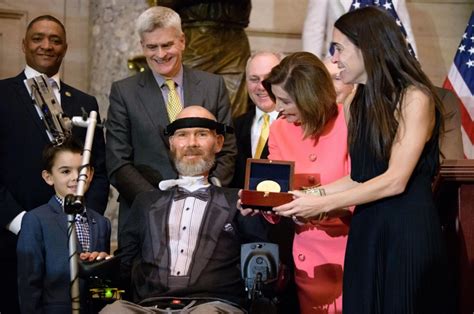
In 2015, the Pro Football Writers of America gave Gleason the George Halas Award, handed out each year to the NFL player, coach, or staff member who overcomes the most adversity. He was the first NFL player to receive the Congressional Gold Medal, which he accepted on January 15, 2020. The Congressional Gold Medal is the highest civilian honor Congress can award – previous recipients include George Washington, Winston Churchill, and Rosa Parks. Gleason was in a wheelchair, communicating through a voice-generating device, when he received it.
The New Orleans Saints gave him their inaugural Hall of Fame Courage Award. In 2022 he received the NCAA Inspiration Award. The Arthur Ashe Courage Award followed in 2024.
What’s notable about that list isn’t the length of it. It’s the range. Sports organizations, Congress, the NCAA – these are not groups that usually agree on the same person. They agreed on Gleason.
The 2016 Documentary
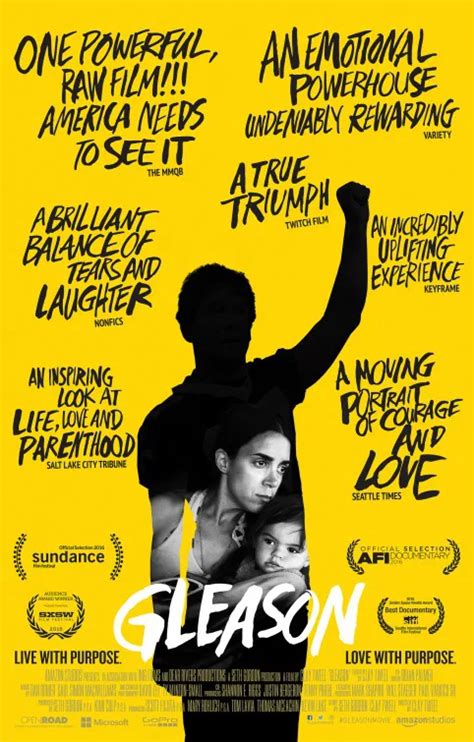
Director Clay Tweel spent years going through more than 1,300 hours of footage – video diaries, home movies, family recordings – to make the 2016 documentary “Gleason.” It premiered at Sundance, received critical acclaim, and was considered a legitimate Oscar contender. The film covers Gleason’s football career, his ALS diagnosis, his marriage to Michel, the birth of Rivers, and his advocacy work. It is not a sports movie. It’s a film about what it means to choose how you respond to something you didn’t choose.
Gleason had begun recording video diaries after his diagnosis, partly as messages for Rivers, who was born in August 2011 before the diagnosis became public. Those recordings form the core of the documentary. Some of what’s in the film is genuinely difficult to watch – not because it’s graphic, but because it is honest in a way that most public storytelling about illness isn’t. There’s no false resolution. The disease continues. So does Gleason.
What His Football Career Actually Meant
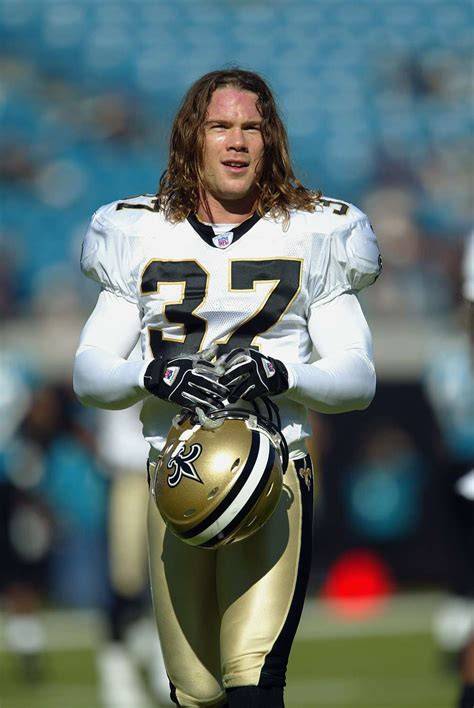
Measured by conventional football standards – draft position, Pro Bowl selections, career statistics – Steve Gleason was a solid special teams contributor for a mid-tier NFL franchise during a difficult stretch of Saints history. That’s a fair accounting and it misses the point almost entirely.
What actually happened is that an undrafted safety from Spokane made one play at exactly the moment a city needed it most, built a relationship with New Orleans that was deep enough to survive a terminal diagnosis, and then used every bit of the visibility that single play created to change what’s possible for people living with ALS. Eye-tracking wheelchair technology. $55 million in support. A foundation that has helped more than 15,000 people.
He said it himself: “I believe my future is greater than my past.” Coming from someone who blocked a punt that a city turned into a statue – that’s a genuinely strange thing to say. He meant it.
Comments