
Jim Plunkett: The Raiders Quarterback Who Won Two Super Bowls and Still Isn’t in the Hall of Fame
Born Poor in San Jose, to Parents Who Couldn’t See
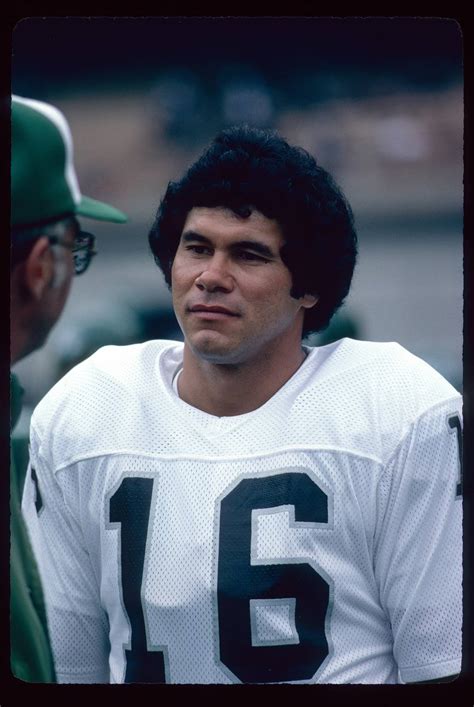
Jim Plunkett was born December 5, 1947, in Santa Clara, California, and grew up in East San Jose in a house that ran on state aid. His father William ran a newsstand. His mother Carmen, of Cherokee and Mexican descent, was blind. So was his father. Both parents. Blind.
He cleaned up at a gas station while still in elementary school. Delivered newspapers. Bagged groceries. Worked orchards. He didn’t bring friends home because he didn’t want them to see where he lived.
That context matters because it shapes everything that follows – not as an inspirational frame someone applied later, but as the actual explanation for who he became. Plunkett has said the financial stress of his childhood was a constant presence, not a background detail. His two older sisters were 5 and 16 years older than him. The family moved from Santa Clara to San Jose to find cheaper housing after William took over the newsstand.
At 14, Plunkett won a local throwing contest with a heave of over 60 yards. He went to William C. Overfelt High School first, then transferred to James Lick High School in East San Jose, where he played quarterback and defensive end, won a CIF Wrestling State Championship at 194 pounds in 1966, and led the football team to an unbeaten season his senior year. His name is on the Hall of Fame wall at James Lick to this day.
He chose Stanford partly because it was close. His parents were blind and he didn’t want to be far away. That’s a detail worth sitting with – the No. 1 overall NFL Draft pick of 1971, picking his college partly based on geography so he could get home easily.
Stanford: Three Years, One Heisman, and a Cancer Scare Nobody Talks About
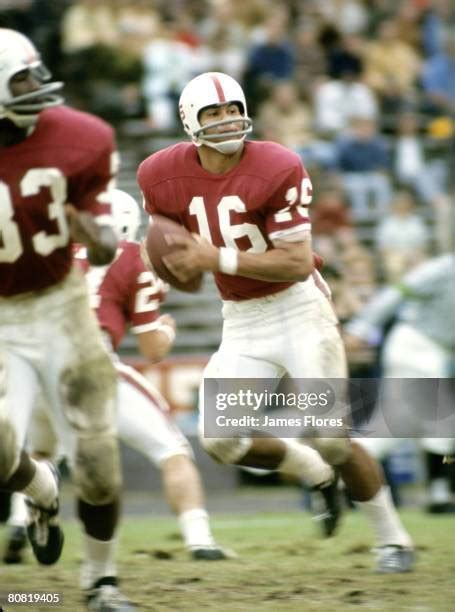
A month before Plunkett enrolled at Stanford, a doctor told him that the lump at the base of his neck might be malignant. Surgery was scheduled. His football career, before it had officially started, looked like it might be over.
The tumor turned out to be benign.
As a sophomore in 1968, he threw for 2,156 yards and set a Pac-8 Conference record. He broke that record in 1969 with 2,673 yards and 20 touchdowns. In 1970, his senior year: 2,715 yards, 19 touchdowns, Pac-8 title, and a Heisman Trophy win that wasn’t supposed to happen. The favorites were Archie Manning of Ole Miss and Joe Theismann of Notre Dame. Plunkett won by a wide margin.
He also took the Maxwell Award and was named player of the year by UPI, The Sporting News, and SPORT magazine. Stanford finished 8-3 and earned a Rose Bowl berth against unbeaten, top-ranked Ohio State. The Cardinal won 27-17. Plunkett has said that was his best game. Stanford has never won the Rose Bowl more definitively.
For his three seasons at Stanford: 7,887 yards in total offense, a national record that stood for 13 years. He’s still the only Stanford player to win the Heisman Trophy. And the first Latino and Native American player to win it, though that fact took decades to get the recognition it deserved.
First Overall Pick, and Then Five Years of Losing in New England
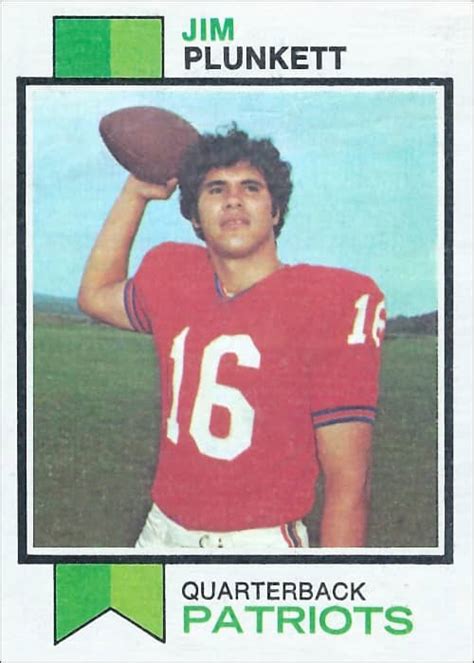
The Patriots took him with the first overall pick in the 1971 NFL Draft, the same year the franchise officially changed its name from the Boston Patriots to the New England Patriots. Plunkett was named AFC Rookie of the Year. UCLA football coach Tommy Prothro, who had watched him closely, called him the best quarterback prospect he had ever seen. The other quarterbacks in that draft class included Manning and Theismann, which makes the praise read differently.
The Patriots were not a good team. Under coach John Mazur and then Chuck Fairbanks, New England won 21 games combined in Plunkett’s five seasons there. Fairbanks ran an option offense, which Plunkett has been direct about: he was never an option quarterback. Asking him to run that system was like buying the right tool and using it wrong.
By the time his five-year contract ran out, he asked to be traded. The Patriots sent him to the San Francisco 49ers in 1976 in exchange for quarterback Tom Owen, two first-round picks in 1976, and first- and second-round picks in 1977. San Francisco wanted the picks more than they wanted Plunkett.
Cut by the 49ers
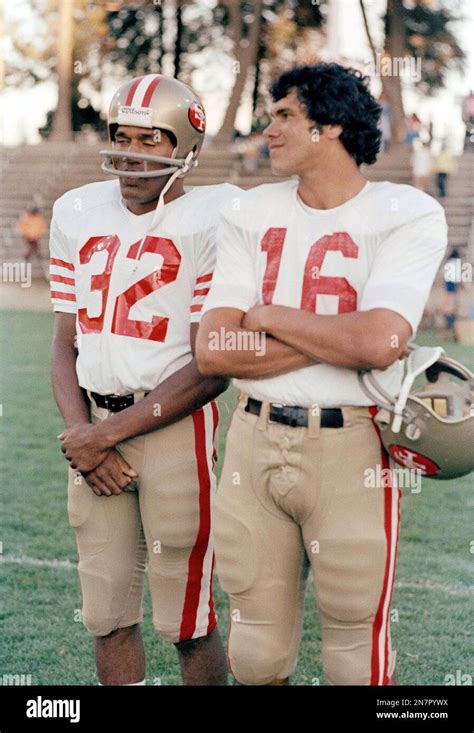
The 49ers went 6-1 to start the 1976 season with Plunkett starting. They finished 8-6. In 1977 they went 5-9. Before the 1978 preseason, San Francisco released him.
“Being cut by the 49ers was the lowest point in my career,” he has said. He was 30 years old and thinking about walking away from the sport entirely.
Instead, he signed with the Oakland Raiders as a free agent. Backup role. No guarantees. In 1978 he threw zero passes. In 1979 he threw 15. Two full seasons, almost entirely watching from the sideline.
1980: The Comeback Nobody Saw Coming
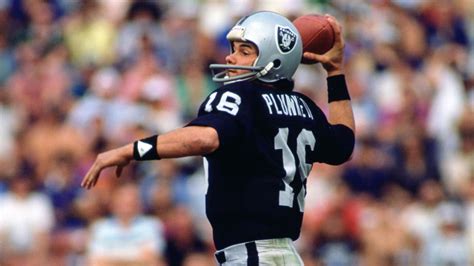
The Raiders opened the 1980 season with Dan Pastorini under center. Week 5, Kansas City Chiefs game, Pastorini broke his leg. Plunkett came in.
What happened over the next four months is still one of the stranger sequences in NFL history. The Raiders, a Wild Card team – meaning they had to win road or neutral-site playoff games four times just to reach the Super Bowl – went 11-5 on the season with Plunkett starting. He was 32 years old, coming off two seasons where he’d barely touched the ball.
They beat the Houston Oilers in the Wild Card round, then the Cleveland Browns, then the San Diego Chargers in the AFC Championship. Super Bowl XV in New Orleans: the Raiders against the Philadelphia Eagles. Plunkett threw for 261 yards, three touchdowns, and the Raiders won 27-10. He was named Super Bowl MVP.
No Wild Card team had ever won the Super Bowl before. None had even gotten that far. The Raiders did it with a quarterback who had been cut, left for dead, and spent two seasons doing nothing.
That same year, Plunkett won NFL Comeback Player of the Year. The award felt almost understated.
Super Bowl XVIII: 38-9, and a Footnote That Gets Overlooked
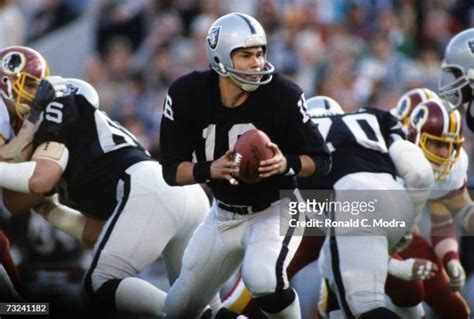
The 1983 season. The Raiders had relocated to Los Angeles. Marc Wilson was the starter. Wilson got hurt. Plunkett took over again, led the team to six wins in their last seven regular-season games, and quarterbacked Los Angeles to Super Bowl XVIII in Tampa against the Washington Redskins.
Final score: 38-9. One of the most dominant Super Bowl performances in the game’s history at that point.
Here’s the fact that tends to get buried: Plunkett is the only NFL quarterback to win two Super Bowls with the same franchise in two different cities. Oakland in 1981. Los Angeles in 1984. Same team, different zip code, two rings. That’s not a trivia footnote – it’s a genuinely unusual career fact that gets almost no attention in the Hall of Fame conversation, probably because the conversation moves quickly to his career numbers and stops there.
He retired after the 1986 season, or effectively after it – a bad shoulder kept him out of the entire 1987 campaign. Final career numbers: 3,701 pass attempts, 1,943 completions, 25,882 yards, 164 touchdowns, 157 games played. Fourth all-time in Raiders history in passing yards.
The Hall of Fame Problem
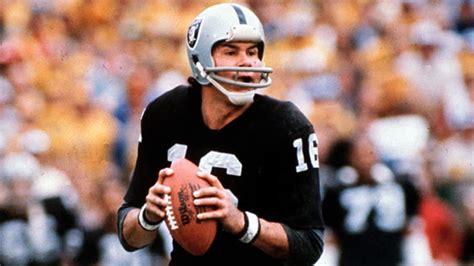
Plunkett is 78 years old. He is the only eligible quarterback in NFL history who started and won two Super Bowls and is not in the Pro Football Hall of Fame. The other quarterback in that category was Eli Manning – and Manning was inducted in 2023.
So now it’s just Plunkett.
The argument against him has always been volume. His career numbers across 17 seasons look modest partly because he spent stretches of those years on the bench, either backing up starters or playing on losing teams running the wrong offense. NBC Sports writer and longtime HOF selection committee member Peter King wrote that Plunkett’s Super Bowl wins were real but his years with the Patriots and 49ers tainted the overall picture. King’s position: championships aren’t the only factor.
What bothers me about that framing is that Plunkett’s postseason record was 8-2. Eight wins, two losses. He didn’t just stumble into two Super Bowls – he won four road playoff games in 1980 with a team that wasn’t supposed to be there. The “modest career numbers” argument ignores that those numbers include two seasons where he threw a combined 15 passes and five years where the offense was actively working against his strengths.
HOF committee member Rick Gosselin, speaking on a Raiders podcast in early 2025, was honest about why Plunkett keeps getting passed over: the Senior Committee pool has over 100 legitimate candidates, including players with seven, eight, and nine Pro Bowl selections, multiple NFL MVPs, and members of the 100th Anniversary Team. Plunkett made zero Pro Bowls. That’s the actual obstacle, not a conspiracy – just math on a crowded list.
In 2025, Plunkett was a nominee in the Seniors Category. He didn’t make the final cut.
California State Senator Dave Cortese introduced Senate Resolution 93 in early 2026, honoring Plunkett’s induction into the inaugural Hispanic Football Hall of Fame and explicitly calling for his Pro Football Hall of Fame induction. The resolution passed 37-0. Whether a unanimous state senate vote moves a selection committee is an open question, but the effort reflects something real: people who know this story feel the omission as an injustice, not a close call.
What He Actually Broke
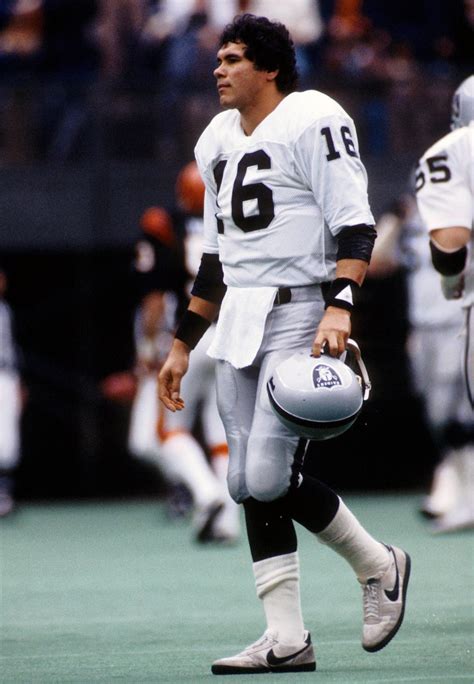
First Latino and Native American player to win the Heisman Trophy. First Hispanic player selected first overall in the NFL Draft. First Hispanic starting quarterback to win a Super Bowl. The only Hispanic player to be named Super Bowl MVP. All of these firsts happened between 1970 and 1981, during an era when Latino representation in pro football at the quarterback position was effectively zero.
Tom Flores, who coached the Raiders to both of those Super Bowl wins with Plunkett as his quarterback, was himself the first Hispanic head coach to win a Super Bowl. Flores waited 22 years after first being eligible before the Hall of Fame called – he was inducted in 2021. The parallel is uncomfortable and obvious.
In May 2026, Plunkett was inducted into the inaugural class of the Hispanic Football Hall of Fame alongside Flores and Ted Hendricks at a ceremony at Raiders headquarters in Las Vegas. The event was called Celebración de Fútbol. It was the first formal institution dedicated specifically to recognizing Hispanic contributions to football, and Plunkett’s inclusion in the first class was not a surprise to anyone who had paid attention.
Career Stats and Honors
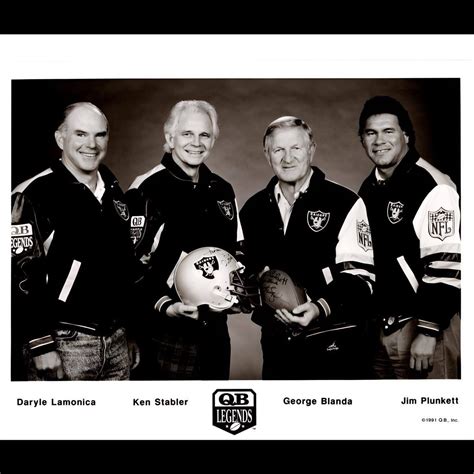
His NFL numbers: 25,882 passing yards, 164 touchdowns, 8-2 playoff record, two Super Bowl rings. One NFL record still on the books – tied for the longest touchdown pass in league history at 99 yards.
Postseason stats alone: in those 10 playoff games, he completed passes at a rate consistent with his regular-season work, with no catastrophic performances and two Super Bowl appearances where the offense moved cleanly.
Honors outside the Pro Football Hall of Fame: College Football Hall of Fame (1990), Bay Area Sports Hall of Fame (1992), California Sports Hall of Fame (2007), International Sports Hall of Fame (2024), Hispanic Football Hall of Fame (2026, inaugural class). Stanford retired his number 16. The California State Senate passed SR-93 in his honor, 37-0, in 2026.
He lives in Atherton, California. He’s been open in recent years about health challenges, which his supporters have cited as a reason the Hall of Fame timeline matters. His own public comments on Canton have been characteristically understated – a 17-year career, good friends made, no bitterness. He’s 78. The committee knows where he lives.
Comments