
Plaxico Burress: The NFL Wide Receiver Who Caught a Touchdown That Stopped History
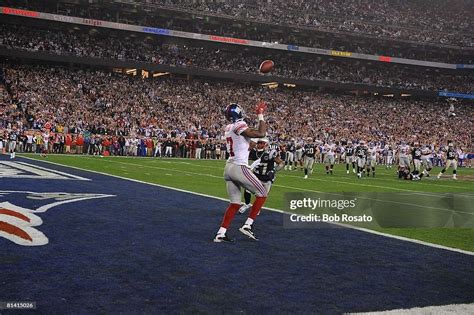
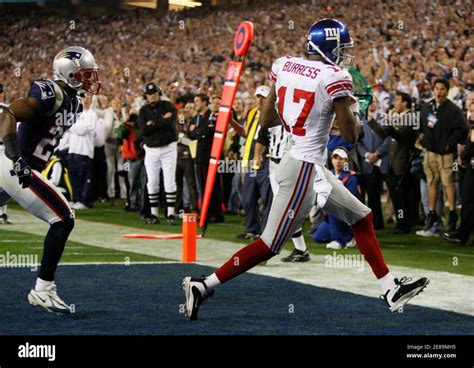
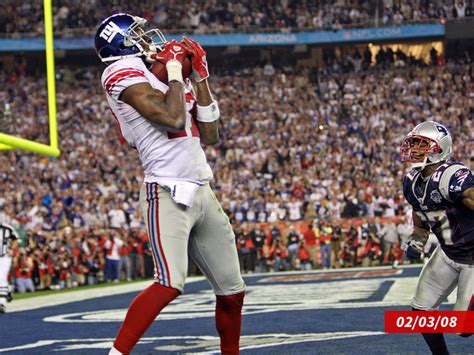
Plaxico Burress caught a 13-yard fade route from Eli Manning with 35 seconds left in Super Bowl XLII, and the New England Patriots’ perfect season was over. Final score: 17–14. The Patriots entered that game 18–0. Burress had predicted a Giants win that week – specifically a 23–17 Giants win, which annoyed Tom Brady publicly – and then went out and caught the only touchdown the Giants needed in the fourth quarter.
Nine months later he was in handcuffs.
Where He Came From
Burress was born August 12, 1977, in Norfolk, Virginia. He went to Green Run High School in Virginia Beach, then spent a post-graduate year at Fork Union Military Academy in Fork Union, Virginia – a detail almost nobody mentions, but it matters. Fork Union is a military prep school known for discipline and football. It did not obviously stick.
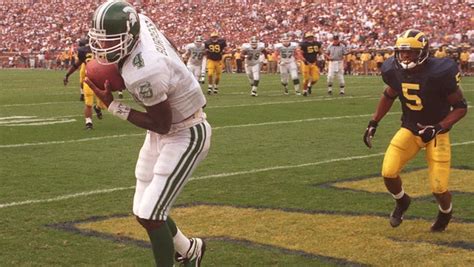
At Michigan State he was something else. As a freshman in 1996, he caught 33 passes for 807 yards (24.5 yards per catch) and 12 touchdowns. By 1998 he set a Big Ten single-season record with 65 receptions – then broke his own record the following year with 66 catches for 1,142 yards and 12 more touchdowns. He became the first Michigan State player ever to record back-to-back 1,000-yard receiving seasons. In his final college game, the 2000 Citrus Bowl against Florida, he caught 13 passes for 185 yards and three touchdowns and was named MVP.
He left after his junior year. The Pittsburgh Steelers took him eighth overall in the 2000 NFL Draft.
Pittsburgh: The Formation Years
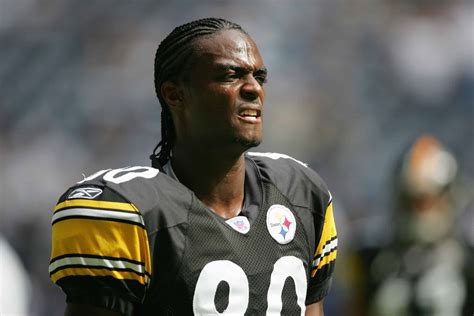
His rookie season produced one of the more embarrassing moments in NFL history – not in a catastrophic way, just a rookie-who-didn’t-know-the-rules way. Against Jacksonville, Burress caught a 19-yard pass and fell to his knees. Believing the play was dead (as it would be in college), he spiked the ball. He hadn’t been touched. The ball was live. Jaguars linebacker Danny Clark recovered it and ran 44 yards. The Steelers still won, but Burress never made that mistake again.
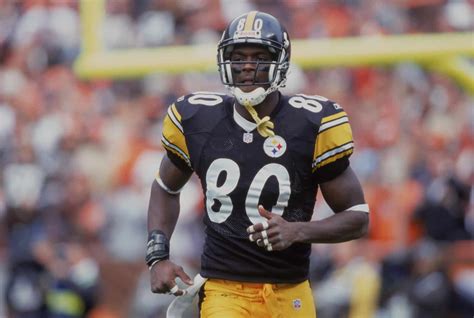
He broke 1,000 yards in his second season. His best year in Pittsburgh came in 2002: 78 catches, 1,325 yards, seven touchdowns. On November 10 of that year, he set a Steelers franchise record with 253 receiving yards in a 34–34 overtime tie against Atlanta. He and Hines Ward became the first two Steelers receivers to each top 1,000 yards in the same season – twice, in 2001 and again in 2002.
He played five seasons in Pittsburgh, then signed with the Giants in 2005 on a six-year, $25 million deal.
New York: The Peak
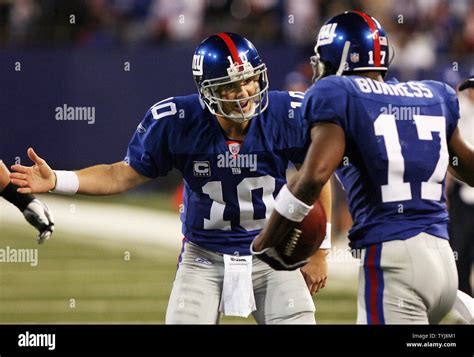
The Giants era is what most people mean when they say his name. Paired with Eli Manning, Burress became the kind of receiver defensive coordinators game-planned around specifically because of his size – 6-foot-5, 232 pounds – and his ability to win contested balls in traffic. He’s not a burner. His 40-yard dash at the NFL Combine was 4.59 seconds. What he had was an enormous catch radius and timing with Manning that developed into something reliable under pressure.
The 2007 season was his best. He played all 16 games despite an ankle injury that kept him out of most practices during the week – a fact that somehow made his production more impressive, not less. He finished with 70 receptions, 1,025 yards, and a career-high 12 touchdowns. That ranked second in the NFC and fourth in the NFL in receiving touchdowns that year.
The NFC Championship Game against Green Bay: 11 catches, 151 yards, a franchise postseason record. Then the Super Bowl.
Super Bowl XLII – The Catch
What people forget about that final drive is how calm Burress said he was. In a 2021 appearance on the Up On Game podcast with LaVar Arrington and T.J. Houshmandzadeh, he described walking onto the field with 2:39 left knowing the Giants needed a touchdown. He wasn’t panicked. He’d spent the week studying Ellis Hobbs, the Patriots cornerback assigned to him, and noticed that Hobbs planted his feet near the goal line once a receiver made his first move.
On the play, Burress lined up wide left, alone. The Patriots sent seven rushers at Manning and left single coverage across the board. Burress faked a slant – Hobbs committed at the 5-yard line – and then released into a fade. He was wide open. Manning found him in the back left corner of the end zone for 13 yards.
What genuinely surprised Burress, by his own account, was that the Patriots put him in single coverage at all. They had covered him with safety help for most of the game and had focused on eliminating him after his dominant NFC Championship performance. “Very surprised,” he told NESN in 2011. “They had single covered me maybe a handful of times that whole game.” He thanked them for it.
That ring – white gold, genuine diamonds – sold at auction in 2024 for $280,600. At the time of the sale, that was the second-highest price ever paid for a Super Bowl ring. The record belonged to Baltimore Colts head coach Don McCafferty’s Super Bowl V ring, which fetched $300,000 in 2022.
November 29, 2008
Burress had a hamstring injury and wasn’t playing that week. He drove to the Latin Quarter nightclub in Manhattan, saw a Glock sitting in his car, and made a decision he’s described as impulsive – he brought the gun inside. He wasn’t a regular at nightclubs. “I never went out on Fridays, not one time in my career,” he said on The Pivot Podcast years later.
Walking up the stairs inside, the gun slipped from his waistband. He reached for it. It discharged. The bullet struck him in the upper right leg. A security guard standing inches away was not hit. The bullet lodged in the floor and was later recovered by a bartender.
His teammate, linebacker Antonio Pierce, drove him to New York-Presbyterian Hospital/Weill Cornell Medical Center. Pierce also arranged for the gun to be transported to Burress’s home in New Jersey. The hospital treated Burress and failed to report the shooting to authorities – as required by law. A doctor involved was later suspended.
The gun was not licensed in New York. Not in New Jersey either, where Burress lived. His Florida concealed carry permit had expired in May 2008, six months earlier. His attorney argued in mitigation that Burress had started carrying the weapon after two NFL players – Sean Taylor and Darrent Williams – were murdered in separate incidents the year before.
Mayor Michael Bloomberg publicly called for full prosecution. A grand jury indicted Burress on two counts of criminal possession of a weapon in the second degree and one count of reckless endangerment. He pleaded guilty in August 2009 to the lesser charge of attempted criminal possession of a weapon. On September 22, 2009, he was sentenced to two years in prison. He surrendered immediately, said goodbye to his family in the courtroom, and began serving his term.
He served 20 months, released June 6, 2011, from Oneida Correctional Facility in upstate New York – three months early for good behavior. Outside the prison, he was wearing a Philadelphia Phillies hat.
Career Statistics
Over 11 seasons and 148 games, Burress finished with 553 receptions, 8,499 receiving yards, and 64 touchdowns. Here’s his season-by-season breakdown:
| Year | Team | G | Rec | Yds | Avg | TD |
|---|---|---|---|---|---|---|
| 2000 | PIT | 16 | 36 | 617 | 17.1 | 5 |
| 2001 | PIT | 16 | 66 | 1,008 | 15.3 | 6 |
| 2002 | PIT | 16 | 78 | 1,325 | 17.0 | 7 |
| 2003 | PIT | 11 | 35 | 698 | 19.9 | 4 |
| 2004 | PIT | 12 | 46 | 516 | 11.2 | 0 |
| 2005 | NYG | 14 | 42 | 677 | 16.1 | 7 |
| 2006 | NYG | 16 | 63 | 988 | 15.7 | 10 |
| 2007 | NYG | 16 | 70 | 1,025 | 14.6 | 12 |
| 2011 | NYJ | 15 | 61 | 612 | 10.0 | 8 |
| 2012 | PIT | 9 | 4 | 22 | 5.5 | 1 |
| 2013 | PIT | 7 | 3 | 42 | 14.0 | 0 |
| Career | 148 | 553 | 8,499 | 15.4 | 64 |
The missing years are 2008 (suspended by the Giants after the shooting), 2009, and 2010 (imprisoned). That’s a significant gap. What his final numbers would have looked like with two full additional seasons – he was 31 at the time of the incident, playing at the highest level of his career – is genuinely impossible to calculate cleanly. He was averaging 1,000+ yards and double-digit touchdowns through 2007.
The Return and After Football
He came out of prison during the NFL lockout, which meant there was no active league to sign with immediately. The New York Jets picked him up once play resumed. He played 15 games in 2011, catching 61 passes for 612 yards and eight touchdowns – genuinely productive numbers for someone who hadn’t played organized football in three years. Then a brief return to Pittsburgh in 2012 and 2013, limited by a torn rotator cuff suffered in practice.
Since retiring he became co-host of Up On Game on Fox Sports Radio alongside LaVar Arrington and T.J. Houshmandzadeh. In the summer of 2021, he went back to Michigan State and completed his bachelor’s degree in Communications. He runs a company called Plaxico Burress Enterprises and has spoken publicly on gun violence and its consequences – not in a performative way, but as someone who lived them specifically.
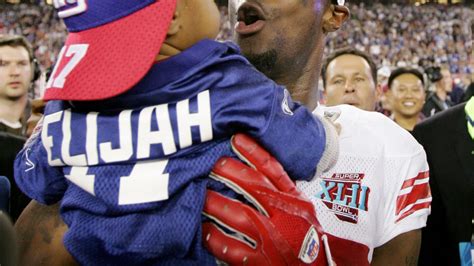
His son Elijah Burress, a four-star wide receiver according to both 247Sports and ESPN, plays for Notre Dame. Elijah was not yet born when his father caught that pass in Glendale, Arizona. He was born in November 2009, while his father was in the middle of his first month in prison.
What His Career Actually Means
The Hall of Fame question comes up occasionally and the honest answer is no, he’s not a candidate on numbers alone. 553 receptions and 8,499 yards are solid, not defining. The two-year gap matters. What he has that most receivers don’t is a singular play in a singular game – the touchdown that ended the only serious threat to the 1972 Dolphins’ perfect-season record, against the quarterback who many consider the greatest of all time, when the Giants were 12-point underdogs.
Here’s the thing that actually gets me about Burress’s story: he predicted the score of that Super Bowl game in a press conference – said the Giants would win 17–14 – and Brady, visibly annoyed, responded publicly. Burress was right. On both the outcome and the final score. Then he went to prison and never played for the Giants again. His Super Bowl ring sat in a case somewhere for fifteen years until he sold it for $280,600 in early 2024.
He’s ranked 46th on the all-time list of greatest New York Giants. That feels a little low for the man who caught the game-winner in what is widely considered the biggest upset in Super Bowl history. But that’s the franchise that also had Lawrence Taylor and Michael Strahan, so maybe 46th is what it is.
Comments