
Brian McManus (B McManus): Real Engineering, Real Science, and the Irishman Who Made Engineering Go Viral

B McManus is Brian James McManus, an Irish engineer from Galway who runs the YouTube channel Real Engineering, which has crossed 5 million subscribers and 689 million views. He also runs Real Science, co-owns the streaming platform Nebula, and holds two engineering degrees. If you arrived here from a search or a citation and wanted to confirm who this is, that’s him.
Growing Up in Galway: A Visual Learner in a System That Didn’t Know What to Do with Him

McManus grew up in Galway in a way that didn’t map cleanly onto what Irish secondary schools in the 1990s and early 2000s were set up for. He’s described himself as someone who would have been labeled with learning disabilities, what we now call neurodivergence. Language and memory were difficult. Hyperactivity was a constant. What he could do was observe and draw things with precision, which is how he excelled in biology during his first year at St. Joseph’s Patrician College (The Bish). Studying birds. Drawing plants. Building scaled Lego aircraft.
He enrolled in biomedical engineering at NUI Galway, graduated in 2011 during Ireland’s economic recession, and immediately ran into the problem that biomedical engineering graduates in a collapsed Irish economy have limited options. So he went back to study aeronautical engineering at the University of Limerick, completing a master’s in composite failure prediction. Both degrees are accredited by Engineers Ireland. He didn’t end up building airplanes. He ended up in the oil and gas sector in Kuala Lumpur, Malaysia, which is a trajectory that probably makes more sense in context than it does on paper.
The Hotel Room in Labuan That Started Everything

He had already quit his engineering job before he uploaded his first video. That detail is worth sitting with for a second, because it reframes the whole story. This wasn’t someone who built an audience and then took the leap. He quit, locked himself in a hotel room in Labuan, Malaysia, during Chinese New Year, taught himself animation basics over four days, went home to Kuala Lumpur, and made a YouTube video called “Why Are Plane Windows Round?”
It went viral.
The channel formally launched as Real Engineering in 2016. Also that year, McManus founded Throttle Media, an animation studio focused on science communication for engineering clients, including work later done for companies like Firefly Aerospace. He wasn’t just doing YouTube. He was building infrastructure around the ability to explain technical things with visuals.
What he made and what most science channels were making at the time are genuinely different things. The animation, the pacing, the willingness to stay with a concept until it actually resolves rather than just gesturing at it. He said in a PorterShed interview that when he started, there were almost no channels doing this type of content, which meant there was no model to copy. He had to figure out what the format was as he went.
What Real Engineering Actually Covers, and Why People Trust It

The channel’s main pillars are aerospace, aviation, and energy, with regular detours into military technology, materials science, infrastructure, and space. A few representative titles: “The Economics of Nuclear Energy,” “The Logistics of D-Day” (a full documentary series), “Why SpaceX’s Starship Will Change Everything,” and a widely-discussed deep analysis of the OceanGate Titan submersible implosion. That last one is worth mentioning specifically because McManus disclosed in the video that he had worked professionally as a composite design engineer and that his master’s thesis focused on composite failure prediction. So when he explained why the carbon fiber hull likely failed, he was drawing on direct professional knowledge, not just research.
Most engineering channels on YouTube present things a qualified engineer would describe as technically accurate but shallow. Real Engineering sits at a different depth level. Not impenetrable, but not dumbed down either. McManus has been explicit about this as a deliberate choice: respecting the audience’s intelligence. Whether that’s why the channel grew to 5 million subscribers or whether that audience was always waiting for someone to make content at that register is a chicken-and-egg question, but either way the channel found them.
Videos average closer to 20 minutes than 10. The animation is produced in-house. McManus employs several full-time staff, plus freelance editors, animators, and writers. This is not a solo bedroom-setup operation anymore, if it ever really was.
Real Science: The Second Channel

Real Science launched after Real Engineering found its footing and follows the same model applied to a wider scientific canvas: biology, physics, medicine, climate, space, cognitive science. As of the most recent verified figures, it has over 2 million subscribers and more than 260 million views. The channel has its own production identity but shares the same commitment to animated explainers and longer-form scripting.
One thing to note: the YouTube handle @TheBrianMcManus is his personal handle, while the channels themselves operate as Real Engineering and Real Science. This trips up searches occasionally.
Nebula: Co-Owning a Streaming Platform That Hit a $150 Million Valuation

Nebula started as a response to a specific problem. Educational YouTube channels get age-restricted for covering topics like military technology, even when the content is completely non-violent. They also get monetized at rates that make 20-minute, heavily produced videos economically difficult to sustain through ads alone. A group of educational YouTubers, including McManus and Sam from Wendover Productions, built a subscription platform where creators retain more control and earn a better share of revenue.
In September 2021, Curiosity Stream acquired a minority stake in Nebula, valuing the company at $50 million. That valuation had grown to $150 million by subsequent reporting, with the platform exceeding 650,000 paying subscribers. McManus is listed as a co-owner. This matters because it means his income isn’t just ad revenue and sponsorships. He has equity in a platform that’s now a real media business.
A YouTube channel with 5 million subscribers generating around $500,000 a year in ad revenue (a reasonable estimate given average viewership of roughly 200,000 daily views and U.S.-skewed audience demographics) is a solid business. Add Nebula equity, brand sponsorships (Brilliant.org has been a consistent partner for years), and Throttle Media’s commercial work, and the revenue picture looks substantially different. Exact net worth figures circulating online are speculation. The structure of his income streams is not.
The India Map Controversy in 2025
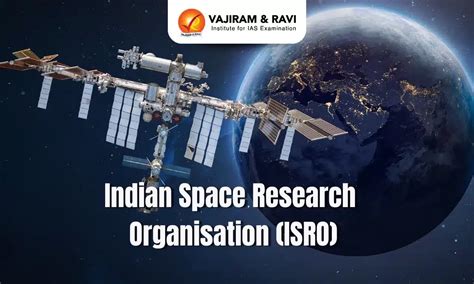
In May 2025, McManus published a roughly 30-minute video called “The Unlikely Rise of the Indian Space Program,” covering ISRO’s achievements in detail, including the engineering logic behind the Mars Orbiter Mission and how the team designed the probe to survive a launch vehicle switch if the primary rocket failed. The video was, by any reasonable reading, a positive profile of ISRO.
The controversy came from a map used briefly in the video that didn’t reflect India’s full territorial claims, specifically excluding Jammu and Kashmir. This is a politically charged issue in India, and the backlash on Indian social media was significant. McManus defended the map as reflecting internationally recognized boundaries, then said publicly that he wouldn’t make the mistake of praising India again. That response made things worse. The clip circulated widely as “YouTuber says won’t praise India again,” stripping it of the context in which he said it.
A substantial portion of the comment section, including many Indian viewers, pushed back on the backlash, arguing the video’s actual content was strong and the controversy was disproportionate. McManus’s subscriber count didn’t materially change. But the episode raised a genuine issue that larger creators working on geopolitically adjacent content are going to keep running into: maps are not neutral objects, and what one country considers internationally standard, another considers an act of erasure.
Recognition, Awards, and the Engineering Recruitment Platform

McManus received the Space Pioneer Award, connected to his work covering aerospace and space technology. Engineers Ireland included him in their “An Engineer Like Me” series as a model career pathway for engineering graduates. YouTube featured him in a 2021 economic impact report on Irish creators, which found the platform supports over 1,600 jobs in Ireland and contributes roughly 30 million euros to GDP. McManus publicly questioned whether that figure was an undercount, pointing out that individual Irish creators generate more than that on their own.
He was a featured speaker at ISDC 2026. He also launched an engineering recruitment platform aimed at connecting early-career engineers with companies working on technical problems worth caring about. That last project is harder to find detailed coverage of, but it reflects a pattern in how he talks about his work: the goal isn’t just views, it’s whether the content is actually pulling people toward engineering as a career.
He employs four people full-time in addition to regular freelance contractors. The production operation is based in Austin, Texas, where he now lives, though the content remains oriented around a global and particularly American audience.
Brian McManus Career Timeline

He graduated from NUI Galway in 2011, completed his master’s at the University of Limerick in 2013, then worked as a composite design engineer and R&D team leader at Oglaend Industries in Malaysia from 2013 to 2016. He quit that job before uploading his first video. Real Engineering launched in 2016. Throttle Media was founded the same year. Real Science followed as a second channel. Nebula launched in 2021, with the Curiosity Stream investment arriving later that year. By 2024, Real Engineering had crossed 5 million subscribers. He’s based in Austin. His LinkedIn lists his current role as co-owner at Nebula.
The thing that doesn’t quite add up about the mainstream narrative around his career is the sequencing. Most “engineer becomes YouTuber” stories treat the YouTube channel as the pivot point. With McManus, the animation studio, the second channel, and the streaming platform investment all suggest he was building a media company from early on, not just posting videos and seeing what happened. Whether that was the plan in that Labuan hotel room or something that emerged later, the result is the same: Real Engineering is one piece of a larger operation, not the whole thing.
Comments