
Buffalo Bills vs. New York Jets: All-Time Record, Rivalry History, and 2025 Results
The Bills lead the all-time series 73–58. That number covers 131 games since September 11, 1960, when the New York Titans – not yet renamed the Jets – beat Buffalo 27–3 in the first AFL season. Sixty-five years later, the Bills closed the 2025 regular season with a 35–8 win at Highmark Stadium, their fifth straight against New York and their most lopsided in years. The gap between these franchises right now is real and wide.
Head-to-Head Record at a Glance
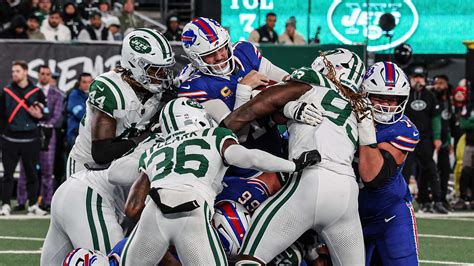
Bills lead overall: 73–58. Regular season only: 72–58. The teams have met once in the postseason, a 1981 AFC Wild Card that Buffalo won 31–27 at Shea Stadium. There are no ties in the series.
Buffalo averages 21.57 points per game in matchups with New York. The Jets average 19.57. Neither number is dominant by modern NFL standards, but over 131 games the scoring margin tells you where the wins pile up. The Bills’ longest win streak in the series ran 10 games between 1987 and 1992. The Jets’ longest was 7, from 1984 to 1987. Right now Buffalo has won five straight, by a combined score of 163–62.
The biggest margin either way: Bills won 37–0 on December 23, 1989. Jets won 42–3 on September 15, 1985. Both were home games for the winner. The Bills have never lost by more than 39 points in this series; the Jets have never lost by more than 37.
How the Rivalry Started: AFL Origins Through the 1980s
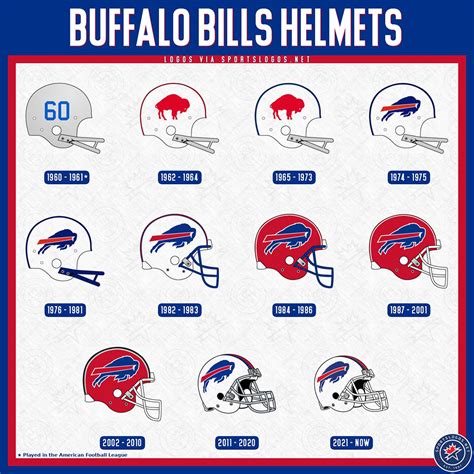
Both franchises were charter members of the American Football League. They played twice a year from day one, which means by the time the AFL merged with the NFL in 1970, these teams already had a decade of history and genuine familiarity with each other’s tendencies.
The 1960s belonged mostly to New York. Joe Namath arrived in 1965 and the Jets won the AFL title in 1968, then shocked the NFL by beating the Colts in Super Bowl III. Buffalo had O.J. Simpson but couldn’t build around him consistently. The first real turning point in the series came on December 16, 1973, when Simpson broke Jim Brown’s single-season rushing record – 2,003 yards – in a 34–6 Bills win over the Jets at Shea Stadium. That game ended the season and ended the conversation about whether Simpson was the best running back alive.
By the early 1980s the Bills were finally building something. They made the playoffs in 1980 for the first time in 16 years, which set up the only postseason game this rivalry has produced.
The 1981 Wild Card: The Only Playoff Meeting
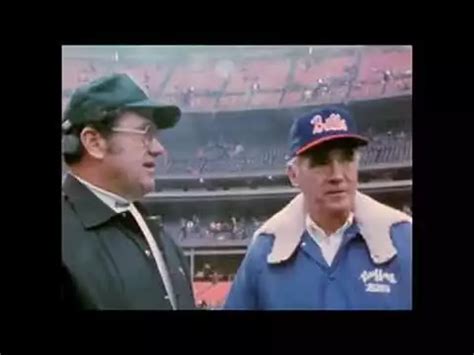
December 28, 1981. Shea Stadium. The Bills went up 24–0 in the first half and looked like they might embarrass a Jets team quarterbacked by Richard Todd. New York fought back to make it 31–24, and the final minutes were genuinely tense. Todd threw an interception that sealed it. Bills won 31–27.
It’s been 44 years since that game. In that time the Jets have appeared in two AFC Championship games (1982 and 1998) and the Bills made four consecutive Super Bowls (1991–1994), losing all four. The two teams have never found a way back onto the same playoff bracket. Given where each franchise stands entering 2026 – Buffalo on its seventh straight playoff run, New York on its longest drought in the league – another postseason matchup doesn’t look close.
Jim Kelly, the 1990s, and Games That Decided Seasons

The Bills under Marv Kelly and Jim Kelly (no relation) owned the AFC East in the early 1990s. They swept the Jets twice during their Super Bowl run years. But the most consequential Bills-Jets game of that era didn’t happen in January – it happened in December 1993, when the Jets missed three field goals in a loss to Buffalo. Those misses cost New York a playoff spot. Three kicks. The Jets finished 8–8 and watched the postseason from home.
New York did get a meaningful win in 1998. By beating the Bills in the final week of the regular season, the Jets clinched their first AFC East title. That’s the kind of stakes these games occasionally carry, even when neither team is a Super Bowl contender. Two divisional games per year, for 65 years – eventually almost everything happens.
The Modern Era: McDermott, Allen, and a Widening Gap

Sean McDermott became the Bills’ head coach in 2017. Since then, Buffalo has gone 12–5 against the Jets. That’s not a rivalry anymore – it’s a managed beatdown with occasional variation. The Bills have won the AFC East five straight times. The Jets haven’t been to the playoffs since 2010, the longest active drought in the NFL.
Josh Allen’s personal record against New York: 10–4. He won nine of the last 11 before sitting out the 2025 Week 18 finale with the Bills already locked in. The four losses include a 2023 game and a 2024 game where the Jets played well for stretches before the Bills pulled away. What gets me about that 10–4 number is how unremarkable Allen makes these games look – the Jets rarely force him into a bad game; they usually just get outgained and outscored from the first quarter.
The October 2024 Monday Night game at MetLife is the one exception worth noting. Aaron Rodgers threw a 52-yard Hail Mary touchdown as the first half ended – the fourth Hail Mary TD of his career – and Buffalo had to overcome a genuine gut punch before winning 23–20. Allen went six straight games without an interception after that stretch, the longest streak of his career. The Jets played well enough to win that one and didn’t.
The 2025 Season: Two Games, Zero Suspense

Week 2, September 14, 2025. MetLife Stadium. Bills won 30–10. Total yardage by the 13:50 mark of the fourth quarter: Bills 383, Jets 78. Josh Allen threw for 148 yards and ran for 59 more despite leaving briefly with a bloody nose. James Cook’s 44-yard touchdown run – he juked linebacker Quincy Williams at the line, nearly ran into his own guard, stayed balanced, and was gone – put it away by halftime. Justin Fields left the game with a concussion. That was the Jets’ quarterback situation going into Week 3.
Week 18, January 4, 2026. Highmark Stadium. Bills 35, Jets 8. Allen didn’t need to play the second half. Mitchell Trubisky started and threw four touchdowns. Ray Davis rushed for 151 yards on 21 carries. Trubisky finished with 259 yards passing, which is a number that probably bothers a few Jets defensive coaches. The Bills rested their starters in a regular-season closer and still won by 27. New York finished the year 0–6 in divisional games and minus-19 in turnover differential, the worst in the league.
Key Players Through the Years
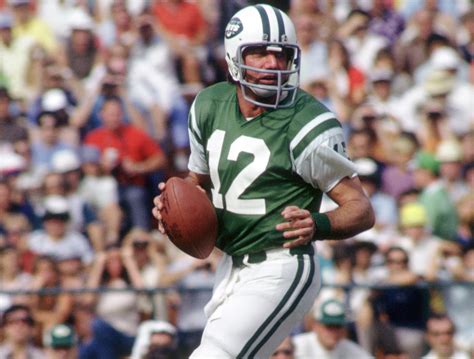
Joe Namath beat the Bills consistently through the late 1960s and into the 1970s. He threw five interceptions – three of them returned for touchdowns – in a Bills upset win in 1969, which is the kind of game that defines a quarterback’s complicated relationship with a particular opponent. O.J. Simpson on the other side: the 2,003-yard game in 1973 remains the most historically significant individual performance in the series, even if it’s been eclipsed by later rushing records.
Jim Kelly went 13–6 against the Jets during his Bills career. Thurman Thomas rushed for 133 yards and a touchdown in a key 1994 divisional win. Wayne Chrebet had a 74-yard, one-touchdown game for New York in 1995 that kept a Jets win streak going.
The current version of this matchup is Allen versus whoever the Jets can put on the field. Garrett Wilson has had good receiving games against Buffalo – four catches, 50 yards in a 2023 contest – but the Jets haven’t found a way to make that matter in the final score. Breece Hall has been quiet in most of these games, which says as much about the Bills’ run defense as anything.
AFC East Stakes and What This Series Actually Decides
Every Bills-Jets game is worth four points in the AFC East standings – two for the winner (they gain one and the loser loses one in head-to-head differential). That matters when the division race is tight. It hasn’t been tight lately. Buffalo has won the division wire-to-wire for five straight years, which makes these games feel more like tune-ups than tests.
But divisional games have a way of biting you when you’re not paying attention. The 1993 missed field goals. The 1998 Jets title-clinching win. The 2023 opener where New York – with Rodgers – actually looked competitive for about four quarters until Rodgers’ ACL tore on the second offensive play of the game. That injury effectively ended the Jets’ window before it opened.
For the Bills, the Jets represent the floor of what AFC East competition looks like right now. For New York, the Bills are a measuring stick they haven’t been able to reach in years. The Jets haven’t won consecutive games against Buffalo since they swept the 2016 season series. That was 10 years ago.
Numbers That Don’t Get Mentioned Often Enough

The Bills’ longest winning streak in this series was 38 games, according to one historical database that counts AFL-era games differently. Pro-Football-Reference puts the longest streak at 10 (1987–1992). The discrepancy comes from how different sources handle AFL-era records before the 1970 merger – some count franchise continuity differently for the pre-merger Titans/Jets.
The Bills have never scored more than 46 points against the Jets in a single game (1979). The Jets’ single-game high against Buffalo is 48 (2012). Neither record is in any danger of falling soon given how these teams are currently built.
Since McDermott took over in 2017, the Bills have outscored the Jets 374–196 across 17 meetings. That’s an average of 22–11.5. The 2025 season contributed 65 points to the Bills’ side and 18 to New York’s.
One number that actually surprises me: the Jets won the series 40 games in a row at some point in the franchise’s history. Forty straight. I could not find a clean year range for that streak in the sources I looked at, which makes me think it’s being counted from the AFL era under a different methodology, but the raw total appears in multiple databases without contradiction. The Bills’ equivalent streak is 38. Two franchises that have each completely dominated the other at different points, now completely separated again.
Comments