
Malcolm Butler – The NFL’s Most Unlikely Super Bowl Hero, Explained
Who Malcolm Butler Is and Why His Name Still Comes Up
Malcolm Butler retired on March 9, 2024. Earned $46 million over nine NFL seasons. Won two Super Bowls, made one Pro Bowl, and earned second-team All-Pro honors in 2016. By any reasonable measure, a good career. But none of that is why anyone remembers him.
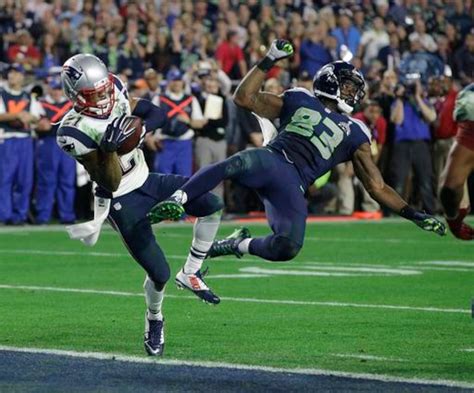
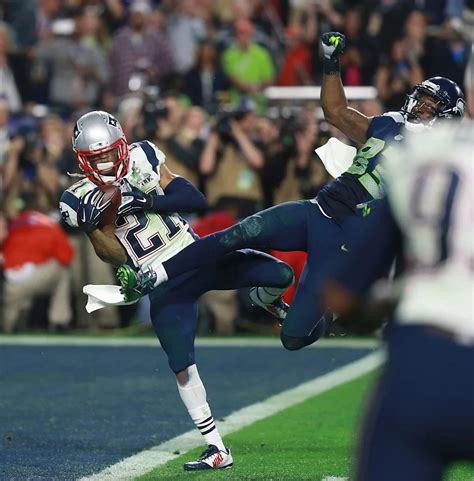
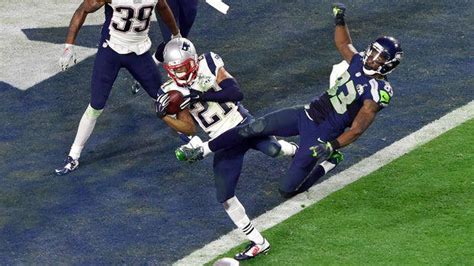
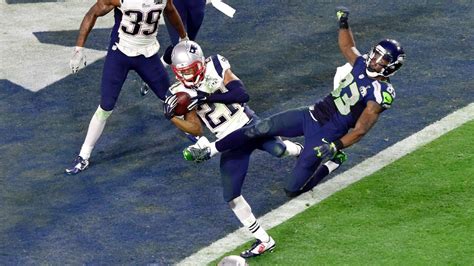
They remember him because on February 1, 2015, with 20 seconds left in Super Bowl XLIX, he intercepted Russell Wilson at the Seattle 1-yard line and ended the game. The New England Patriots won 28-24. The play was later voted the fifth-greatest in NFL history by a panel of 68 media members for the NFL’s centennial special. Tom Brady gave Butler his MVP truck afterward because, in Brady’s words, “Without him, we don’t win that Super Bowl.”
What makes the story stick is the backstory. Butler was an undrafted free agent from the University of West Alabama – Division II – who two years before the Super Bowl had been working at a Popeyes in Vicksburg, Mississippi, sweeping floors and taking orders. He was not supposed to be there. Not on that field, not with that assignment, not making that play.
Growing Up in Vicksburg and Getting Kicked Off His First College Team

Vicksburg sits on the Mississippi River in Warren County, a city with a median household income that hovered below $28,000 during Butler’s childhood. His mother, Deborah Butler, raised five children on two jobs. Butler has spoken about his upbringing with pride, not resentment, but the financial pressure was real and the margin for error was thin.
He was good enough at Vicksburg High to attract attention – five tackles per game as a senior, plus track and field, where he ran the 100 meters in 12.07 seconds and jumped 22 feet 8.5 inches in the long jump. That athleticism eventually got him a scholarship to Hinds Community College in Raymond, Mississippi.
He lasted five games.
Hinds coach Gene Berry kicked him off the team in 2009 for disciplinary reasons. Reports blamed either a misdemeanor drug charge or an altercation with a campus police officer. Butler then transferred briefly to Alcorn State, took summer classes to stay academically eligible, and eventually talked his way back into Hinds for the 2011 season. He had no scholarship at that point. His former Vicksburg teammate Les Lemons, who was his roommate during that period, later recalled Butler “always working, always running hills or lifting weights, always staying ready” even when he had nowhere to play.
The second chance at Hinds worked. He picked off three passes in 2011, broke up 12 others, and earned a transfer to West Alabama, where he made first-team All-Gulf South Conference in both 2012 and 2013. In 2012, he recorded 49 tackles and five interceptions, including three in a single game against West Georgia. In 2013, a Beyond Sports Network All-American selection. Still, come the 2014 NFL Draft, no team called his name.
The Path to New England: Alabama Pro Day, a Beat-Up Cadillac, and a $1.53 Million Contract
After his senior season, Butler started training with a Tuscaloosa-area coach named Johnny Jackson, who ran what Butler’s agent later described as a no-frills storefront gym. Jackson had noticed Butler during a game – specifically, Butler popping up off the ground after a fall and chasing down a receiver near the goal line. He invited Butler to train for the draft. Butler showed up in a beat-up green Cadillac with a Black & Mild cigar. Jackson didn’t care. He thought Butler’s cat-like reflexes belonged on an NFL field.
Jackson and attorney Derek Simpson, who had recently become an NFL-certified agent, convinced contacts at the University of Alabama to let Butler work out at the Crimson Tide’s pro day. Strong workout. Still went undrafted. The Patriots signed him as an undrafted free agent on May 19, 2014, to a three-year contract worth $1.53 million.
Bill Belichick, in a Sports Illustrated interview after Super Bowl XLIX, said the team “kind of created a roster spot for him by juggling some other guys around.” This is how close Butler came to never making an NFL roster at all. The Patriots had Darrelle Revis, Brandon Browner, and Kyle Arrington. Butler was a roster experiment from a Division II school that most NFL teams had never scouted.
Super Bowl XLIX: The Play, the Practice, and the Scolding That Made It Possible
In the week before Super Bowl XLIX, the Patriots had identified a specific rub route the Seattle Seahawks used repeatedly in goal-line situations. One receiver drives his defender backward; the other runs a slant underneath into the space that opens up. New England drilled against it obsessively, and Butler kept getting beaten.
Belichick lit into him during one practice rep. “If you see that formation, you can’t give ground,” Belichick told Butler. “You’ve got to be ready to jump that.” Butler would later say that scolding was still running through his head as he sprinted onto the field in the game’s final seconds.
He was on the field because of Kyle Arrington. Arrington had struggled in coverage through the first half, and Belichick pulled him. Butler took more snaps as the game wore on. The Seahawks had driven 80 yards in the final two minutes, Jermaine Kearse making a ridiculous 33-yard bobbling catch while lying on his back at the New England 5. First and goal from the 1. Marshawn Lynch had run for 102 yards. Seattle had one timeout left. The entire stadium expected Lynch to get the ball.
Butler was expecting a pass. He told Yahoo Sports in 2025, “Everyone knows you’re supposed to run the football from the 1-yard line, but my mindset was if they threw it, their ass was in trouble.” He also said he’d been watching Wilson’s eyes during that final drive and noticed Wilson looking toward the slot receiver too frequently. “He’s looking over here too much,” Butler thought.
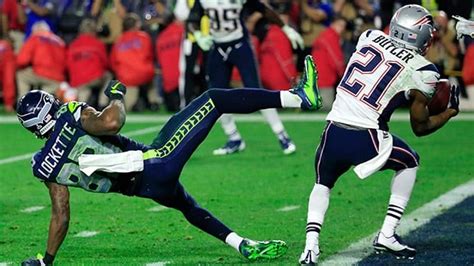
When Seattle came out in the formation Butler had practiced against all week, he reacted before the snap. Browner jammed Kearse at the line. Butler undercut Ricardo Lockette’s slant, caught the ball at the goal line, and the game was over. New England 28, Seattle 24.
What’s easy to forget: Butler had been beaten on that exact route in practice six days earlier. The interception wasn’t instinct. It was a correction – something Belichick had specifically forced him to fix – executed under the most pressure a defensive back can face. Tom Brady later said Butler’s truck was earned. No argument there.
The Career That Followed – Pro Bowl, All-Pro, and a Second Ring
Butler told his agent right after the interception that he did not want one play to define him. For several years, it didn’t.
In 2015, playing opposite Revis, Butler held opposing receivers to a 58.7 passer rating when targeted, made his first Pro Bowl, and started all 16 games. In 2016, he earned second-team All-Pro honors. He won a second Super Bowl ring in February 2017 when the Patriots came back from 28-3 down against Atlanta in overtime. Over his four full seasons in New England, he appeared in 70 regular season and playoff games and finished with 14 career interceptions as a Patriot. His career totals across all teams: 17 interceptions, 82 pass deflections, 406 tackles, 100 games played.
He was never a shutdown corner in the Revis sense – opponents did target him, and there were stretches where he struggled. But in 2015 and 2016, Butler was one of the better starting corners in the AFC, and his value to the Patriots defense was straightforward and real.
Super Bowl LII: The Benching Nobody Has Ever Explained
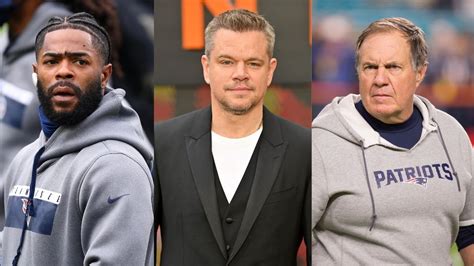
Super Bowl LII against the Philadelphia Eagles, February 4, 2018. Butler played one snap – on special teams. Not a single defensive snap, despite starting all 16 regular season games that year and playing 97.8 percent of the team’s defensive snaps. Philadelphia scored 41 points. Nick Foles threw for 373 yards. The Patriots lost 41-33.
Butler found out just before the game that he wouldn’t play. He cried on the sideline. When asked afterward what happened, he said: “I never got a reason.”
At least four separate explanations have circulated since then, and none is confirmed. Butler himself theorized he had gotten sick and visited the hospital during Super Bowl week, and that the coaching staff may have thought he missed curfew or wasn’t locked into the game plan. Belichick has never said anything substantive. ESPN reported at the time that Butler had “struggled with what the Patriots were asking him to do against the Eagles’ complex scheme.” Seth Wickersham’s 2021 book It’s Better to Be Feared claimed Butler was demoted after an altercation with then-defensive coordinator Matt Patricia. Robert Kraft, in the Apple TV+ documentary The Dynasty, said something more personal was involved: “What has been told to me is that there was something personal going on between Bill and Malcolm that was not football related.”
What makes the benching genuinely strange, beyond the obvious competitive cost, is that several coaches who would have known if something serious had happened still pursued Butler aggressively in free agency. Matt Patricia himself, as the new Lions head coach, was one of them. Mike Vrabel, who had spent eight seasons as a Patriots player and was then coaching Houston’s defense, also had interest. Jon Robinson, Tennessee’s general manager, was a former New England scouting director. All three knew the organization inside and out. None of them walked away from Butler.
Butler himself, speaking to the Boston Herald after signing with the Titans, said: “Bill Belichick has been doing this for a very long time. He took a veteran out of Super Bowl XLIX and put in a first-year rookie, and that turned out right, so you could never question his decision. It didn’t work out right. It didn’t work out the best for me or him or the New England Patriots. But I can say he won more than he lost, so it is what it is. I always have love for New England.”
Eleven years later, nobody knows. That’s the honest answer.
Tennessee, Arizona, and the Return That Didn’t Work Out
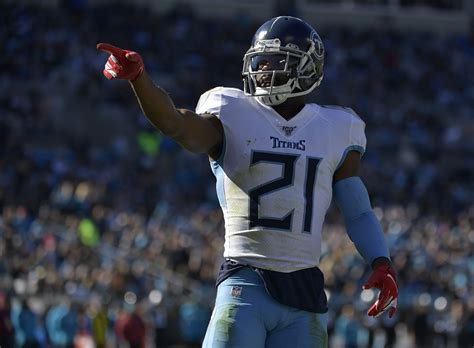
Butler signed with the Tennessee Titans in March 2018: five years, $61 million, $30 million guaranteed. The largest contract of his life and a fair reflection of what teams thought of him as a player, regardless of what had happened in Minnesota.
His first season in Tennessee was rough. By mid-November 2018, he had allowed 39 catches for 618 yards and was responsible for seven touchdowns allowed – the most of any cornerback in the NFL, per Pro Football Focus. He was $61 million playing like a backup. To his credit, he cleaned it up. In 2019 and 2020, Butler was a functional starter who helped the Titans reach the AFC Championship Game. He finished his three seasons in Tennessee with 10 interceptions in 42 games. The Titans released him after 2020.
The Arizona Cardinals signed him for 2021. He never made the final roster. The Patriots brought him back in March 2022 on a two-year, $9 million deal – a reunion with the organization where it all started. He was released in August without playing a game. He worked out for the Dolphins and Falcons. Nothing came of it.
He announced his retirement to KPRC’s Aaron Wilson in Houston: “I am retired. I did the best I can do. Walking away from the game feeling comfortable. Everybody can do more, but I’m satisfied with my career. It’s time to move on and transition.”
Career Stats and Contract Earnings at a Glance
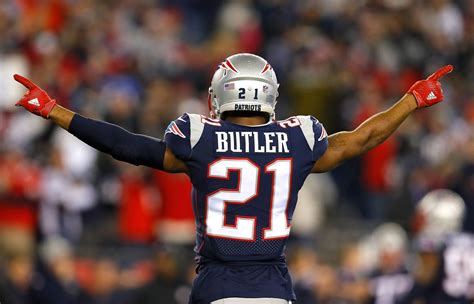
Total career earnings, per Spotrac: $46,185,246. The breakdown tells the story of how his value was perceived at each stop – $7,541,496 over five seasons with the Patriots, $36,481,250 over three seasons with the Titans, $2,162,500 with the Cardinals.
Career defensive statistics: 406 tackles, 3 sacks, 5 forced fumbles, 82 pass deflections, 17 interceptions, 2 defensive touchdowns, 100 games played. Awards: two-time Super Bowl champion (XLIX and LI), Pro Bowl 2015, second-team All-Pro 2016, New England Patriots All-2010s Team, two-time first-team All-Gulf South Conference at West Alabama.
What’s worth holding onto: 17 career interceptions is a real number. A lot of starting corners in the NFL never reach that. The narrative about Butler being essentially a one-play player is wrong, even if the one play is what everyone remembers.
What Happens Next – and What the Play Still Means
Butler told CBS Sports he plans to write a book about going from undrafted free agent to Super Bowl hero. He’s 35, five years removed from his last game, and by his own account at peace with how it ended. His Instagram handle is mac_bz.
The interception gets replayed whenever the Patriots and Seahawks meet in a meaningful game – which happened again in Super Bowl LX in 2026, almost exactly eleven years after XLIX. Butler told the Boston Globe in February 2026: “It changed peoples’ lives. It changed my life. We went 10 years without winning the Super Bowl before that. It changed the franchise back to their winning ways.”
The NFL Network panel that ranked it fifth-best in NFL history had it behind Franco Harris’s Immaculate Reception (first), Dwight Clark’s The Catch (second), David Tyree’s helmet catch in Super Bowl XLII (third), and one other. Butler’s interception ranked ahead of every other defensive play on the list. Whether you think that ranking is right or slightly low, the framing matters: the five greatest plays in NFL history tend to involve a degree of chaos, improbability, and timing that no coach can fully engineer. Butler’s play had all three, plus the thing that separates it from some of the others – he had specifically prepared for exactly that moment. The luck was in the formation. The execution was earned.
He went from a Popeyes in Vicksburg to a ticker tape parade at Disneyland the next morning. He spent parts of nine NFL seasons trying to be more than one play, and mostly he was. The benching in 2018 is still unexplained and probably always will be. He made $46 million. He retired satisfied.
Comments