
Johnny Unitas as a Charger: How a Legend’s Career Ended in Powder Blue
On January 22, 1973, the Baltimore Colts traded Johnny Unitas to the San Diego Chargers for $150,000. Not a player. Not a draft pick. Cash. For the man who had thrown 2,796 completions, 39,768 yards, and 287 touchdowns in 17 seasons with that franchise.
The guy who sold him was Joe Thomas, the Colts’ new general manager, who had built decent teams in Miami and Minnesota and then decided he wanted nothing to do with the 40-year-old quarterback Baltimore had crowned a legend. Thomas had fired head coach Don McCafferty midway through the 1972 season partly because McCafferty refused to bench Unitas. The next interim coach, John Sandusky, did what Thomas demanded. Unitas threw three passes in his last game as a Colt.
Why San Diego Wanted a 40-Year-Old Quarterback
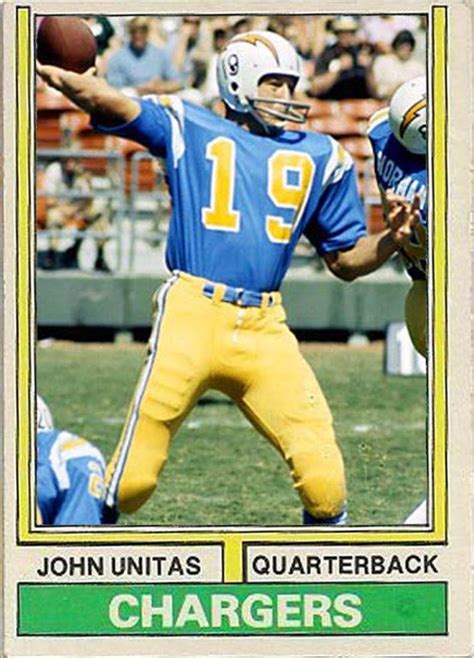
Chargers owner Gene Klein wasn’t running a football operation in 1973 so much as a marketing campaign. The team had gone 4–9–1 in 1972. John Hadl, their starter for years, was gone. Head coach Harland Svare needed a name that would move tickets. Unitas was that name. Season tickets jumped when the trade was announced. Klein got exactly what he paid $150,000 for: publicity.
Svare had actually played against Unitas. He was a Giants linebacker in the 1958 NFL Championship Game, the one everyone calls “the greatest game ever played,” where Unitas drove the Colts 80 yards in overtime to beat New York 23–17 and effectively invented the modern quarterback. Svare knew who he was getting. “The Chargers are honored and proud to acquire John Unitas, the greatest quarterback ever to play the game,” Svare told reporters in January.
The Chargers offensive coordinator, Bob Schnelker, was also a Giants player from that same 1958 game. Svare was 42. Unitas was 40. Between them and Schnelker, the coaching staff skewed heavily toward men whose NFL careers peaked when Eisenhower was in office. Unitas didn’t get along with Schnelker. That part didn’t help.
The 1973 Season: A Record, Then a Collapse
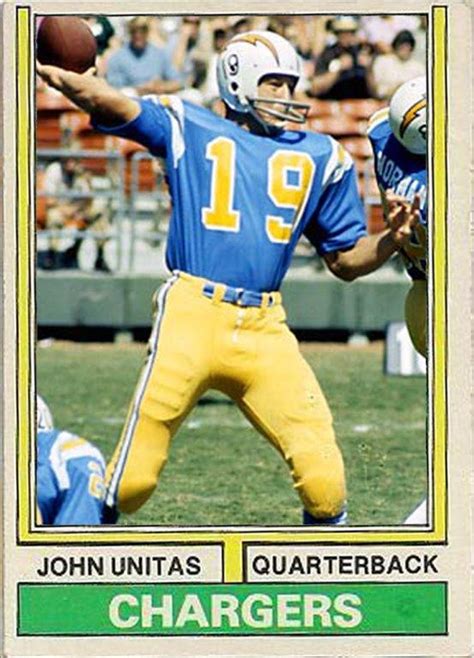
Opening Day was at RFK Stadium against the defending NFC champion Washington Redskins. The Chargers lost 38–0. Unitas completed 6 of 17 passes for 55 yards, threw three interceptions, and was sacked eight times. He was 40 years old with a bad elbow he had been managing since a preseason injury in 1968, playing behind an offensive line that couldn’t protect him, against a team that was good enough to reach the Super Bowl that season.
The second game was better. Buffalo, 34–7, Chargers win. In the third game of the season Unitas became the first quarterback in NFL history to throw for 40,000 career yards. He finished his career with 40,239. That milestone got a lot of attention at the time, some redemptive narrative about him still making history. What got less attention: his body was coming apart.
Game four was in Pittsburgh, his hometown. The Steelers – on their way to winning the first of four Super Bowls in six seasons – ran their Steel Curtain defense at him and he completed 2 of 9 passes for 19 yards with two interceptions before getting pulled in the second quarter. Rookie Dan Fouts came in and threw for 174 yards and a touchdown. The Chargers still lost 38–21, but the message was obvious. Unitas didn’t start another NFL game.
Dan Fouts, Some Beer, and What Actually Got Passed Down
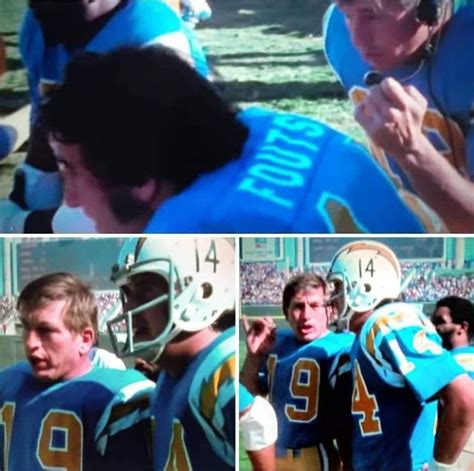
Fouts was a third-round pick from Oregon. He was 22. What’s interesting, and what most summaries of this season miss, is that the relationship between Unitas and Fouts was genuinely good. Fouts said in a 1999 interview that Unitas “treated me, a lowly rookie, as one of his teammates. He didn’t have any pretension. He wasn’t stuck up or anything. He just had real class and real dignity.”
The actual knowledge transfer happened at a bar. Per reporting by The Athletic’s Daniel Popper in 2020, Fouts said Unitas bought him beers and walked him through how to process film study, scouting reports, and real-time observation into on-field decisions. “I had to buy a lot of beer,” Fouts told Popper. “But it was fun. I learned a lot.”
Fouts spent three more mediocre seasons before Don Coryell arrived in 1978 with the Air Coryell offense and let him throw constantly. He led the NFL in passing yards four straight years from 1979 to 1982, broke the single-season passing record three consecutive times, and was inducted into the Pro Football Hall of Fame in 1993. None of that is traceable to one bar conversation in 1973, obviously. But Fouts remembered it clearly enough to still be talking about it 47 years later.
What Unitas’s Numbers as a Charger Actually Show
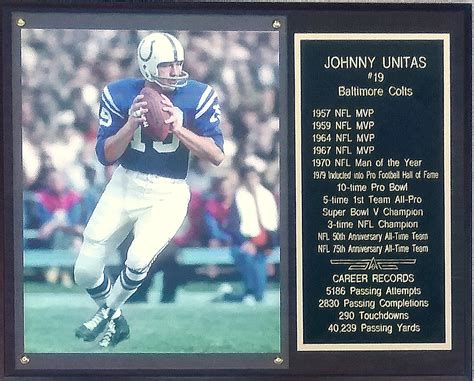
Five games played. Fewer than half his passes completed. Three touchdowns, seven interceptions. Passer rating of 40.0. The last touchdown pass of his career came against the New York Jets – a fourth-quarter strike to Bob Thomas – which, given everything, reads as a decent final footnote.
He was inactive for the last five games of the season. Wayne Clark backed up Fouts down the stretch as San Diego finished 2–11–1, last in the AFC West. Svare resigned after going 1–6–1; interim coach Ron Waller won one of the six games he coached. The whole season was, by most accounts, a wreck on multiple levels – there was a drug scandal in the locker room severe enough that it defined the franchise’s memory of 1973 more than anything that happened on the field.
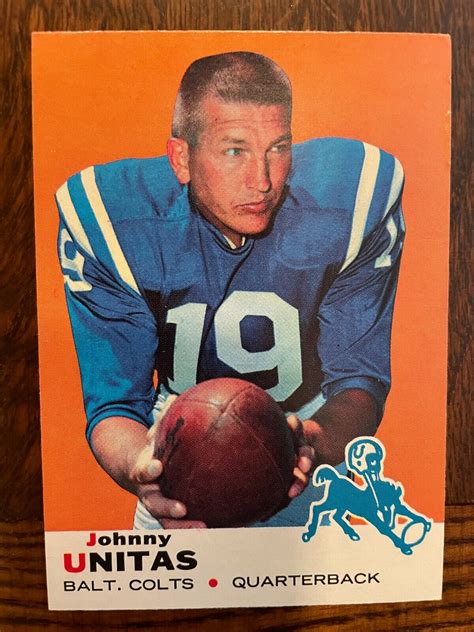
Unitas signed a two-year contract with the Chargers back in June 1973. He never played in 1974. He was listed on the 1974 Topps football card set, which is one of those odd archival details that only matters to collectors – but it means he was technically still on the roster when the card series was finalized. Officially retired in 1974.
The Trade Itself Was More Complicated Than It Looked
There was a wrinkle in the deal that doesn’t come up much. When Unitas was still with the Colts, he signed a personal services contract in 1970 – back when Carroll Rosenbloom owned the franchise – that guaranteed him $30,000 a year for 10 years after he stopped playing. It was a loyalty deal, the kind owners made with players they wanted to keep in the organization after retirement.
Then Rosenbloom swapped the Colts for the Los Angeles Rams in July 1972, handing Baltimore to Robert Irsay, who brought in Joe Thomas. That personal services agreement complicated the trade because it technically kept Unitas employed by the Colts organization even after his playing career. The Chargers resolved it by purchasing that contract as part of the deal. Unitas, who apparently wanted nothing more to do with the Colts under Thomas, signed a fresh two-year contract with San Diego on June 8, 1973.
The Jets nearly got him instead. According to research published at the Professional Football Researchers Association forum, a Chargers representative approached the Jets about trading Unitas during the 1973 season, when New York was 1–3 with Joe Namath hurt. Jets president Phil Iselin was intrigued – there was a certain poetry in reuniting Unitas with Weeb Ewbank, who had coached him in Baltimore. Ewbank made some calls and concluded Unitas was finished. The deal died.
The Colts-Chargers Connection Nobody Talks About
Here is the part that I keep coming back to: the 1973 San Diego Chargers had almost no institutional interest in winning football games. The first-round pick that year was receiver Johnny Rodgers from Nebraska, who didn’t actually join the team until 1977 because he played in Canada first. The team’s best draft outcome from the entire 1973 class was Fouts at pick 64 – someone they acquired not to start but to sit behind a legend they knew was declining.
Unitas entered the season needing 472 passing yards to reach 40,000. The Chargers needed a reason for fans to buy season tickets. Those two needs happened to align for about three weeks in September. After that, they didn’t. Svare’s quote to the press – “the greatest quarterback ever to play the game” – wasn’t wrong. It just didn’t have much to do with what the 1973 San Diego Chargers actually required from him.
He retired holding records for pass attempts (5,186), completions (2,830), total yards (40,239), touchdowns (290), 300-yard games (26), and that consecutive-games TD streak of 47 straight, set between 1956 and 1960. All of those records have since been broken. The streak hasn’t.
Comments