
Franco Harris and the Pittsburgh Steelers: The Story of Number 32
From Fort Dix to the First Round
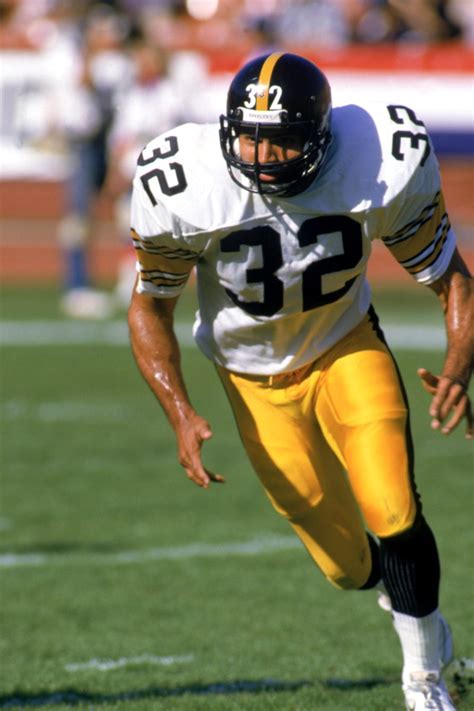
Franco Harris was born March 7, 1950, at Fort Dix, New Jersey, to an African American soldier from Mississippi and an Italian woman he’d met overseas during World War II. The family settled in Mount Holly, Burlington County, and raised nine children. As a kid Harris mostly played baseball and basketball. Football came later.
At Penn State, he blocked for Lydell Mitchell, who got all the attention. Mitchell was the All-American. Harris was the other guy. When the 1972 NFL Draft came around, Steelers scouts had watched enough to know what they were seeing, and Pittsburgh took Harris with the 13th overall pick.
Chuck Noll had gone 1-13 in his first season coaching the Steelers. The franchise had finished below .500 in 36 of its first 39 years. When Harris arrived, Noll kept saying “We got our man.” He was right in ways that took years to fully understand.
A Rookie Season That Announced Something
Harris rushed for 1,055 yards on 188 carries in 14 games. 5.6 yards per carry. Ten rushing touchdowns, three more through the air. He was only the fourth rookie in NFL history to crack 1,000 yards. Both The Sporting News and United Press International named him Offensive Rookie of the Year.
Pittsburgh’s large Italian-American community adopted him immediately. Fans called themselves “Franco’s Italian Army,” showed up at Three Rivers Stadium in army helmets stenciled with number 32, and turned what could have been a footnote into something genuinely unusual – a fan movement organized around one player’s ancestry and excellence at the same time.
The Steelers went 11-3 that season. For context: they had gone 5-9 the year before.
December 23, 1972 – What Actually Happened
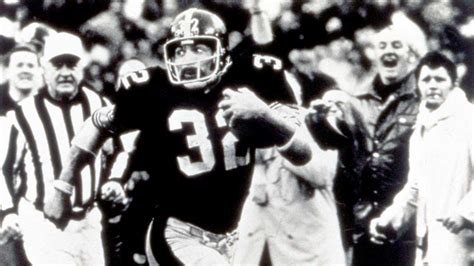
Fourth-and-10 from the Steelers’ own 40-yard line. Twenty-two seconds left. Pittsburgh trailing the Oakland Raiders 7-6 in an AFC Divisional Playoff game at Three Rivers Stadium. The franchise had never won a playoff game in its 40-year history.
Terry Bradshaw took the snap under pressure, scrambled, and threw toward running back Frenchy Fuqua near the Oakland 35. Raiders safety Jack Tatum arrived at the same instant. There was a collision. The ball ricocheted backward – hard, maybe 10 yards – and Franco Harris, trailing the play, scooped it out of the air just before it hit the turf and ran 42 yards into the end zone.
Pittsburgh won 13-7.
Pittsburgh sportscaster Myron Cope coined the phrase “Immaculate Reception” within hours. The name stuck the way names do when they’re exactly right.
The problem – if you want to call it that – is the 1972 NFL rule that said two offensive players couldn’t touch the ball consecutively on a forward pass. If the ball deflected off Fuqua before Harris caught it, the touchdown shouldn’t have counted. If it deflected off Tatum, a defensive player, everything was legal. The officials ruled it good. Raiders coach John Madden spent the final seconds of the game on the phone with the officiating booth, arguing. He never stopped arguing, really.
Frenchy Fuqua, for his part, spent the next 50 years enjoying the ambiguity. He’d tease an answer and pull it back. In 2022, with the 50th anniversary approaching and Harris still alive to see it, Fuqua finally said the ball hit Tatum. Whether that closes it depends on who you ask.
What’s strange about the controversy is that it somehow made the play bigger, not smaller. A clean, unambiguous touchdown catch doesn’t generate five decades of debate. The Immaculate Reception became part of NFL mythology partly because the question was never fully resolved. Harris himself said in 2022 that what made it truly special was the decade that followed – the play set the tone for winning, proved the Steelers could come back from anything, and everything that happened after confirmed it.
Four Super Bowls in Six Years
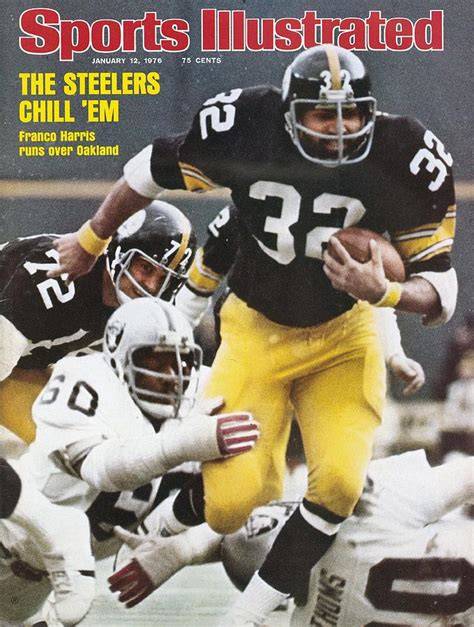
Super Bowl IX, January 1975: Harris rushed for 158 yards and a touchdown against the Minnesota Vikings’ “Purple People Eaters” defense. Pittsburgh won 16-6. Harris took MVP. He was the first African American and the first Italian American player named Super Bowl MVP – a distinction that didn’t receive nearly the coverage it deserved at the time.
Then Super Bowl X (Cowboys, 21-17), XIII (Cowboys again, 35-31), and XIV (Rams, 31-19). Four championships between the 1974 and 1979 seasons. Harris carried the ball 101 times in those four games for 354 yards – both records that still stand. His four rushing touchdowns in Super Bowls tie for second-most in the game’s history.
The Steelers of that era had Terry Bradshaw throwing, Harris running, Lynn Swann and John Stallworth catching, Rocky Bleier as the other back, and a defense so good it got its own name. The Steel Curtain. Mel Blount, Joe Greene, Jack Ham, Jack Lambert. When people call that team one of the greatest assemblies of NFL talent in history, it’s not nostalgia clouding the argument. The record makes it.
Harris’s role in the offense was specific and underappreciated by casual fans. He wasn’t just a bruiser. At 6-foot-2 and 230 pounds, he had what people now call “contact balance” – the ability to take a hit at full speed and keep moving, changing direction without losing momentum. He caught the ball cleanly out of the backfield. He ran precise routes. The YAC statistic didn’t exist yet, but he would have led in it.
The Career Numbers
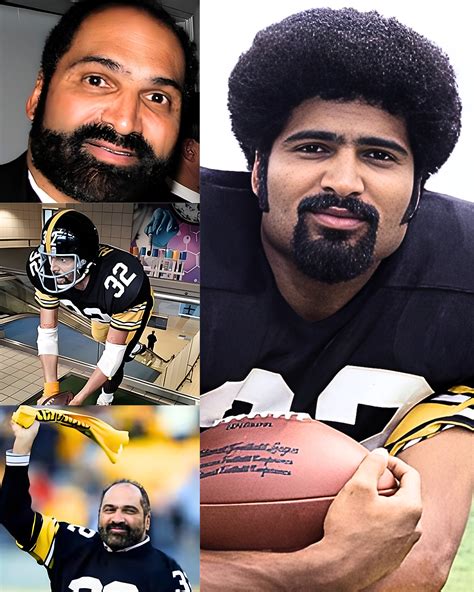
Thirteen seasons total, 12 with the Steelers. 2,949 carries. 12,120 rushing yards. 91 rushing touchdowns. He rushed for 1,000 yards or more in eight of those seasons, breaking Jim Brown’s record for most 1,000-yard campaigns in a career at the time. He ran for more than 100 yards in 47 games.
Nine consecutive Pro Bowls, 1972 through 1980. First-team All-Pro in 1977, second-team in 1972 and 1975. He also added 307 receptions for 2,287 receiving yards, putting his combined net yardage at 14,622 – third-highest in NFL history when he retired after the 1984 season with Seattle.
One number that gets lost: his 47 100-yard games. That’s not a peak-year statistic. That’s a measure of sustained performance across a full decade against the best defenses in professional football.
Pittsburgh, the Man, the City
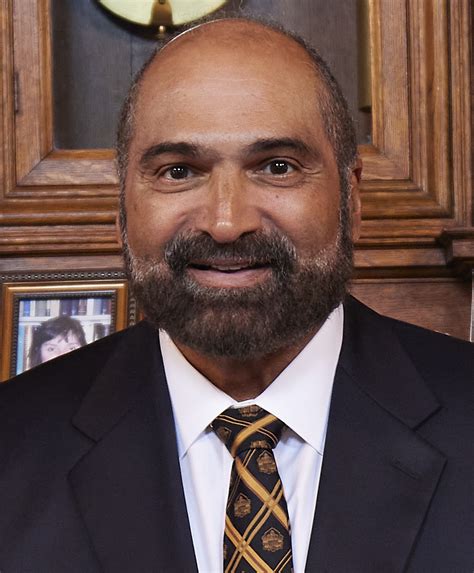
Rocky Bleier told a story at the jersey retirement ceremony in August 2023 that said more than any stat line. When Harris joined the Steelers in 1972, he didn’t own a car. He took the bus to practice. Teammates had to pick him up and drop him off.
This was a first-round draft pick, a player who would go on to four Super Bowls and the Hall of Fame, riding the bus to work because he saw no reason to do otherwise.
In 1997, Harris bought Parks Sausage, a Baltimore-based company that had been the first African American-owned business listed on the New York Stock Exchange. He ran it for years before the plant eventually became a Dietz and Watson facility. The business side of Harris doesn’t come up enough in discussions of his legacy, but it mattered to him.
He stayed in Pittsburgh long after football ended. He showed up at community events without a publicist. He knew people’s names. Bleier said at that ceremony: “He saw people on the street. He saw people down on their luck. He touched people. He was there for them.”
Art Rooney Sr., the Steelers’ founder, was quoted during Harris’s playing days as saying: “Before Franco got here, we didn’t win much; since he got here, we don’t lose.” That quote circulated for decades. It still does.
The Last Week of December 2022
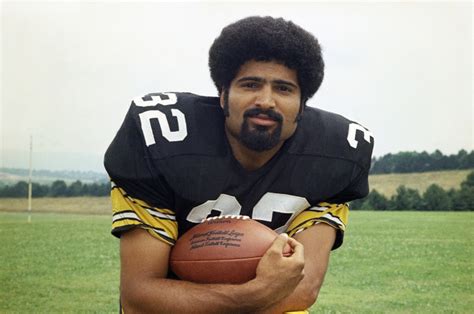
The Steelers had announced in September 2022 that they’d retire Harris’s number 32 at halftime of the Christmas Eve game against the Las Vegas Raiders – the same franchise he’d beaten with the Immaculate Reception exactly 50 years earlier. Harris heard the news and said, “When Art mentioned it to me, I was blown away. It was a wild moment. It was unbelievable. It’s quite an honor to be the first offensive player to have their number retired.”
He died on December 20, 2022. Four days before the ceremony. No cause was publicly disclosed. He was 72.
His wife Dana and son Dok attended in his place on December 24. Players walked into the stadium wearing replica No. 32 jerseys. The throwback uniforms included a patch for the Immaculate Reception’s 50th anniversary. Defensive captain Cam Heyward carried a large black flag with 32 on it during pregame introductions. Kenny Pickett, the rookie quarterback that year – whose draft selection had been announced by Harris at the April ceremony – called out “Franco! Franco!” in the huddle before sneaking for a first down in the second quarter.
There was a moment of silence before kickoff. The Steelers beat the Raiders 13-10.
In August 2023, the club unveiled a permanent exhibit at Acrisure Stadium: a glass-encased No. 32 jersey mounted above a large black-and-white photograph of Harris in the moment of the Immaculate Reception. Mel Blount was there. Rocky Bleier was there. Dwayne Woodruff, John Banaszak, Larry Brown, Randy Grossman, Gerry Mullins. Most of the men who won those Super Bowls with him showed up.
Harris is the third Steeler to have a number retired. Ernie Stautner’s 70 went in 1964. Joe Greene’s 75 in 2014. The franchise waited 90 years to retire an offensive player’s number.
The Hall of Fame and What It Confirms
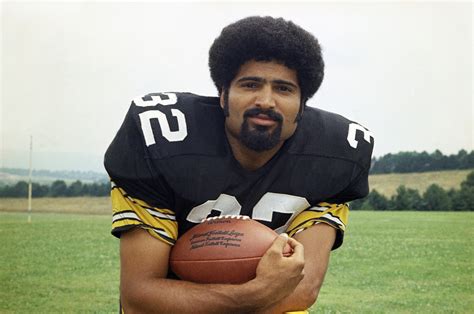
Harris was inducted into the Pro Football Hall of Fame in 1990, his first year of eligibility. He was also part of the inaugural class of the Steelers Hall of Honor in 2017.
Where he ranks among running backs is a conversation that gets genuinely complicated. The knee-jerk answer places him below Walter Payton, Barry Sanders, Emmitt Smith – players whose individual statistical production was higher. That’s fair, and Harris would probably agree. But the Super Bowl rushing record (354 yards, four games, still standing) doesn’t fit the narrative of a player who was “good but not the best.” Neither does the Super Bowl IX MVP performance against a defense that had given up the fewest points in the NFL that season.
What Harris did was make the people around him better, win in the games that counted most, and do it for 12 years without a down year until he was 32 years old. That’s a different argument than “most yards” – and it’s an argument worth making.
A statue of him stands at Pittsburgh International Airport, capturing the moment of the Immaculate Reception: Harris bent low, ball in hand, one foot on the turf. People who have never watched a football game recognize it. That’s how you know a play has left sports entirely and entered something else.
Comments