
Odafe Oweh: Who He Is, What He’s Done, and Why Washington Paid $100 Million
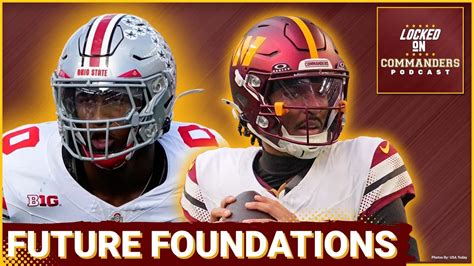
Odafe Oweh (pronounced uh-DAH-fay OH-way) is a defensive end for the Washington Commanders. He signed a four-year, $100 million deal in March 2026 after one of the stranger second halves of a season any pass rusher has had in recent memory – traded midway through 2025 from Baltimore to Los Angeles, recorded zero sacks before the trade, 7.5 after it, then set a Chargers postseason record with three sacks and two forced fumbles in a single playoff game.
He’s 27 years old, born December 15, 1998, in Hackensack, New Jersey. Six-foot-five, 251 pounds. First-round pick, 31st overall, 2021 NFL Draft. Penn State before that. And before he was Odafe, he was Jayson – his middle name, the one he used for years because nobody could pronounce the first one.
The Name and Where It Comes From
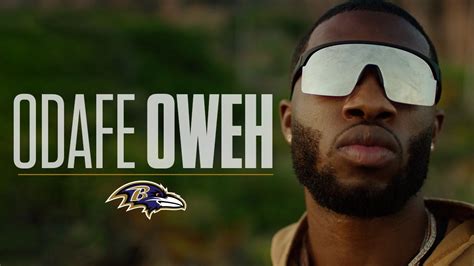
His parents, Henry and Tania, are both of Nigerian descent. They moved to the United States before Odafe was born. His name comes from the Urhobo tribe in southwest Nigeria and means “a wealthy individual,” which, given the current contract situation, is working out fine.
Growing up in Hackensack, he went by Jayson. Classmates couldn’t get Odafe right, and at some point he just got tired of correcting people. He was Jayson Oweh all through Blair Academy in Blairstown, New Jersey – where he became close friends with David Ojabo – and then through three years at Penn State. When he got drafted in 2021, he decided to switch back. “I just felt like I really wanted to start being myself,” he told ESPN that year. His teammate at Blair, Ojabo, went on to be drafted by the Ravens two picks behind him in 2022, so they ended up on the same team anyway.
He was selected for the 2018 Under Armour All-America Game out of high school. That’s not nothing – it’s a national recruiting event – but it’s also not the part of this story that matters most.
Penn State: Three Years and Zero Sacks in the Final One
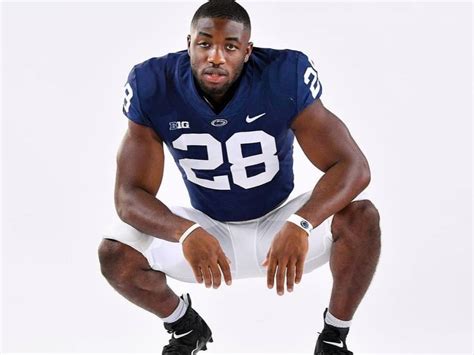
Oweh played three seasons in Happy Valley. Two sacks as a true freshman in 2018, five as a sophomore in 2019, then zero in 2020. Zero. And yet the Ravens took him 31st overall.
That contradiction is worth sitting with. The whole pre-draft conversation around Oweh was about what he couldn’t do – he hadn’t recorded a sack in his final college season, his pass-rush technique was raw, his instincts against the run were inconsistent. What scouts kept coming back to was his testing. At 6-foot-5 and 251 pounds, his combine numbers put him among the most explosive edge prospects anyone had seen in years. Teams were betting on the athlete, not the production line. In his three Penn State seasons he totaled 63 tackles, seven sacks, and two forced fumbles. Not a résumé that screams top-32 pick. The athleticism did that.
He finished with First-team All-Big Ten honors in 2020 despite the sack total, which tells you something about how the conference’s coaches evaluated what they saw on tape versus what showed up in the box score.
Baltimore Ravens (2021–2025): The Slow Build
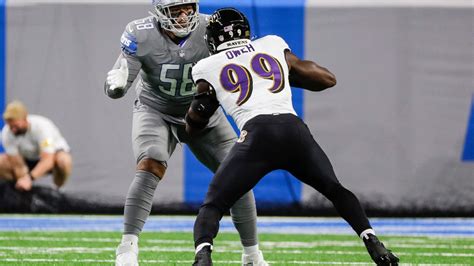
The Ravens got that pick by trading Orlando Brown Jr. to the Kansas City Chiefs. So indirectly, Oweh’s entire NFL existence with Baltimore traces back to that deal.
His rookie year was promising. Thirty-three total tackles, five sacks, three forced fumbles. He was named to the PFWA All-Rookie Team and won AFC Defensive Player of the Week in Week 2 after forcing a fumble and recovering it against Clyde Edwards-Helaire late in the fourth quarter – a turnover that helped seal a 36-35 Ravens win over Kansas City. He signed his four-year rookie contract at $12.6 million on June 10, 2021.
Then came two seasons of stagnation. Three sacks in 2022 across 17 games. Five in 2023 across 13. Enough to keep his name in the conversation, not enough to convince anyone he’d broken through. Baltimore picked up his fifth-year option in April 2024 anyway, which cost them somewhere in the neighborhood of $17–20 million for that single year – a bet that paid off when Oweh posted a career-high 10 sacks in 2024, his best season to that point, with 23 quarterback hits and nine tackles for loss across 17 games.
The 2025 season unraveled fast. Through five games with Baltimore he had zero sacks, 10 tackles, and five quarterback hits. There was a training camp weight gain that the Baltimore Banner reported seemed to add little to his physicality, and his snap percentage dropped. The Ravens were 1-4. On October 7, 2025, they traded him to Los Angeles along with a 2027 seventh-round pick, receiving safety Alohi Gilman and a 2026 fifth-round pick in return.
He found out while driving home from a meeting at the Ravens facility.
The Chargers Trade and What Actually Changed
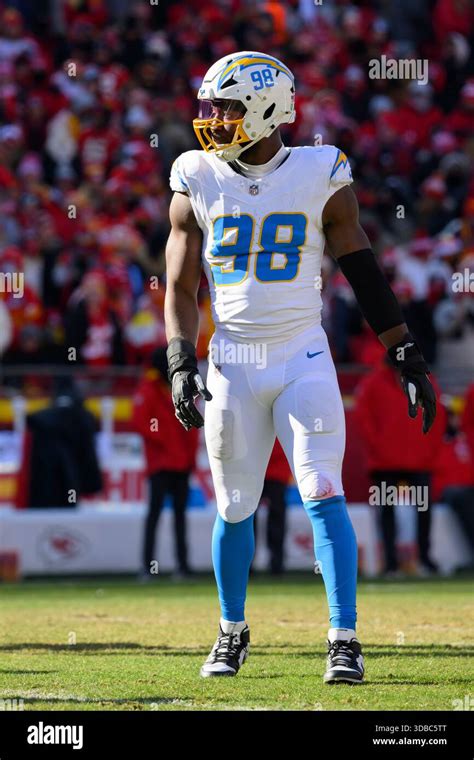
Oweh packed a bag, flew to Los Angeles, slept at a hotel near the practice facility, and was on the field by 1 p.m. the next day. “I had no prior knowledge to what was going on,” he said in the Chargers locker room. “After a few hours I was with the Chargers. I’m at peace with it now.”
He played 12 games in LA. Seven and a half sacks. Thirty-seven total pressures, leading the team over that span. A 17.3 percent pressure rate that ranked sixth-highest in the NFL among pass rushers with at least 200 pass-rush snaps. The Chargers went 3-1 in his first four games, clawed out of a 1-4 start, and made the playoffs.
What changed? The scheme helped. He rushed opposite Khalil Mack in Jesse Minter’s defense, which manufactured one-on-one opportunities by using Mack’s presence to pull attention away from Oweh’s side. He also added an inside spin move during this stretch – a real development, not just a scheme gift. The Athletic’s Daniel Popper noted that Oweh “started to show more variety in his pass-rush arsenal after joining the Chargers, including an inside spin move that is a changeup off his cross-chop to the edge.”
The Wild Card game against the New England Patriots. Twenty-five defensive snaps. Three sacks of Drake Maye, two forced fumbles, a Chargers postseason franchise record. That performance, more than the regular season numbers, was the thing that set his free agency price.
PFF graded his combined 2025 season at a career-high 81.0 pass-rush grade. For context: his overall grade with the Commanders in the same evaluation period came in at 73.7.
Washington Commanders: The $100 Million Signing
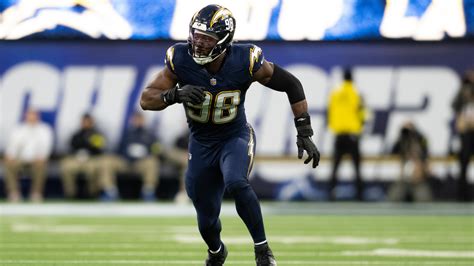
CBS Sports ranked him the seventh-best free agent available in the 2026 cycle. Four and a half hours into the legal tampering window on March 9, the Commanders agreed to terms. Four years, $100 million, $68 million guaranteed. He signed officially on March 14.
He picked Washington partly because of geography. Born in Hackensack, spent five years in Baltimore, a few months in LA – he said the East Coast pull was real, that being closer to family made sense. He also cited Daronte Jones’s defensive scheme specifically. Jones, who spent three seasons learning under Brian Flores with the Minnesota Vikings, plans to deploy Oweh in a pressure-heavy 3-4 structure with a blitz rate modeled on Flores’s Vikings, which led the NFL at 48 percent. Jones told Oweh he’d “play fast and just play up the field.” In his introductory press conference, Oweh explained the pitch: “They really let me know how they saw me fitting on this defense in terms of just being able to find those one-on-one matchups.”
What Oweh is walking into: a team that finished 5-12 in 2025, ranked 31st in opposing quarterback QBR, and was last in yards allowed. The Commanders needed edge help badly enough that GM Adam Peters paid top-of-market money for a player an unnamed NFL executive described to The Athletic as “more of a DPR than an every-down guy, a little hit and miss.” That characterization isn’t wrong, exactly – Oweh’s run-defense grade from PFF in 2025 was 62.5, ranking 59th at the position out of 115 qualifiers. The Commanders, and Jones specifically, are betting the scheme covers that gap.
Daron Payne and Jer’Zhan Newton are expected to generate interior disruption that pushes quarterbacks outside – straight into Oweh’s lane. Dorance Armstrong is on the other side. K’Lavon Chaisson, who posted 74 pressures in 2025, came in on a one-year deal. The plan is coordinated aggression, not individual heroics.
Pass-Rush Style and What He Actually Does
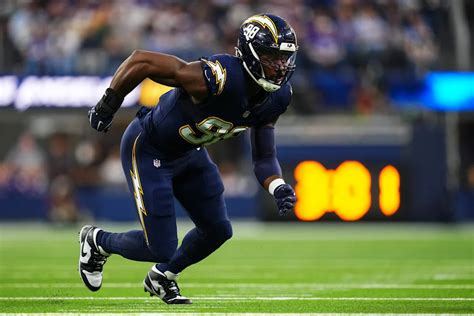
His primary moves: the speed-to-power rush, a chop-rip combination with hand usage that film analysts at Hogs Haven described as his most reliable technique, and now the inside spin he developed in LA. He can line up in a three-point stance or stand up wide, which gives coordinators flexibility in disguising pressure and coverage pre-snap. That’s part of why Daronte Jones compared his deployment to how he previously used Jonathan Greenard and Dallas Turner.
What he doesn’t do as reliably: set the edge against the run. His 62.5 run-defense PFF grade is the honest answer to anyone asking whether Washington overpaid. If you need an every-down defensive end who holds the point of attack, Oweh isn’t that. He generates 20 solo run-stopping tackles a season, which is serviceable, but it’s not the reason you pay $25 million a year.
The reason you pay $25 million a year is what he does to quarterbacks. Forty-seven total pressures in 2025 – 8 sacks, 30 hurries, 9 hits. His pass-rush grade of 78.0 ranked 17th among all qualified edge defenders. At 27, he’s in the window where pass rushers typically hit their most consistent stretch – old enough to have developed counters and situational awareness, young enough that the burst is still there.
Career Statistics by Season
Through 79 career games and 27 starts: 176 tackles, 30.5 sacks, 79 quarterback hits, 34 tackles for loss, seven forced fumbles, three fumble recoveries.
| Season | Team | G | GS | Tackles | Sacks | QB Hits | TFL | FF |
|---|---|---|---|---|---|---|---|---|
| 2021 | BAL | 17 | 6 | 33 | 5.0 | 18 | 7 | 3 |
| 2022 | BAL | 17 | 6 | 43 | 3.0 | 13 | 6 | 1 |
| 2023 | BAL | 13 | 5 | 23 | 5.0 | 10 | 5 | 2 |
| 2024 | BAL | 17 | 10 | 39 | 10.0 | 23 | 9 | 1 |
| 2025 | BAL | 5 | 2 | 10 | 0.0 | 5 | 1 | 0 |
| 2025 | LAC | 12 | 2 | 28 | 7.5 | 13 | 8 | 0 |
The jump from five sacks in 2023 to ten in 2024 probably saved his fifth-year option from being declined. The five-game stretch in 2025 with Baltimore – zero sacks, limited snaps, a defense going sideways – is the one data point that will follow him into Washington if the Commanders have a slow start. What made his Ravens tenure genuinely hard to read was that even in his worst stretches, his pressure numbers held up better than his sack totals suggested. He had a team-high 12 pressures in those five 2025 games before the trade. The sacks just weren’t falling.
For what it’s worth, the six-year career arc – inconsistent starter, one breakout year, change of scenery, playoff record, $100 million – is not a unique shape in NFL history. But he’s the one who has to go prove it wasn’t a fluke in Ashburn now.
Comments