
Mark Ingram and the New Orleans Saints: Franchise Records, Peak Years, and the Career That Defined a Generation of Who Dat Football
From Flint to the French Quarter
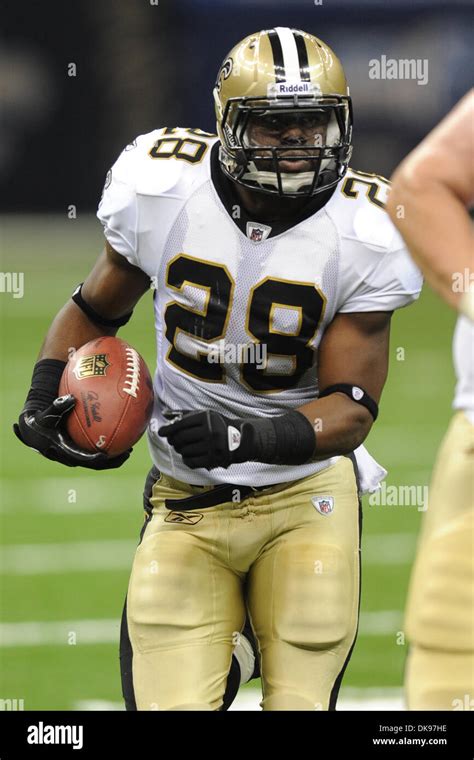
Mark Ingram II grew up in Flint, Michigan, played high school ball at Flint Southwestern, and arrived at Alabama in 2008 as a backup behind Glen Coffee. Two years later he was holding the Heisman Trophy – the first player in Crimson Tide history to win it. The Saints took him 28th overall in the 2011 draft. His father, Mark Ingram Sr., had also been a 28th overall pick when the Giants selected him in 1987. That’s either a remarkable coincidence or a good story, depending on how skeptical you are.
He signed his rookie contract and, according to ESPN’s reporting at the time, immediately pulled his No. 28 jersey on over shoulder pads and trotted onto the field before coaches would let him do anything but watch. That eagerness would define how New Orleans eventually came to see him.
What’s easy to forget now is that the Saints already had Reggie Bush, Pierre Thomas, Darren Sproles, and Chris Ivory in the backfield when Ingram arrived. He was a first-round pick walking into a log jam. His first three seasons produced 1,462 rushing yards combined – respectable, not dominant. The situation wasn’t ideal for a runner who needed carries to develop rhythm.
The Breakout and the Building of a Complete Back
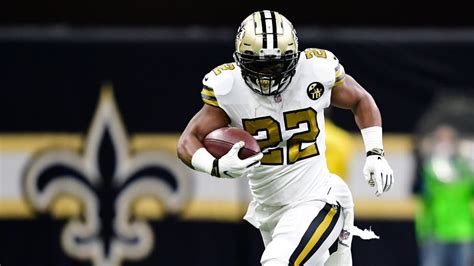
2014 was when things changed. Ingram rushed for 964 yards, earned his first Pro Bowl bid, and showed he could handle a genuine feature-back workload. That season matters more in retrospect than it did at the time – it was the year the organization decided he was their guy.
The receiving development is actually one of the more interesting parts of his career arc. In his first four NFL seasons he caught 53 passes total. In 2015 alone he caught 50. That’s not an accident of volume; that was deliberate work. Sean Payton’s offense demanded backs who could threaten out of the backfield in the passing game, and Ingram spent the early part of his career being a liability in that area. By 2015 he wasn’t.
His first 1,000-yard rushing season came in 2016 – 1,043 yards – making him just the seventh player in franchise history to hit that mark. He was 26 years old, healthy, and playing in an offense that was starting to build something again around Drew Brees. Then the Saints drafted Alvin Kamara in the third round of the 2017 draft, and everything accelerated.
The Kamara Years: What That Backfield Actually Was
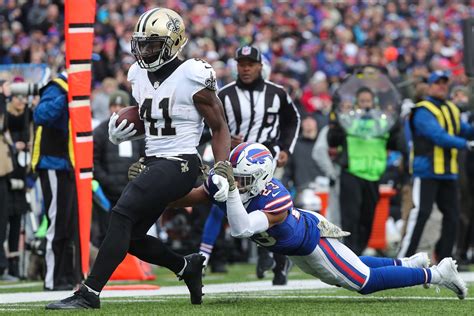
The 2017 season is where most Saints fans freeze the frame. Ingram rushed for a career-high 1,124 yards, scored 12 touchdowns, made his second Pro Bowl. Kamara, a rookie, caught 81 passes for 826 yards and added 728 on the ground. Together they ran for 1,852 yards and 20 touchdowns and added 1,242 receiving yards on 139 catches. The Saints sent both to the Pro Bowl – the first time two running backs from one team had done that in over 42 years.
What made the pairing work was the contrast. Ingram was physical, downhill, the guy you handed the ball to on third-and-one when the game was on the line. Kamara was elusive and unpredictable in open space. Defensive coordinators couldn’t game-plan for both at once, and Payton’s play-calling made them pay for trying either way.
Ingram’s best single game that season came against Washington – 134 yards on just 11 carries, one touchdown, plus three catches for 21 yards, 155 total yards in a performance where he also broke into sole possession of second place on the club’s all-time rushing list with a 36-yard touchdown run.
The 2018 season is harder to summarize cleanly. Ingram tested positive for a banned substance – a charge he denied – and served a four-game suspension to open the year. He came back and finished with 645 yards and six touchdowns in 12 games. More importantly, in Week 16 against Pittsburgh, he took a one-yard touchdown run into the end zone and broke Deuce McAllister’s franchise record for rushing touchdowns. McAllister was on the radio call. “You are looking at the new rushing leader for the Saints, in touchdowns, in Mark Ingram,” he said.
After that season, the Saints signed Latavius Murray to a four-year, $14.4 million deal. Ingram left in free agency. He was 89 yards shy of McAllister’s all-time rushing yardage record when he walked out.
Baltimore, Houston, and the Trade Back Home
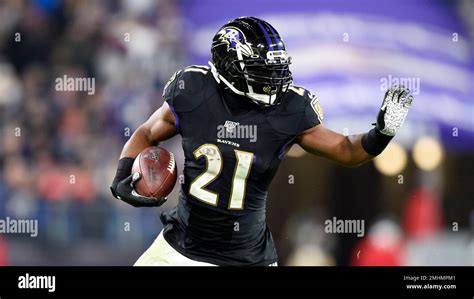
Baltimore signed him and he had arguably the best individual statistical season of his career in 2019 – 1,018 yards, 10 touchdowns, third Pro Bowl selection – running alongside Lamar Jackson in an offense that led the NFL in rushing. The Ravens used him differently than the Saints had: more between-the-tackles, less as a receiver. He was 29 and still producing at a high level.
2020 was worse. Injuries limited him, and Baltimore didn’t bring him back. Houston picked him up for 2021, and he spent half a season there before the Saints traded for him in October.
The homecoming at the Superdome was something. When his name was announced, the crowd went loud in a way that surprised even people who’d been watching Saints games for years. He led the Who Dat chant before kickoff. Coach Sean Payton gave him the game ball after a win over the Buccaneers and described it as – his words – the “you could hear him before you could see him” game ball. Ingram gained 52 yards in that game and told reporters nobody would find anyone happier to be back in New Orleans than him.
Three games into his second stint, he surpassed McAllister’s rushing yardage record on a 6-yard run against Tennessee – 19 yards beyond what he needed at the time of the carry. He said he’d have preferred to break it at home in front of the crowd, which is a very specific kind of disappointment that’s hard to fake.
The Franchise Records and Where They Stand Now
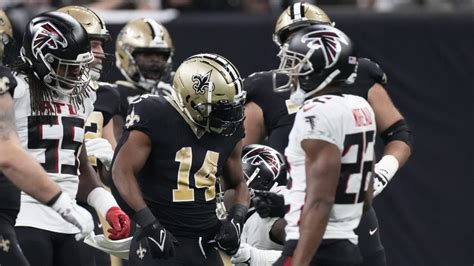
Over ten seasons and 123 games in a Saints uniform, Ingram finished with 6,500 rushing yards and 52 rushing touchdowns – both franchise records when he retired. He also holds the franchise marks for rushing attempts and 100-yard games. He added 264 receptions for 1,804 receiving yards and five scores as a Saint.
Alvin Kamara surpassed the rushing yardage record in 2024, finishing that season with 7,250. Ingram’s rushing touchdown record of 52 still stands as of this writing.
His full NFL career across 12 seasons and 156 games: 1,817 carries, 8,111 yards, a 4.5 average, 65 rushing touchdowns, 303 catches, 2,125 receiving yards, 10 receiving touchdowns. Seventy-five total scores.
In January 2026, Ingram was selected to the NFF College Football Hall of Fame Class of 2026 – formal induction scheduled for December 8, 2026, at the Bellagio in Las Vegas. He’ll be there representing Alabama’s first-ever Heisman winner, which is still the thing that started all of this.
What His Career in New Orleans Actually Meant
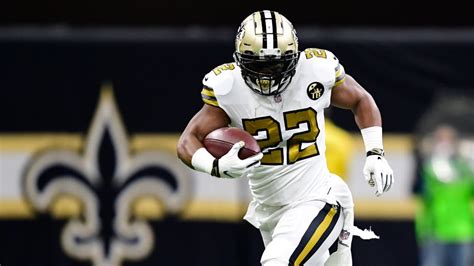
Here’s what I find genuinely interesting about the Ingram story: he was never the most exciting player on his own team. Reggie Bush was flashier when Ingram arrived. Kamara was flashier when Ingram peaked. Drew Brees drew the attention the whole time. Ingram ran hard between the tackles, caught the ball when asked, blocked when nobody was watching, and quietly accumulated one of the better running back careers of his generation.
The 2019 free agency departure has a slight awkward quality that the franchise history tends to gloss over. He left still short of McAllister’s yardage record because New Orleans chose not to bring him back. Then they traded to get him in 2021 so he could break it anyway, with knee injuries limiting what he could actually do. His second stint lasted 24 games and he missed seven of them. It’s a complicated ending to a mostly great story, which is how it goes.
What’s not complicated is what he built during those eight original seasons. Three Pro Bowls, back-to-back 1,000-yard campaigns – only the third Saints player ever to do it in consecutive years – and the most productive rushing partnership in franchise history alongside Kamara. The 2017 Saints went 11-5 and made the playoffs for the first time since 2013. Ingram was central to that.
The MCL tear he suffered against Tampa Bay in December 2022 was likely his last significant game action. He was 33. His number hasn’t been retired by the Saints, but his name is in every major rushing category in the franchise record books – and that, more than any ceremony, is how running backs tend to get remembered.
Comments