
Jared Lorenzen, the Hefty Lefty: Record-Breaker, Super Bowl Champion, Kentucky Legend

Jared Lorenzen was born weighing 13 pounds. He never really stopped growing from there. By the time he reached the NFL, he was listed at 285 pounds and stood 6 feet 4 inches – officially the heaviest quarterback in league history. He was left-handed. So when the nicknames came, they came fast: the Hefty Lefty, the Pillsbury Throwboy, the Round Mound of Touchdown, J-Load. He laughed at all of them. He used them himself. That was Lorenzen: too big for the position, too good to be ignored, too likable to resent.
He died on July 3, 2019, in Fort Thomas, Kentucky. He was 38 years old. Heart and kidney failure, complicated by infection. His weight at the end had climbed well past 500 pounds, and his body couldn’t hold anymore. The sports world grieved with a particular kind of sadness reserved for people who seemed too alive, too funny, too much of a character to actually be gone.
The Kid from Covington
Covington, Kentucky. February 14, 1981. Joe and Janet Lorenzen had a son who came into the world at 13 pounds and never fit neatly into any category after that. He was playing organized football by age five, begging whoever was around to throw a ball with him, lying on his back in the living room lobbing a football to himself for hours at a stretch. He cried the first time a coach made him play quarterback because taking a snap from center required touching another kid’s rear end. He got over it fast once he figured out quarterbacks got to throw.
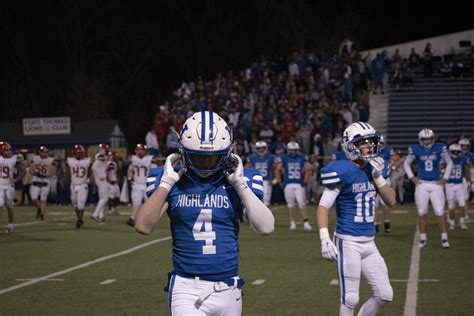
At Highlands High School in Fort Thomas, Kentucky, Lorenzen put up numbers that still seem implausible for a high school kid. Over four years, his teams went 41-2. As a senior in 1998 alone, he completed 62 percent of his passes for 3,393 yards, threw 45 touchdowns against six interceptions, and rushed for 904 yards at 8.4 yards per carry. His team went 15-0 and won the state championship. He also led Highlands to three consecutive Boys’ State Basketball Tournament appearances, from 1997 to 1999. College basketball programs came calling. So did baseball programs. Football won.
He chose Kentucky. A homegrown kid staying home – that mattered in a state where the Wildcats football program doesn’t always give fans much to feel good about.
Four Years That Rewrote the Kentucky Record Book
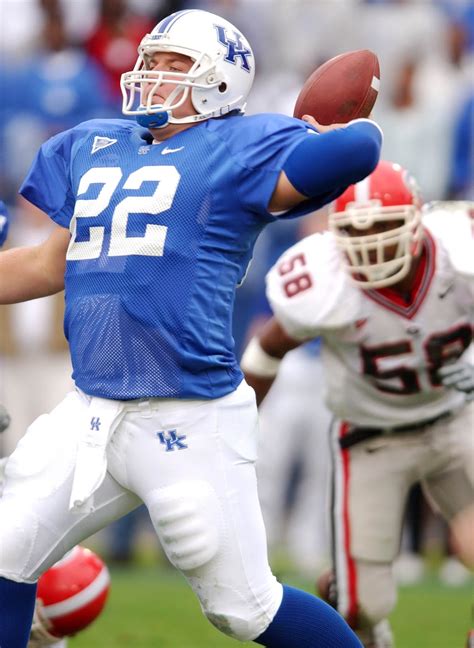
Lorenzen became the first true freshman to start at quarterback for Kentucky in 2000. That alone was unusual in the SEC, where programs typically redshirt prospects rather than throw them to conference wolves. But Lorenzen wasn’t a typical prospect. He was 19 years old, already north of 230 pounds, and could throw the ball 70 yards with something that resembled nonchalance.
What he did over four seasons at Kentucky is genuinely hard to contextualize without mentioning the chaos around him. Three different head coaches came and went during his time there. The program was, at various points, a mess. He was on the field for 1,793 total snaps across four years – the most of any Kentucky player in school history, including the most in a single season (635 in 2000). And through all that coaching turnover and organizational turbulence, he threw for 10,354 yards and 78 touchdowns. Both are Kentucky records that stood for years after his graduation.
His best season came in 2002 under Guy Morris. The Cats went 7-5, Lorenzen earned Second-Team All-SEC honors, and for one year the program looked like it might be building toward something. It wasn’t, really. But Lorenzen kept showing up.
There’s something slightly uncomfortable that gets glossed over in most tributes: Lorenzen held these records at a program that rarely won, which raises the question of how those numbers would look behind a better offensive line, with more consistent coaching, on a team that wasn’t shedding coordinators every eighteen months. The honest answer is probably: even better. His arm talent was never the issue. His 528-yard single-game passing record at Kentucky is still in the books.
Undrafted, Unsigned, Then Signed by the Giants
The 2004 NFL Draft came and went without Lorenzen’s name being called. This wasn’t a surprise exactly – the NFL has always been skeptical of quarterbacks who don’t fit the prototype, and at 285 pounds, Lorenzen looked less like a pocket passer and more like a man who should be protecting one. The New York Giants signed him as an undrafted free agent anyway. Tom Coughlin’s staff saw something worth keeping around.
He spent four seasons in New York as Eli Manning’s backup. His official NFL passing statistics are not impressive: 28 total passing yards across his career, a passer rating of 58.3, zero touchdowns, zero interceptions. He appeared in four regular-season games. The numbers tell you almost nothing about what he actually was as a quarterback, because backup quarterbacks in the NFL rarely get to show what they can do.
What he did get was a Super Bowl ring. On February 3, 2008, the Giants beat the previously undefeated New England Patriots 17-14 in Super Bowl XLII. Lorenzen was on that roster. He didn’t take a snap in the game – he stood on the sideline in street clothes, technically inactive – but he was part of the team, part of the preparation, and part of the celebration afterward. His father Joe watched from the stands. When the final whistle blew, Jared lifted him off the turf of the University of Phoenix Stadium and held him there.
That ring was real. That win was one of the biggest upsets in Super Bowl history. He earned it the way backup quarterbacks earn things: by showing up, by being reliable in practice, by keeping the starters sharp. That counts.
After the NFL: Indoor Football and a Weight That Kept Climbing
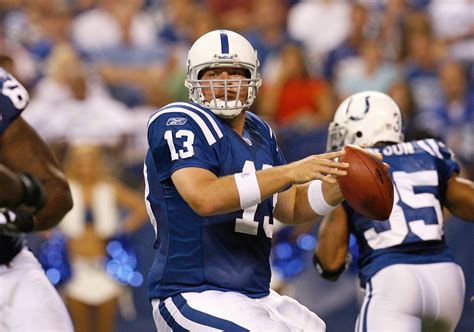
The Indianapolis Colts brought him in for the 2008 offseason and practice squad. Nothing came of it. By 2009, his NFL career was effectively over at age 28, and he did what a lot of players do when the big league closes the door: he found smaller leagues that would still let him play football.
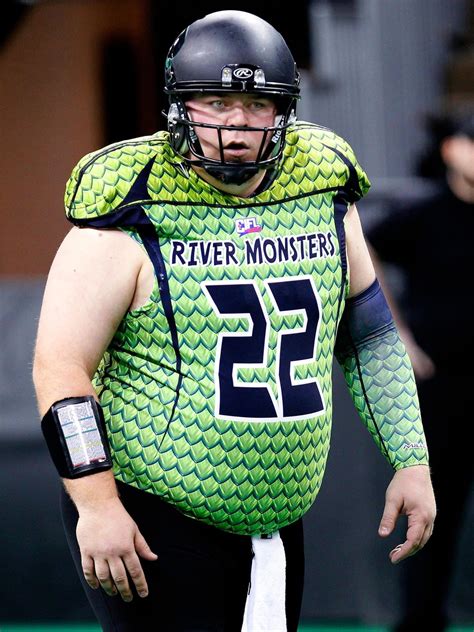
He suited up for the Kentucky Horsemen in 2009. The Northern Kentucky River Monsters in 2011. The Owensboro Rage in 2013. Back to the River Monsters in 2014. Indoor football, arena football, whatever kept him on a field with a ball in his hand. In 2011 with the River Monsters he was named the UIFL MVP. In a single season that year, he threw 81 touchdowns. Eighty-one. The arena game favors prolific passers, granted, but that number is absurd in any context.
What I find genuinely striking about this period is how little his physical limitations seemed to slow his reads and his arm. Video from those indoor games shows a man moving at speeds that looked improbable for his size, still throwing with velocity, still finding gaps in coverage. The body could still do the football things. The body just couldn’t stay at a weight that made everything else sustainable.
By the time he left the NFL, he was well over 300 pounds. In the years that followed, his weight continued to climb. At his heaviest, according to reports from people close to him, he reached somewhere above 500 pounds. He had developed diabetes, high blood pressure, high cholesterol, and sleep apnea. His liver, kidneys, and heart were all showing strain. He knew all of this. He talked about it openly, which is not something most people in his position do.
The Jared Lorenzen Project

In 2014, ESPN’s Tommy Tomlinson – a sports journalist from Charlotte who had his own long history with weight – spent time with Lorenzen for an E:60 feature. The piece ran during a stretch when Lorenzen was playing minor league football and still carrying well over 300 pounds. Tomlinson wrote about how Lorenzen’s size affected everything in his life, even as his football abilities remained startling. That story reached a lot of people.
Later, Lorenzen took the idea further himself. He started the Jared Lorenzen Project, a web series that documented his efforts to lose weight in real time, on camera, for anyone who wanted to watch. The series attracted viewers who saw something familiar in him: the pattern of wanting to be healthier, making progress, then losing ground, then trying again. He wasn’t selling a program. He wasn’t pretending it was going well when it wasn’t. He was just letting people in.
“Once I can run again,” he said in one stretch of footage, “I gotta do something.” He kept going. He kept trying. In 2019, his health deteriorated sharply. He was admitted to St. Elizabeth Hospital in Fort Thomas in late June with kidney and heart complications. Six days later, he was gone.
His mother Janet released a statement: “I lost my sweet boy today after a long hard fight.”
What the Nickname Actually Meant
The Hefty Lefty. The name came from two plain facts: he weighed a lot, and he threw left-handed. But the reason it stuck for twenty years isn’t really about either of those things. It stuck because Lorenzen was the rarest kind of athlete – one who made fans feel included rather than inadequate.
Left-handed quarterbacks have always been unusual. Steve Young, the most decorated lefty QB in NFL history, once pointed out that with ten percent of the population being left-handed, you’d statistically expect several lefties on the quarterback depth charts at any given time. It’s never happened. Fewer than three dozen southpaws have played quarterback in the NFL’s 100-year existence. Young and Ken Stabler are the only two in the Hall of Fame. Boomer Esiason, Mark Brunell, Kellen Moore – the list is short. Lorenzen fit into a tiny fraternity, which added to his distinctiveness.
But the weight was the thing. Most NFL quarterbacks look like they belong in a Nike commercial. Lorenzen looked like someone you’d see at the game. That wasn’t an insult, not to him and not to fans. It was a connection. The Pillsbury Throwboy was a joke that came with genuine affection built in. He was the Everyman quarterback, which is a category that does not exist in real life except that he somehow occupied it for a few years in the NFL and then for years afterward in the stories people told about him.
The Kentucky Records and the Hall of Fame
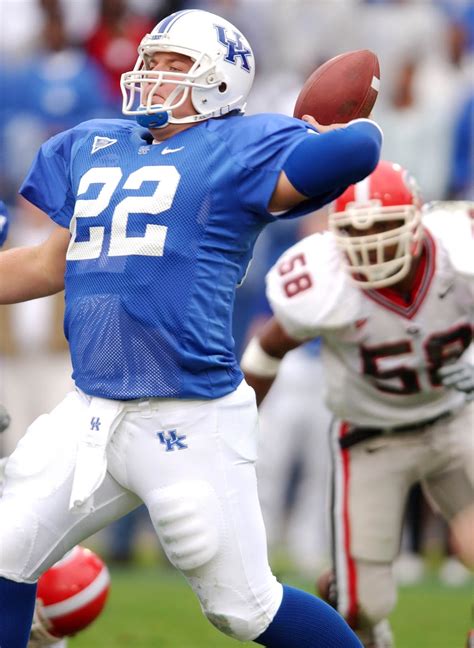
The University of Kentucky inducted Lorenzen into its Athletics Hall of Fame in 2015. By then, most of his passing records had been standing for over a decade. Career passing yards: 10,354. Career completions: 862. Career attempts: 1,514. Total offensive yards: 10,637. All school records at the time of his death.
Kentucky football hasn’t been an easy program to love over the decades. The Wildcats have lived in the shadow of the basketball program, have had stretches of real organizational dysfunction, and rarely make noise in the national conversation. Lorenzen gave the program a player worth talking about for four straight years despite the chaos around him. That’s a specific kind of value that box scores don’t really capture.
Mitch Barnhart, Kentucky’s athletic director, put out a statement after Lorenzen died calling him “a true Wildcat” whose love for the university was plain well after his playing days ended. That language – love for the university – isn’t the kind of thing athletic directors say reflexively. With Lorenzen, it was just accurate.
The Weight of the Legacy
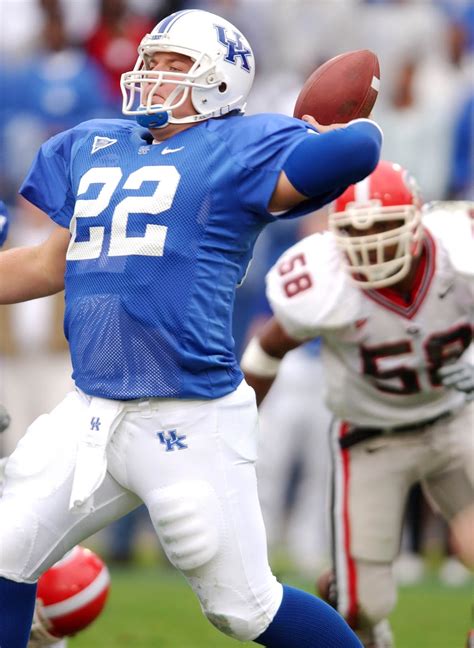
Lorenzen is survived by his two children, Taylar and Tayden. His father Joe, who lost his morning phone calls – ten minutes to seven, every day, just to hear each other’s voices – has said that nothing since has filled that gap. Joe plays golf to occupy his mind. He plays Candy Crush. Neither works particularly well.
The football achievements are real and they’re worth listing: Kentucky records that stood for years, a Super Bowl ring from one of the greatest upsets in the game’s history, an indoor football MVP season where he threw 81 touchdowns, a career that lasted in some form until his mid-30s because he refused to stop. The Jared Lorenzen Project reached people dealing with obesity who had never had someone in public life talk about it the way he did – not as a personal failing, but as a fight, ongoing, imperfect, worth having.
He was 38. He weighed more than 500 pounds. He had a Super Bowl ring and a father who counted on hearing his voice every morning. He had nicknames that made people laugh and a cannon arm that made people stare. He was the heaviest quarterback to ever play in the NFL, the most prolific passer in Kentucky history, and one of the more unlikely people to own a championship ring.
None of those things fully explain why his death hit so hard. What it actually was, I think, is simpler: he was the kind of person who made the people around him feel better about their own lives, and those people knew it while he was alive, which is rarer than it sounds.
Comments