
George Blanda Football: The Career, the Records, and the 1970 Season Nobody Has Ever Matched
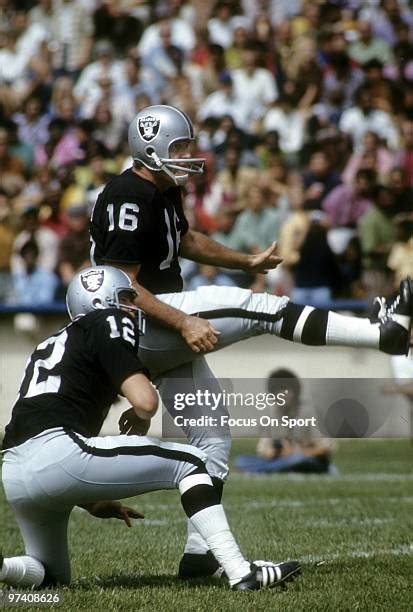
George Blanda was 43 years old, sitting on the Oakland Raiders bench as a backup, when he put together one of the most absurd five-week stretches in professional football history. Four wins. One tie. All of them decided in the final seconds. All of them on his arm or his foot. The Raiders announcer Bill King, losing his composure on air, screamed that Blanda had just been elected “King of the World.” By then, Blanda had already been playing pro football for 21 years.
He would play five more.
Youngwood, Pennsylvania, and the Twelfth Round
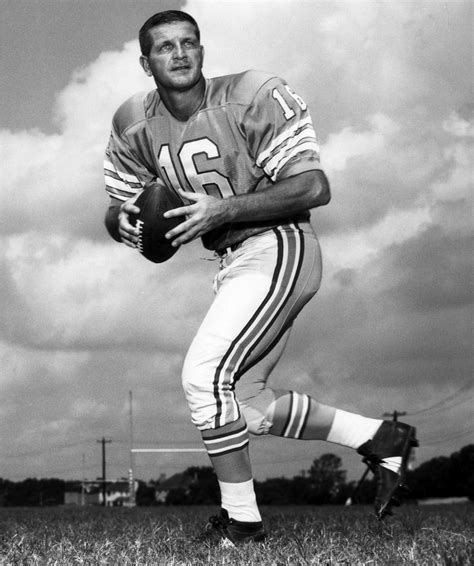
Blanda was born September 17, 1927, in Youngwood, a working-class borough about 25 miles southeast of Pittsburgh. It was coal and steel country, the kind of place where you either left on a football scholarship or didn’t leave at all. He left on one – sort of. His college numbers at the University of Kentucky were not impressive by any standard. In his two years as starting quarterback, he completed 49.6 percent of his passes for 1,451 yards and 12 touchdowns. He said himself he didn’t think he’d played well enough to go pro.
The Chicago Bears disagreed, taking him in the 12th round of the 1949 NFL Draft, 119th overall. George Halas signed him for $6,000 per year with a $600 signing bonus. For context, that’s what a mid-tier Bears contract looked like in 1949 – not a lot, not an insult. Blanda came in as a kicker and backup quarterback, and for a while that’s mostly what he stayed.
One thing worth knowing about his Kentucky years: he played under Bear Bryant, who arrived for Blanda’s sophomore season after the Wildcats went 1–9 in 1945. The program went 20–9–2 over the next three seasons. Bryant later called Blanda one of the most versatile players he’d ever coached. That word – versatile – would follow Blanda for the next 30 years.
Ten Years in Chicago: The Long Education
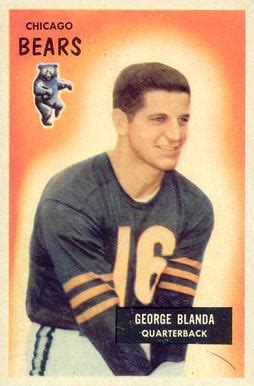
His Bears career is the chapter most people skip, which is a mistake. It took Blanda until his fifth season to become a full-time starter. In 1953, when Halas finally handed him the job, he led the entire NFL in pass attempts (362) and completions (169) – though he also threw 23 interceptions against 14 touchdowns, and the Bears finished 3–8–1. He was a starter on a losing team, which is its own education.
An injury in 1954 set him back. After that, Halas kept sliding him toward kicker-only, and Blanda kept resisting. The friction between them ran for years. Halas would bump his salary in small increments to keep him from jumping to the Canadian Football League – Blanda came close to signing with Hamilton in the early 1950s before Halas opened the books just enough. By 1958, the dispute had calcified: Halas wanted a kicker. Blanda wanted to play quarterback. He retired rather than accept the reduction.
During those 10 Chicago seasons, he passed for 5,946 yards and 44 touchdowns, kicked 88 field goals, and converted 247 extra points. None of those numbers suggest a future Hall of Famer. That came later, and elsewhere.
The AFL Saves His Career
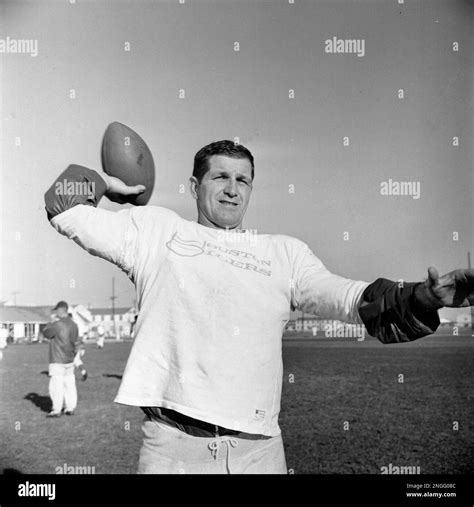
He sat out 1959 completely. Then the American Football League launched, and the Houston Oilers called.
What happened next is genuinely strange if you look at the numbers. In Chicago, Blanda had thrown roughly equal touchdowns and interceptions his entire career – the kind of ratio that gets quarterbacks benched, not celebrated. In Houston, playing in a league built around the pass, everything shifted. In 1960 he threw for 2,413 yards and 24 touchdowns against 22 interceptions – the first time in his pro career he’d finished a season with more TDs than picks.
Then came 1961. Blanda threw 36 touchdown passes. He led the AFL in passing yards (3,330). The Oilers won their second consecutive AFL championship. That 36-touchdown record stood as a professional football mark for 23 years, until Dan Marino threw 48 in 1984. Y.A. Tittle tied it in 1963, but nobody broke it until Marino.
Over seven seasons in Houston he finished as the team’s leading passer and scorer every single year. He still holds Titans franchise records for most extra points (299), most touchdown passes in a season (36), and most touchdown passes in a single game (7). The 7-TD game is a detail that tends to get buried under the 1970 story, but it happened.
The Oilers eventually decided he was done after the 1966 season. He was 39. The Raiders thought differently.
Oakland: The Last Act Begins
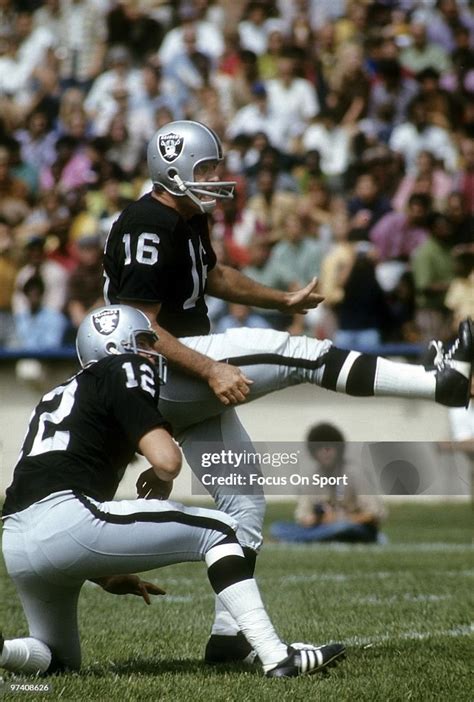
John Madden’s Raiders signed Blanda in 1967 primarily as a kicker and secondary insurance at quarterback behind Daryle Lamonica. In his first Raiders season, Blanda led the entire AFL in scoring with 116 points. The Raiders won the AFL Championship that year and went to Super Bowl II, losing to the Green Bay Packers 33–14. Blanda kicked four field goals in a regular-season win over the Oilers, his former team, during a stretch where Oakland beat Houston twice in three weeks.
For the next two years he was reliable and largely invisible – exactly what a backup and specialist is supposed to be. He turned 43 before the 1970 season started. The Raiders actually cut him during the preseason. They re-signed him when injuries created need. It is genuinely hard to explain what happened next.
Five Games in Five Weeks: The 1970 Streak
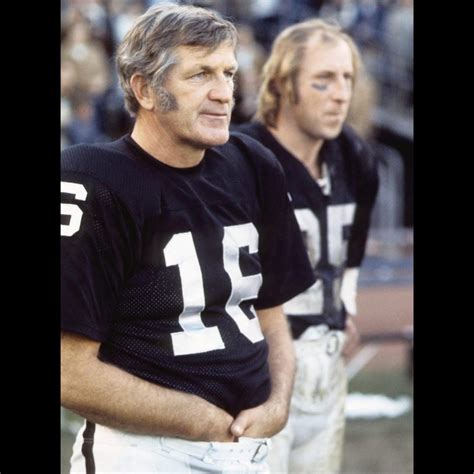
October 25, 1970. Oakland vs. Pittsburgh. Lamonica got hurt. Blanda came in and threw three touchdown passes. The Raiders won 31–14. The sports press noted it. Nobody called it the beginning of anything.
November 1. Oakland vs. Kansas City, the defending Super Bowl champions. The Raiders trailed with three seconds left. Blanda came on for a field goal attempt from 48 yards and made it. Tie, 17–17. Kansas City came into that game as the best team in the AFC West.
November 8. Cleveland Browns. Blanda entered with the Raiders trailing and, in the final 96 seconds, threw a scoring pass and then hit a 52-yard field goal. Oakland won. The 52-yarder was not a chip shot by 1970 standards – the average successful field goal that season was around 28 yards.
November 15. Denver Broncos. Blanda threw the game-winning touchdown.
November 22. San Diego Chargers. He kicked a 16-yard field goal with eight seconds left. Raiders 20, Chargers 17. By this point, as the Bay Area News Group later documented from Oakland Tribune archives, “the miracle worker story angle was getting nearly as old as Blanda himself.”
The Raiders went 4–0–1 across those five games. Blanda appeared on the covers of Sports Illustrated, Time, and Newsweek – three major magazine covers in five weeks, all for the same 43-year-old backup. The Associated Press named him Male Athlete of the Year. He won the Bert Bell Award. None of this is what usually happens to a kicker-quarterback coming off the bench in midseason.
The streak ended at the AFC Championship game in January 1971, when Lamonica was knocked out again by Bubba Smith and Blanda relieved him. He completed 17 of 32 passes for 217 yards and two touchdowns – not bad – but threw three interceptions late, and the Colts won 27–17. That game made him the oldest quarterback to play in a professional football championship. He was 43 years and 118 days old.
What the Career Statistics Actually Show
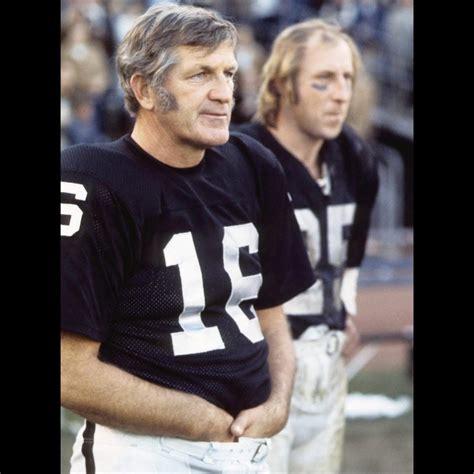
When Blanda retired before the 1976 season – just a month short of his 49th birthday – he held records in most seasons played (26), most games played (340), most career points (2,002), most extra points made (943 of 959 attempted), and most field goals (335 of 638 attempted). He had thrown for 26,920 yards and 236 touchdowns across his career.
Most of those records have since been broken. Jerry Rice passed 2,002 career points in 2000. Adam Vinatieri surpassed his games-played record in 2004. Morten Andersen broke his field goal record in 1983. The passing numbers were never elite to begin with – he threw more interceptions than touchdowns in many seasons, and his career touchdown-to-interception ratio finished at 236 to 277. That’s not a Hall of Fame passing number by any modern measure.
Two records still stand untouched: most career extra points made (943) and most career extra points attempted (959). Given that modern NFL kickers rarely attempt 959 extra points in a decade, those may stand indefinitely. He also remains the oldest player in NFL history, full stop.
What’s odd – and I think underappreciated – is that Blanda’s Hall of Fame case is almost impossible to make on conventional statistical grounds. His passing numbers don’t hold up, his kicking accuracy was mediocre by modern standards (335 of 638 field goals is 52.5 percent, a number that would end any contemporary kicker’s career), and he won exactly zero Super Bowls. His case rests almost entirely on longevity, the 1970 streak, and the AFL titles in 1960 and 1961. The voters in Canton made the right call in 1981 – but the reasoning is genuinely complicated if you try to map it onto current metrics.
The Dual Role: Quarterback and Kicker
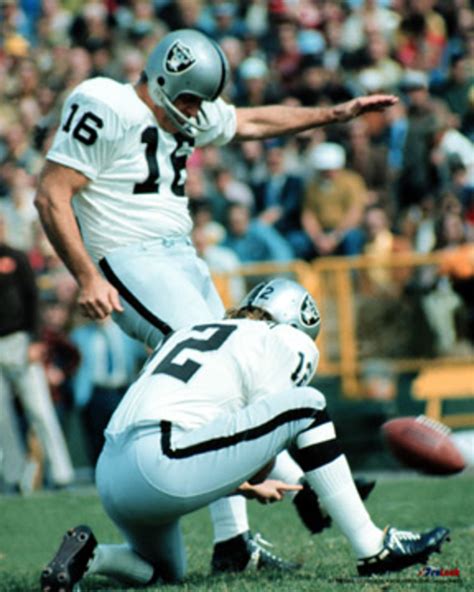
Modern NFL teams carry separate players for every specialized role. The idea of the same man throwing a touchdown pass and then kicking the extra point is foreign to how the game is currently organized. But even in Blanda’s era, the quarterback-kicker combination was unusual. Most teams had separated those duties by the mid-1950s. Blanda kept doing both through 1975.
At the Raiders, his role had shifted: Madden used Lamonica as the starter and Blanda primarily as the kicker, with the understanding that he could step in. That arrangement worked because Blanda had genuinely not declined as a passer. He could still read a defense, hit open receivers, and manage a game – at 43, at 44, at 45. His arm had shortened but his processing hadn’t.
The argument Halas made in 1958 – that Blanda should just kick – was probably reasonable from a pure efficiency standpoint. Halas had other quarterbacks. What Halas missed was that Blanda’s value was never separable from his willingness to play both roles, and that forcing him into one was the thing that drove him out the door to a league where he became the best quarterback for two straight years.
The Hall of Fame, and What Came After
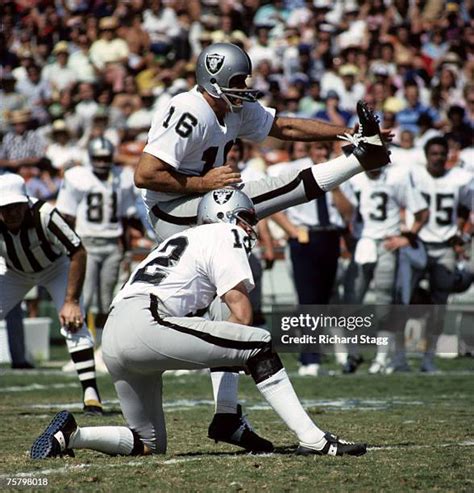
Blanda was inducted into the Pro Football Hall of Fame in 1981, five years after he retired. He was selected as a player, not specifically as a kicker or as a quarterback – a distinction that matters because it reflects how Canton evaluated his full contribution rather than forcing him into a single positional box.
He lived in Alameda, California – the East Bay city adjacent to Oakland – after his playing days. He died there on September 27, 2010, at 83. The date was, by coincidence, the same as his birthday on the calendar – he was born September 17, died September 27. He had been dealing with health issues in his final years.
The obituaries focused almost entirely on 1970. That’s understandable – those five weeks are the best-compressed version of everything Blanda represented. But they undersell the full strangeness of a career that stretched from the Truman administration to the Ford administration, from the single-wing era to Monday Night Football, from a $6,000 rookie contract to a professional landscape he’d outlasted by about a decade.
He played in four different decades. John Carney and Jeff Feagles are the only other players to do that. He was the backup quarterback for a team that went to the AFC Championship when he was 43. He is still, as of today, the oldest person to appear in an NFL game.
The 1961 record, 36 touchdown passes in a season, stood for 23 years. George Halas told him he was finished as a quarterback in 1958.
Comments