
Fred Taylor – The Jacksonville Jaguar Who Still Doesn’t Have a Hall of Fame Bust
From Pahokee to the Draft Board
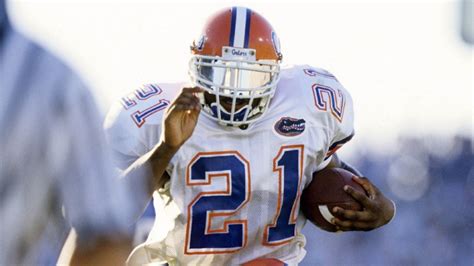
Pahokee, Florida sits on the eastern shore of Lake Okeechobee, about 60 miles west of Palm Beach. The town has roughly 6,000 residents, no major highways running through it, and more NFL players per capita than just about any place in the country. Fred Taylor was one of them.
He was born there on January 27, 1976. His mother was 15 at the time, so his grandmother, Rosetta Lusane, raised him. Taylor has said that everything he is, he owes to her – and that she kept discipline with a switch from a tree when he needed it. That’s not background color. It’s the actual explanation for why a kid from a town with almost nothing made it to the ninth overall pick in the NFL Draft.
At Glades Central High School in Belle Glade, Taylor started as a defensive end. His coach, Rick Casko, moved him to running back during his junior year, and the switch worked in ways nobody fully anticipated. By his senior season in 1993, he’d run for 1,722 yards and 22 touchdowns. In one game against Cardinal Newman, he carried the ball seven times for 134 yards and two scores – and that was the opener. He later had a 301-yard, five-touchdown performance in a single game.
SuperPrep ranked him the eighth-best high school running back in the nation. The Florida High School Athletic Association eventually named him one of the state’s 100 Greatest Players of the First 100 Years, though that designation came a decade after he’d left.
Four Years at Florida Under Spurrier
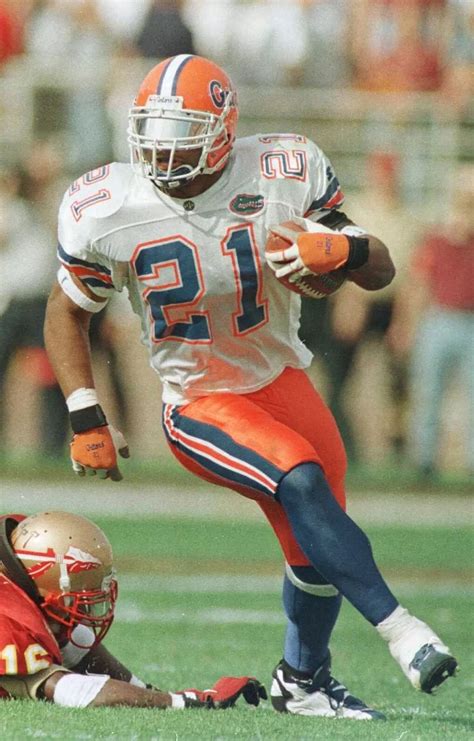
Steve Spurrier recruited Taylor knowing exactly what he was getting. “Fred Taylor was obviously the big recruit coming out of high school,” Spurrier told the Orlando Sentinel in January 1997. “He had all the records, long runs, and touchdowns.” What Spurrier didn’t know was how much drama would come with him.
Taylor was suspended for the season opener of both his sophomore and junior years at Florida. Once for using a stolen credit card to buy pizza for freshman players. Another time for hiding a stolen book bag and throwing eggs on Halloween. Spurrier attended his disciplinary hearings both times. Taylor has called him a lifelong friend because of it.
On the field, the freshman version of Taylor was fast but too fancy. Spurrier said he was doing too much shaking. The coaches got his shoulder pads lower, added a power element to his game, and the numbers jumped. He ran for 873 yards and eight touchdowns as a freshman in 1994, then suffered a significant knee injury midway through his sophomore season in 1995 that cost him the back half of the year.
He came back. The Gators won the national championship in 1996 – a season Taylor played a full role in. As a senior in 1997, he earned first-team All-SEC and third-team All-American honors. He left Gainesville ranked third in school history with 3,792 total yards. Emmitt Smith was first with 2,262 rushing yards (a different era, fewer games), which gives you a sense of the company Taylor was keeping.
The Jacksonville Jaguars selected him ninth overall in the 1998 NFL Draft, in a pick that technically involved trading away Rob Johnson and future picks to Buffalo. The Jaguars were five years old at that point, had already made a conference championship game, and needed a workhorse back. They got one.
The Rookie Year That Set Expectations Too High
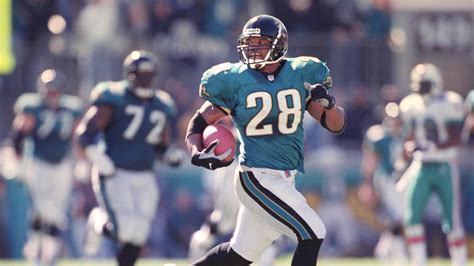
1,223 rushing yards. 14 touchdowns. PFWA All-Rookie Team. The Jaguars won 11 games.
The prior year, Jacksonville had ranked 18th in the NFL in rushing with 1,720 total yards as a team for the entire season. Taylor nearly matched that by himself as a rookie. Tom Coughlin, who drafted him, said the first thing that struck him about Taylor wasn’t the size or the speed – it was that he’d never talked to a player more forthright and honest. That impression clearly held; Coughlin kept giving him carries for the next decade.
The problem with a debut like that is it locks in expectations. From 1998 forward, any season where Taylor wasn’t dominant felt like a disappointment, even when injuries were the obvious explanation.
The Injuries and the Nickname Nobody Asked For
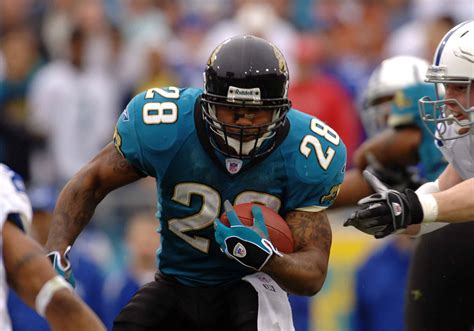
The media called him “Fragile Fred.” The nickname stuck because Taylor missed time in several seasons – hamstring issues, ankle problems, knee trouble. In 2000 he played just three games. In 2002, eight. Those gaps fed the narrative.
Here’s what gets lost in that narrative: Taylor still finished his career with 11,695 rushing yards and 4.6 yards per carry. That average is not a product of padding stats against soft competition in garbage time. He maintained it across 13 seasons and 153 games. For context, Marshall Faulk is in the Hall of Fame with a career average of 4.3. Curtis Martin is in the Hall of Fame with 4.0. Both played on better teams with more consistent offensive lines than Taylor ever had in Jacksonville.
The injury history is real. But the way it’s used to dismiss his career stats involves a kind of selective accounting that nobody applies to quarterbacks who missed time or receivers who played through nagging ailments. Taylor played in an era when running backs absorbed contact every single carry, behind an offensive line that wasn’t always protecting him well, and he still accumulated numbers that rank 18th all-time.
The 2007 Season, Age 31
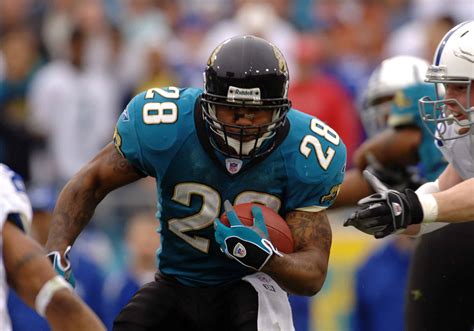
His best-recognized season came when he was 31 years old. Second-team All-Pro. Pro Bowl. He ran for 1,202 yards on 223 carries, averaging 5.4 per rush – better than his career average – with an offensive line that wasn’t considered elite.
Running backs almost never have their career year at 31. It’s not how the position works. Taylor’s 2007 season is either proof that he was remarkably well-preserved or proof that earlier injuries had robbed him of years he would have otherwise dominated. Probably both.
The Pro Bowl that year was his first and only. That single selection is one of the main arguments used against his Hall of Fame candidacy. It’s worth thinking about what “one Pro Bowl” actually means for a back who played through injuries, played for a mid-level franchise, and shared the field in an era when LaDainian Tomlinson and Shaun Alexander were getting most of the attention and the votes.
Eleven Years in Jacksonville, Then New England
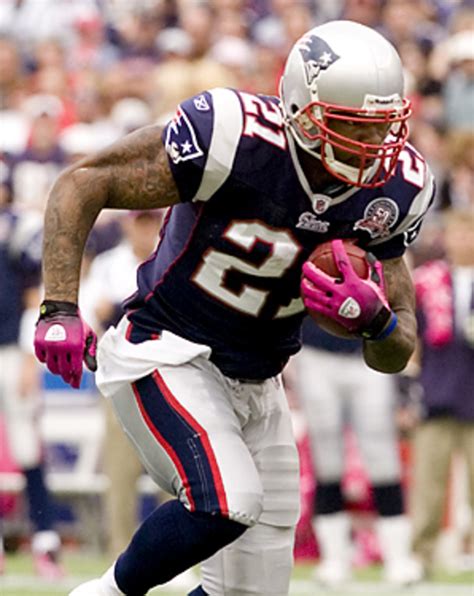
The Jaguars released Taylor in February 2009 after 11 seasons. The New England Patriots signed him five weeks later. He played two seasons in New England – contributing as a change-of-pace back, not a featured runner – and his last game came in 2010.
On September 2, 2011, he signed a one-day contract with the Jaguars. The next day, he retired. It was a ceremonial gesture, but not an empty one. He’d set 42 franchise records in Jacksonville, accumulated 11,271 yards with the team (more than 3,000 ahead of whoever was second at the time), and is still the all-time leading rusher in franchise history. Retiring as a Jaguar mattered to him, and the organization made it happen.
He was inducted into the Pride of the Jaguars – the team’s franchise honor program – on September 30, 2012.
Career Numbers in Context
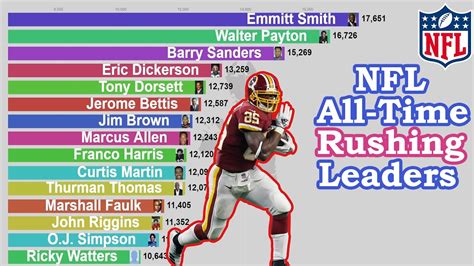
11,695 career rushing yards puts Taylor 18th all-time in NFL history. He scored 66 rushing touchdowns and 74 total. He caught 290 passes for 2,384 yards. His 4.6 yards-per-carry average over 2,534 attempts is the kind of efficiency number that holds up better the longer you look at it.
The comparison table that keeps coming up in Hall of Fame debates lines him against backs like Ricky Watters (8,978 yards, inducted), Jerome Bettis (13,662 yards, inducted), and Clinton Portis (9,923 yards, not inducted). The yards put Taylor clearly above Watters and Portis. He’s below Bettis, who played 16 seasons on teams with better supporting casts and won a Super Bowl. That gap matters.
What doesn’t have a clean answer is how you weigh efficiency against volume, or production against team success, when a player spent his prime years on a franchise that never won a championship and never consistently surrounded him with weapons. Taylor’s teams were decent, sometimes good, rarely great. He still put up numbers that most Hall of Fame runners never reached.
The Hall of Fame Situation
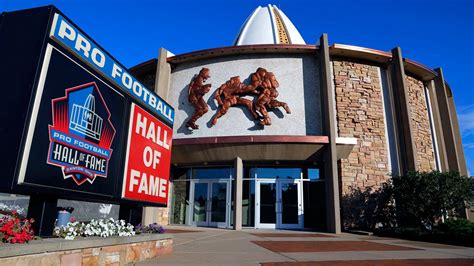
Taylor became eligible for the Hall of Fame in 2017 for the Class of 2018. As of 2026, he’s been a semifinalist seven consecutive years, a finalist in 2024 and 2025, and he didn’t advance past the semifinalist stage for the 2026 class.
The 2026 finalists included Drew Brees, Larry Fitzgerald, Luke Kuechly, Eli Manning, Frank Gore, Torry Holt, Willie Anderson, Terrell Suggs, and Jahri Evans. Taylor wasn’t among them.
Brees and Fitzgerald will almost certainly get in immediately. The competition for the remaining spots is what keeps bumping Taylor. Frank Gore ran for 16,000 yards – the third-most in NFL history – and he’s not in yet either, which tells you something about how crowded the backfield conversation has become for the Hall’s selectors.
The Jacksonville factor is real, though nobody says it plainly. The Jaguars had exactly one Hall of Famer before 2026 – offensive tackle Tony Boselli, inducted in 2022 after 16 years of eligibility. One player from an entire franchise’s history. That’s not a reflection of player quality. It’s a reflection of how the committee weights small-market teams with short histories.
Taylor has said he’s grateful to even be considered, that each year is an opportunity. That’s the right answer to give publicly. Whether it’s how he actually feels after seven years of semifinalist announcements is another matter, and it’s hard to imagine it doesn’t wear on him.
The Pivot, Sporting Jacksonville, and What Comes Next
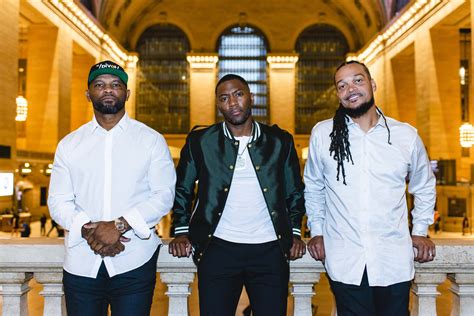
Taylor co-hosted The Pivot Podcast alongside Channing Crowder and Ryan Clark. The show received an Emmy nomination, which is not a sentence you’d have predicted from any of those three when they were playing. The podcast covered sports and life with more candor than most NFL-adjacent media, and it built a real audience.
He’s also a co-founder of Pivot Energy, a drink brand tied to the podcast’s identity, and he owns Sporting Jacksonville, a soccer club in northeast Florida. The business portfolio is genuine, not just a collection of names attached to his.
His son Kelvin Taylor followed him to the University of Florida, played running back for the Gators, and pursued a professional football career afterward. Two generations of Florida Gators running backs from Pahokee – which is either a remarkable coincidence or evidence that whatever Rosetta Lusane was doing raising Fred, it had a long reach.
Taylor is married to Andrea Taylor. They have five children: Kelvin, Braylon, Nataajah, Austin, and Inari. His identity as a father – he’s been open about what becoming a girl dad specifically did for him as a person – is something he talks about more readily now than most of his football career.
His career earnings during his playing days came to roughly $41 million, though he lost a significant portion through fraud committed by a former agent. His current net worth is estimated between $12 million and $15 million by most sources, with income now coming from the podcast, business ventures, and media work. Those estimates are always imprecise for former athletes, but the range is consistent across multiple reporting sources.
There’s a version of the Fred Taylor story that ends with the Hall of Fame bust and a clean bow on everything. That version hasn’t happened yet, and the 2026 snub suggests it may take longer than his supporters expect. What’s already true is that he ran for nearly 12,000 yards behind offensive lines that ranged from adequate to mediocre, spent 11 years defining a franchise that still hasn’t replaced what he gave them, survived a nickname designed to minimize him, and built an entirely different career after the cleats came off. That’s not nothing, with or without Canton.
Comments