
Lyle Alzado, NFL Defensive End: Career, Steroids, and Death at 43
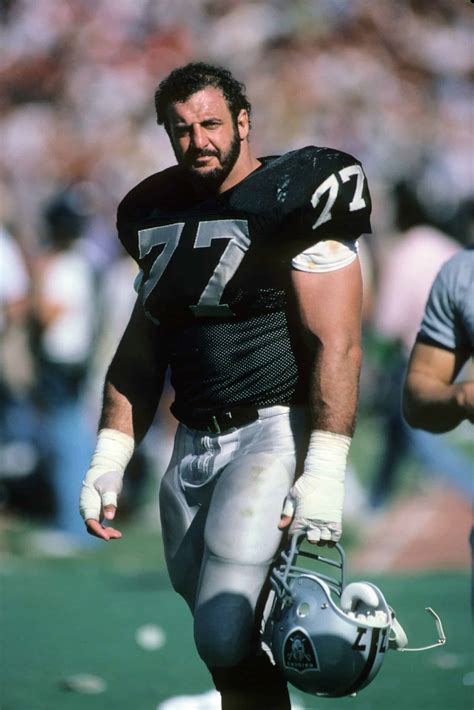
Lyle Alzado played 196 games in the NFL and registered 112 career sacks. He won a Super Bowl, made two Pro Bowls, earned First-Team All-Pro honors twice, and was named the AFC Defensive Player of the Year in 1977. Then, in the summer of 1991, he appeared on the cover of Sports Illustrated gaunt and bandana-wrapped and told the world he had been lying for two decades.
He died ten months later. He was 43.
Brooklyn, Yankton, and an Accidental Discovery
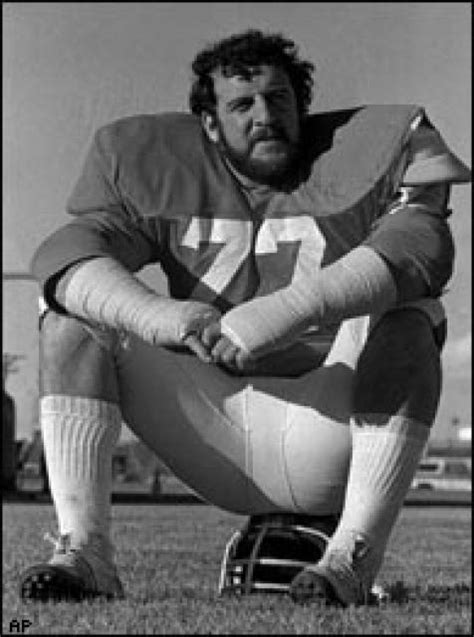
Alzado was born on April 3, 1949, in Brooklyn, New York. His father was an alcoholic who was largely absent; his mother worked constantly. His brother Peter later said the violence people saw from Lyle on the football field came directly from those years – that it “was not real stuff,” meaning it was survival translated into sport.
He played at Lawrence High School in Cedarhurst, New York, and then ended up at Yankton College, a small NAIA school in South Dakota that nobody in NFL circles had heard of. The way a Denver Broncos scout found him is one of those stories that feels too convenient but is apparently true: the scout’s car broke down in Montana, and he killed time watching a film of Montana Tech playing Yankton. Alzado was on that tape. Denver took him in the fourth round of the 1971 draft, 79th overall.
He showed up to training camp as a backup. The starter, Pete Duranko, tore his knee in the preseason. Alzado stepped in, recorded 8 sacks and 55 tackles as a rookie, and never gave the position back.
The Denver Years and the Orange Crush
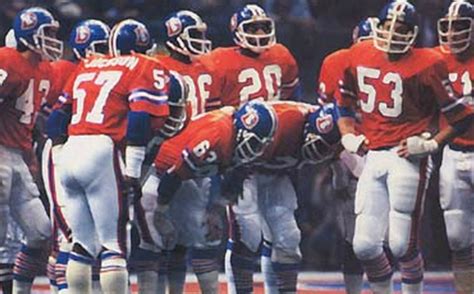
From 1971 through 1978, Alzado anchored the left side of Denver’s defensive line. By 1972 he was leading the team with 10.5 sacks and 91 tackles. In 1974 he put together seven consecutive games with at least one sack. In 1977 he was named AFC Defensive Player of the Year by both the NFL Players Association and the Kansas City 101 Club, made the Pro Bowl, and helped carry Denver to Super Bowl XII against Dallas. The Broncos lost 27-10, but that defense – the Orange Crush, built around Alzado, linebacker Randy Gradishar, and safety Billy Thompson – was legitimately one of the best units of that decade.
He also won the Byron Whizzer White Award that year for community service, which tends to get dropped from the story. He visited schools. He worked with kids. His teammate Gradishar remembered him doing charity work “in the fast lane” the same way he did everything else.
By 1979, the relationship with Denver had soured. Alzado’s intensity had become harder to manage off the field, and when he threatened to pursue a boxing career if the team wouldn’t renegotiate his contract, the Broncos traded him to Cleveland. The Browns paid him. He repaid them with three years of injuries and inconsistency, though he still made First-Team All-Pro in 1980.
The Raiders and Super Bowl XVIII
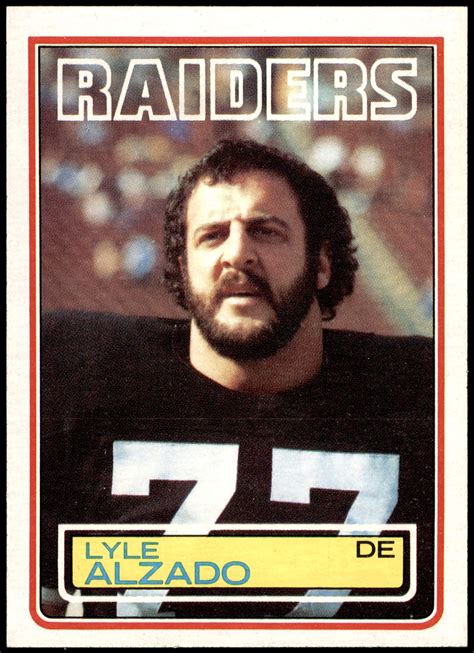
The Los Angeles Raiders signed him in 1982. He was 33 years old and had missed significant time to injuries in Cleveland. What happened next probably shouldn’t have been possible.
He won NFL Comeback Player of the Year in 1982. The following January, the Raiders went to Super Bowl XVIII and beat the Washington Redskins 38-9 – still the largest margin of victory in Super Bowl history at that point. Alzado played alongside Howie Long and Ted Hendricks on a defensive line that was arguably the best in football that season. His career sack total would eventually reach 112, with 64.5 of those coming during his Denver years alone.
The Raiders were the right team for him. That roster collected players who didn’t fit elsewhere, and owner Al Davis liked his players mean. Alzado had been mean since Brooklyn. He played through the 1985 season, retired, and that should have been the end.
What the Steroids Did
Alzado said he started taking anabolic steroids in 1969, his first year at Yankton. He never stopped. At the peak of his use he estimated he was spending $30,000 a year on anabolic steroids and human growth hormone, buying them at gyms across the country. He took them through his entire pro career, through his failed comeback attempt in 1990, and kept taking them after that.
The drugs made him better on the field, he said. They also made him someone most people didn’t want to be around. He described walking into restaurants and immediately scanning the room for threats. He said he “needed to play a game every day” just to burn off the aggression. He went through four marriages. He attributed at least two of those divorces directly to his behavior while on steroids.
In his Sports Illustrated confession in July 1991 – the issue with the headline “I Lied” – he was specific about the timeline and the dosages in a way that left no wiggle room. He hadn’t used steroids “occasionally” or “recreationally.” He had used them constantly, as an athlete uses training equipment, for over twenty years.
He also claimed that 90 percent of NFL players were doing the same thing. That claim was never verified, and the NFL pushed back on it. But nobody who covered the league seriously in the 1970s and ’80s was particularly shocked by the number.
The Brain Cancer Diagnosis
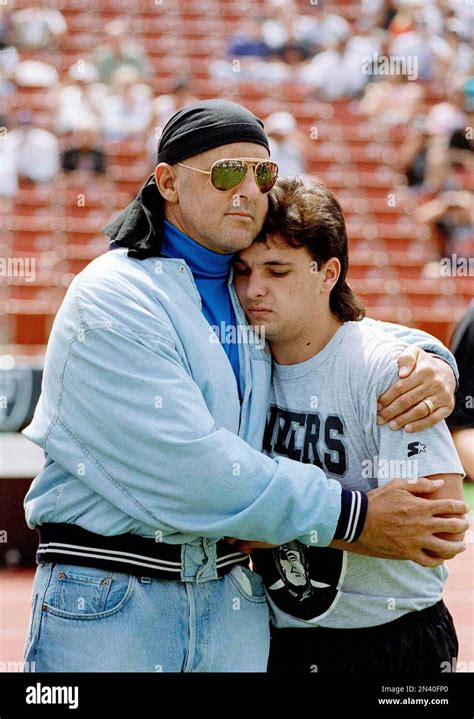
In April 1991, about a month after his fourth marriage to Kathy Murray, Alzado was diagnosed with T-cell central nervous system lymphoma. This is a rare cancer of the immune system that affects the brain, and its causes are not fully understood. A compromised immune system is a known risk factor. Whether anabolic steroids compromise the immune system in ways that could contribute to this specific cancer is not established.
His attending physician, Dr. Thomas DeLoughery at Oregon Health Sciences University, said plainly that there were no known cases of steroids causing the type of large brain tumor Alzado had. A sports medicine columnist at the Baltimore Sun wrote that summer that no cancer expert he’d spoken with believed steroid abuse could cause a malignant brain tumor – liver problems and infertility, yes, but not this. Alzado knew what the doctors were saying. He didn’t accept it. He remained convinced the drugs had killed him, and he said so repeatedly and publicly until he couldn’t anymore.
That contradiction – Alzado’s certainty against the medical record’s silence – is the part of the story that doesn’t resolve cleanly, which is probably why it keeps getting revisited.
The Fight and the Confession
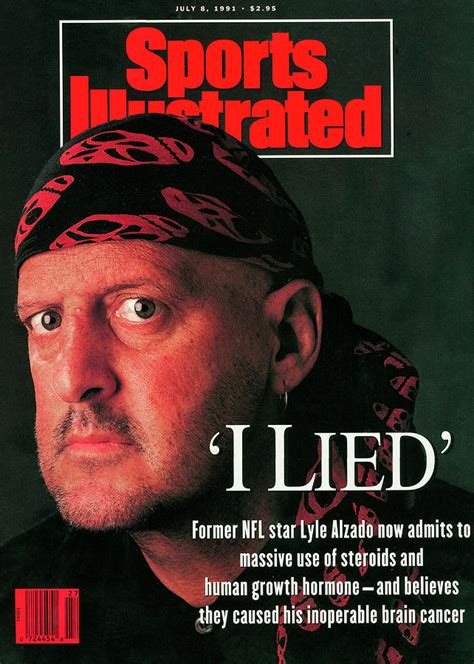
The Sports Illustrated piece ran in July 1991, three months after his diagnosis. He was photographed hairless and hollow-faced, a bandana around his head. The article was blunt: he had lied for years about steroid use, he had spent most of his adult life chemically altered, and he believed it had led directly to his death sentence.
He went through aggressive chemotherapy at Oregon Health Sciences University – a treatment his care team described as a blood-brain barrier approach, designed to get chemotherapy agents past the protective membrane surrounding the brain. He contracted pneumonia as a complication and was hospitalized. He was discharged in late April 1992.
On May 14, 1992, he died at his home in Lake Oswego, Oregon, a suburb of Portland. He was 43. His wife Kathy was with him. Dr. DeLoughery later said he had kept all his faculties and remained engaged until the end, watching the NBA playoffs from home in his final weeks.
His former Denver teammate Craig Morton said afterward that what Alzado most wanted to be remembered for was not the Super Bowl ring or the Pro Bowls but his public campaign against steroid use among young athletes. That’s a hard legacy to evaluate. His confession came too late to affect the players who trained alongside him. Whether it reached anyone younger is impossible to measure.
The Acting Career, the Ali Fight, and the Restaurant
In June 1979, while still with the Broncos, Alzado worked out at the Friars Club in New York to prepare for an eight-round exhibition boxing match against Muhammad Ali. It happened at Mile High Stadium in Denver on July 14. Ali won on points. Alzado lasted all eight rounds, which says something about his physical conditioning and probably something about Ali’s approach to exhibition bouts.
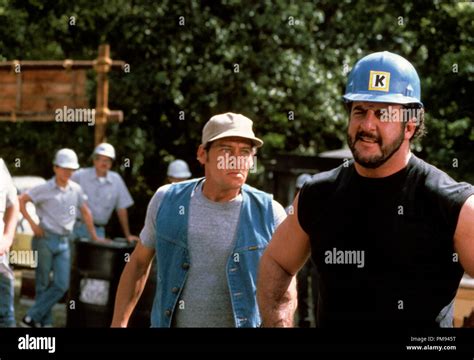
After retiring from football, he did television and film work. His most recognizable role was in Ernest Goes to Camp in 1987, where he played a heavy named Bronk. He appeared in Destroyer in 1988 and in the TV movie Mike Hammer: Murder Takes All. He also did a brief stint as a color analyst for NBC’s NFL coverage in the 1988 and 1989 seasons. In February 1990 he opened a restaurant called Alzado’s in West Hollywood, with Gary Coleman attending the launch. It closed not long after.
None of it was the career he wanted. He had said publicly that after football he felt lost in a way the drugs had previously masked.
Career Numbers and the Hall of Fame Question
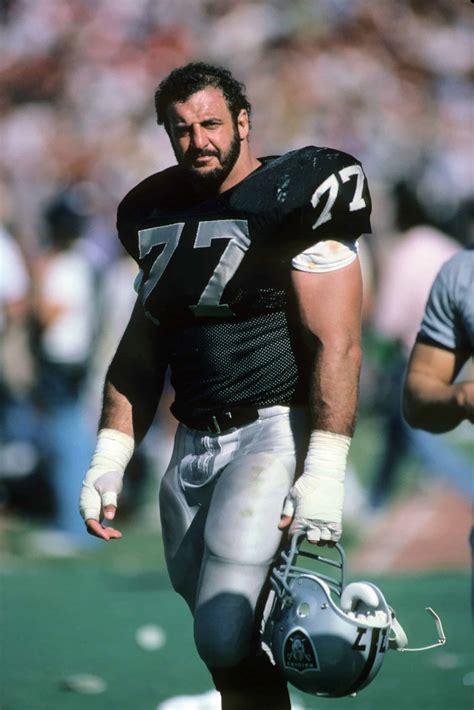
Alzado finished with 112 career sacks, 20 fumble recoveries, 3 safeties, and 1 defensive touchdown across 196 games. He was 6-foot-3 and 255 pounds. His Pro Football Reference Hall of Fame monitor score is 52.68. The average HOF defensive end scores 102.38. He has never been elected.
The sack total is real and it’s significant – 112 over 15 seasons is not borderline production. But he missed an entire season in 1976 with a knee injury, struggled with injuries through his Cleveland years, and came back as a situational player in Los Angeles rather than a true starter. The statistical case is incomplete. The steroid admission closed whatever door was left open.
Some defensive ends of his era with comparable or lesser production have plaques in Canton. Alzado does not. Whether that’s about the numbers or the narrative is a fair argument to have, and there’s no clean answer.
What He Left Behind
The NFL implemented its anabolic steroid testing policy in 1987, two years after Alzado played his last regular-season game. Whether the widespread steroid use of the 1970s and ’80s would have been addressed sooner without the cultural indifference of that era is speculation. What’s documented is that Alzado’s Sports Illustrated piece in 1991 became the most-cited piece of journalism in that conversation for years afterward, even after the medical claim at its center was disputed.
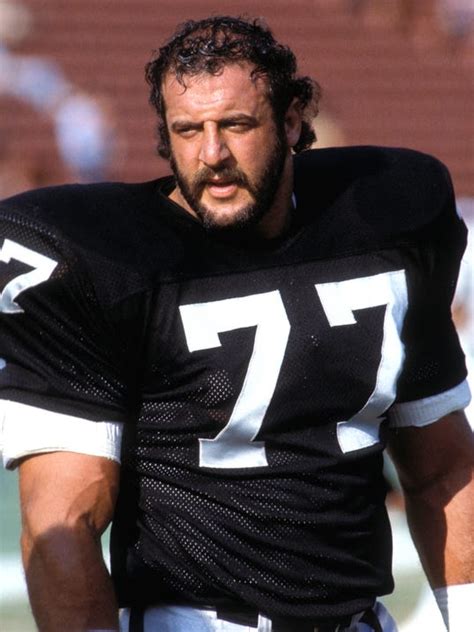
NFL Network ran an episode of A Football Life focused on Alzado. His son Justin, from his second marriage to Cindy, was born in 1984. His brother Peter has given interviews about their childhood. The Raiders retired no numbers during his era, so 77 is not officially his alone – but anyone who followed that defense knows whose jersey it was.
What gets me is that the story keeps being told as a cautionary tale about steroids when the medical link was never actually established – and yet Alzado himself believed it so completely that he spent his last year on earth making that argument publicly while dying. You can disagree with his conclusion and still respect what he was trying to do with it. Those two things aren’t in conflict.
Comments