
Randall Cobb’s Career With the Green Bay Packers: What He Did, What It Meant, and Why Fans Still Talk About It
Who Is Randall Cobb and Why Does He Matter to Packers Fans
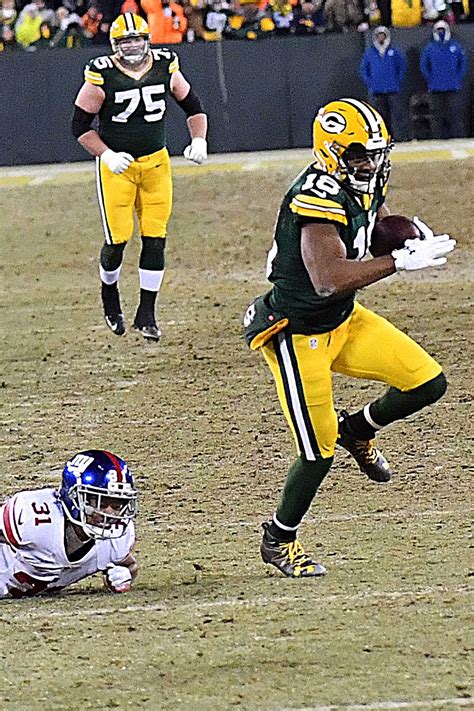
Randall Cobb was drafted 64th overall by Green Bay in 2011, a second-round pick out of Kentucky who measured 5-foot-10 and 192 pounds at a time when most teams were chasing taller boundary receivers. He was, at 20 years old, the first player born in the 1990s ever drafted into the NFL. He spent 10 of his 13 professional seasons in Green Bay, caught 532 passes in a Packers uniform, and retired in everything but official name as a studio analyst for ESPN’s SEC Network.
His career totals across all four teams – Green Bay, Dallas, Houston, and the Jets – came out to 630 receptions, 7,624 receiving yards, 54 receiving touchdowns, plus 364 rushing yards and two punt return scores. He played 166 regular-season games. One Pro Bowl, in 2014. No Super Bowl ring.
What makes him worth writing about isn’t just the numbers. Slot receivers don’t often get the attention their production earns them, and Cobb was among the best at the position during the early-to-mid 2010s. He also became something rarer in professional sports: a player who left a team, missed it badly, got traded back, and genuinely seemed happier for it.
Randall Cobb’s Stats With the Packers – By Season
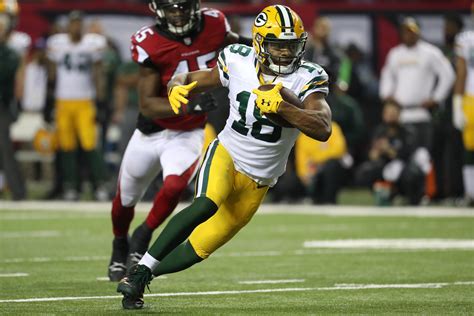
His first eight seasons in Green Bay produced 470 catches for 5,524 yards and 41 touchdowns across 105 regular-season games. That’s the chunk of his career most Packers fans know – the years alongside Aaron Rodgers when Cobb was one of the most dangerous third-down options in the NFC.
His 2014 season was the peak: 91 receptions, 1,287 yards, 12 touchdowns. He was voted to his only Pro Bowl. He was 24 years old, a playoff captain, and in a 55-14 win over Chicago that November he caught a one-handed diving 18-yard touchdown with 14 seconds left in the first half – Rodgers’ sixth TD pass of the night. He had a TD reception in six consecutive games, the first Green Bay player to do that since Sterling Sharpe in 1994.
The three years after that – 2016, 2017, 2018 – never matched it. He totaled 214 catches for 2,577 yards and 21 touchdowns over those three seasons combined, good production by most standards but noticeably down from what came before. Injuries played a role, though no single catastrophic one explains the drop fully. It’s one of the harder things to reconcile about his Green Bay run: what changed between 2015 and 2016 isn’t entirely clear even now.
After the Packers let his contract expire in 2019, he signed a one-year $5 million deal with Dallas and caught 55 passes for 828 yards and three scores. Then Houston for 2020, 37 catches in 10 games before a trade sent him to the Packers in July 2021 – a move reportedly pushed by Rodgers, who wanted his slot receiver back ahead of what would become another MVP season. Cobb played 12 games that year, caught 28 passes for 375 yards and five touchdowns before core muscle surgery ended his season. He returned for 2022, 34 catches and 417 yards. Then one more year with the Jets in 2023, five catches for 39 yards in 11 games.
The Moments That Defined His Time in Green Bay
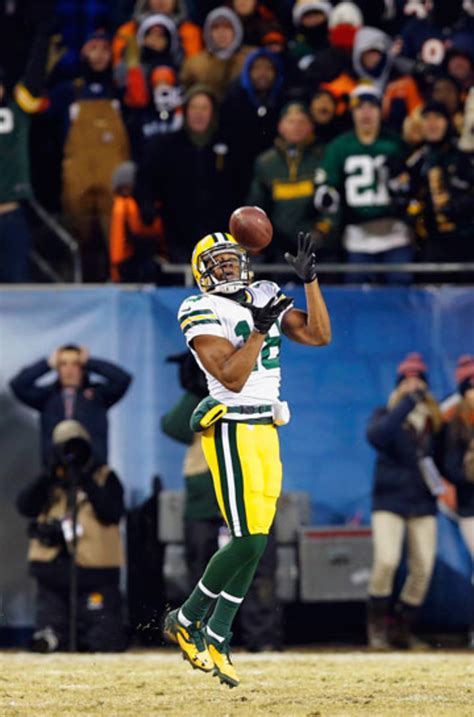
December 29, 2013. Soldier Field. The Packers trailing the Bears 28-27 with 38 seconds left, fourth-and-8 from the Chicago 48. Rodgers had been out earlier in the season with a broken collarbone. Cobb had been on injured reserve himself. Both came back for this game, which the Packers had to win to claim the NFC North title.
Rodgers avoided pressure and found Cobb deep for the 48-yard game-winning touchdown. Green Bay won 33-28. That play tends to come up in most conversations about what Cobb meant to those Packers teams – not just because of the stakes but because of how calmly both of them handled it.
Two and a half years later, in the 2016 NFC Wild Card game against the Giants, trailing 14-6 at halftime, Rodgers rolled right and launched a Hail Mary that Cobb caught for a 42-yard touchdown as time expired in the second half. The Packers won 38-13. Cobb finished with five catches for 116 yards and three scores that day.
His first career touch as a Packer was a 108-yard kickoff return for a touchdown. A franchise record, and a reminder that before he settled in as a pure slot receiver, he was one of the more dangerous returners in the league. His 25.88-yard career kickoff return average ranks fifth in Packers history.
There’s also the 2014 playoff game against Dallas – third-and-11, two minutes left, Cowboys needing a stop. Rodgers to Cobb for 13 yards. The Packers moved on. Cowboys fans still bring it up.
What Made Cobb So Effective as a Slot Receiver
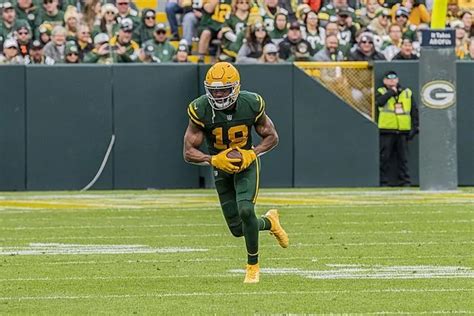
His numbers on third down over his career tell the story more cleanly than any highlight does. He made a career out of finding the right depth on his routes and sitting in zones before defenders could rotate. Aaron Rodgers, who was not generous with praise that could be taken to mean he needed a particular target, called Cobb “a dynamic player” when the trade back from Houston was announced in 2021 and said he’d specifically requested a true slot receiver that offseason because of what the position added to the offense.
In Green Bay’s 2022 win over New England – overtime, third-and-1, Cobb hauling in a bang-bang catch from Rodgers for 11 yards to get the Packers in field goal range – Allen Lazard called it “probably the biggest play of the game.” Five of Cobb’s 10 catches that season came on third down, four of them on scoring drives.
What made it work technically: he ran precise routes, had reliable hands, and could line up in the backfield when the situation asked for it. Over his eight original years in Green Bay he had 59 carries for 352 yards as a runner out of the slot or backfield. He was not fast in the way a deep threat is fast, but he was quick enough to create separation in short areas, and he was almost never dropped a catchable ball in a critical moment.
Bill Belichick, during a FOX pregame segment ahead of a 2021 Packers-Steelers game, was asked what trait separates good receivers from great ones. He said competitive toughness – specifically the willingness to fight through contact near the end zone. Cobb scored twice in that game, including one where he broke through a tackle a yard out. It was the kind of detail the film study crowd noticed, even if the box score just said “touchdown.”
The 2019 Departure – and What Cobb Said About It Later
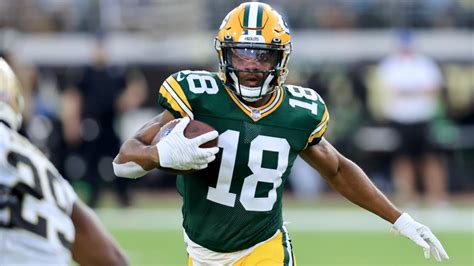
The Packers didn’t offer Cobb a contract after 2018. He had dealt with injuries that season and his production had slipped, but he’d also just finished his age-27 campaign – not the typical age to walk away from a receiver who’d caught 470 passes for your franchise.
In June 2024, five years after the fact, Cobb said publicly that he “would have taken anything” to stay in Green Bay. He said he didn’t know how his return to the locker room in 2021 was being perceived by teammates who hadn’t played with him before – that he’d felt he had to prove himself all over again to a roster that barely remembered his first eight years there.
What’s odd about the 2019 departure is that it clearly stung him more than the organization seemed to realize at the time. He went to Dallas, put up solid numbers, and then followed Rodgers to Houston, which followed Rodgers lobbying the Packers’ front office to trade for him ahead of 2021. The tears in the car at the Houston airport, his wife beside him, before boarding the flight back to Green Bay – that detail, which came from a Milwaukee Journal Sentinel piece at the time, didn’t read like a player who was ambivalent about where he belonged.
Randall Cobb’s Place in Packers History
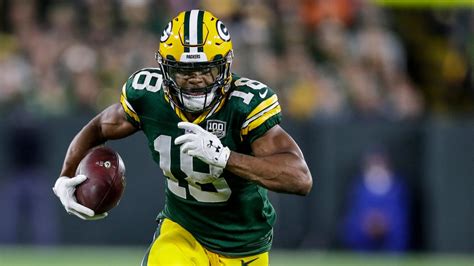
He’s fifth in franchise history with 532 career receptions in a Packers uniform – two more than Pro Football Hall of Famer James Lofton. He’s 11th in receiving yards with 6,316 and 10th in receiving touchdowns with 47. He’ll be eligible for the Packers Hall of Fame and, given those numbers and the decades of institutional goodwill, should be a straightforward selection.
His 89 career punt returns in Green Bay rank fifth in franchise history, behind Willie Wood (187), Antonio Chatman (110), Al Carmichael and Phillip Epps (both at 100).
The question of whether he belongs in the Pro Football Hall of Fame is a different one, and the answer is probably no – at least not on the first ballot and maybe not at all. One Pro Bowl, no championship, and a career that plateaued earlier than expected. The Packers Hall of Fame is the more realistic ceiling, and it’s a deserved one.
What he won’t get enough credit for is the leadership piece. He was voted a playoff captain in 2014 at 24 years old, which is not nothing on a team that had veterans like Jordy Nelson and James Jones around. When he came back in 2021 to a receiving corps that was suddenly very young – Adams left after 2021, Marquez Valdes-Scantling was gone, Equanimeous St. Brown was gone – Cobb became the elder in the room almost by default. He’d been through roster turnover before and didn’t treat it as chaos. “This isn’t easy. What we do is not easy,” he said in a 2022 camp interview, which is about as close to a philosophical statement as he typically offered to the press.
Life After Playing: SEC Network and What Comes Next
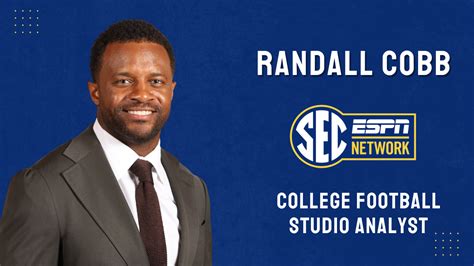
In the summer of 2024, Cobb joined ESPN as a studio analyst for the SEC Network. He hadn’t officially retired – his statement through ESPN’s press release was careful not to use that word – but joining a broadcasting operation in July ahead of a college football season is, practically speaking, a career pivot.
His 13 NFL seasons ended with a 630-7,624-54 receiving line, 909 targets, 364 rushing yards, and 2,829 return yards. He said at various points he remained open to playing if the right situation emerged. It hasn’t, and he’s 35 now.
There was a house fire at his Nashville home in 2022 that his family was lucky to survive. He thanked firefighters publicly and said they were lucky to be alive. It’s the kind of thing that tends to reorder priorities, and it probably colors how he talks about the end of his career – which he’s done with more equanimity than most players who spent a decade with one team and left on terms they didn’t choose.
He grew up in Maryville, Tennessee, played at Alcoa High School, went to Kentucky, and was viewed coming out of college as undersized and a projection at the NFL level. He proved that wrong across 166 games and four teams. The Packers were where it made the most sense, and that’s where most of the memories live.
Comments