
Bruce Arians: The NFL Coach Who Won a Super Bowl at 68
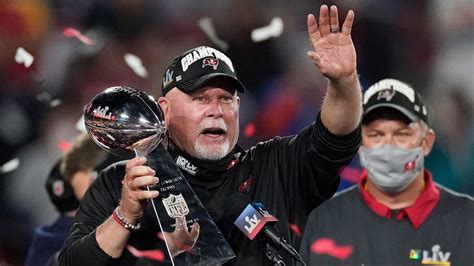
Bruce Arians spent 45 years coaching football before he lifted the Lombardi Trophy. He was 68 years old when Tampa Bay beat Kansas City 31-9 in Super Bowl LV, which made him the oldest head coach in history to win it. That’s the record most people know. What’s harder to appreciate is how long it took to get there, and how many times he was passed over before anyone gave him a real shot.
From York, Pennsylvania to the NFL Sideline
He grew up in York, Pennsylvania, after being born in Paterson, New Jersey on October 3, 1952. He played quarterback at Virginia Tech from 1971 to 1974, won the team MVP award his senior year, and set a school single-season record with 11 rushing touchdowns by a quarterback in 1974. That record stood until Logan Thomas tied it in 2009.
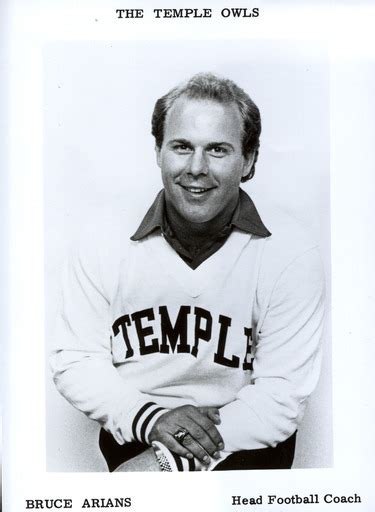
After finishing at Virginia Tech, Arians stayed in football the only way he could. He became a graduate assistant for the Hokies in 1975, then moved to Mississippi State to coach running backs and wide receivers from 1978 to 1980. Two seasons at Alabama followed under Bear Bryant, coaching running backs. Then Temple offered him the head job in 1983. He was 30 years old. That made him one of the youngest Division I head coaches in history at the time.
Six seasons at Temple produced a 21-39 record. Not great. But he built something at a program that had almost nothing, and he learned how to run a program, manage a staff, and develop players from scratch. When he left in 1988, he went back to the NFL as a position coach and didn’t look back.
The Long Assistant Coaching Road
His full list of stops before becoming an NFL head coach: running backs coach for the Kansas City Chiefs (1989-1992), offensive coordinator at Mississippi State (1993-1995), tight ends coach for the New Orleans Saints (1996), offensive coordinator at Alabama (1997), quarterbacks coach for the Indianapolis Colts (1998-2000), offensive coordinator for the Cleveland Browns (2001-2003), then seven years with the Pittsburgh Steelers as wide receivers coach and eventually offensive coordinator (2004-2011). Eleven different teams across roughly 35 years.
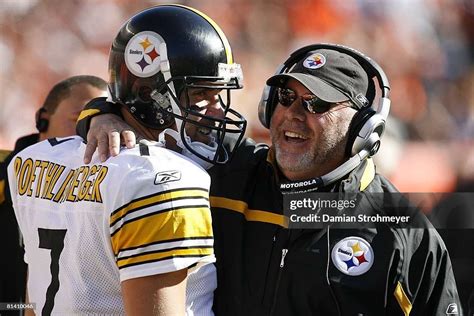
The Pittsburgh years were genuinely important. Arians helped Ben Roethlisberger put together some of his best seasons, including 32 touchdown passes in 2007 (a franchise record at the time) and 4,328 passing yards in 2009. The Steelers won Super Bowl XL and Super Bowl XLIII while Arians was on staff. He collected two rings as an assistant. The offensive concepts he developed in Pittsburgh, particularly the vertical passing attack that would later define his head coaching tenures, were largely built during that stretch.
Before Pittsburgh, he was Peyton Manning’s quarterbacks coach in Indianapolis from 1998 to 2000. Manning went to the Pro Bowl in 1999 and 2000 in part because Arians spent hours with him on footwork, timing, and the mechanics of running a west coast-influenced system. That relationship mattered later, when a crisis in 2012 gave Arians his first real opening.
Indianapolis, 2012: The Season That Changed Everything
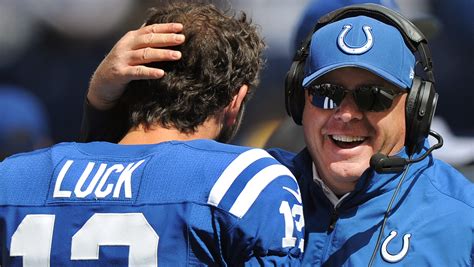
Chuck Pagano was diagnosed with leukemia in September 2012, three games into the season. Arians, who had just been hired as the Colts’ offensive coordinator, became the interim head coach. The team had gone 2-14 the year before. They had Andrew Luck, a rookie quarterback, and not much else.
They went 9-3 over those 12 weeks. They made the playoffs.
The Associated Press named Arians the NFL Coach of the Year for 2012. He was the first interim head coach in league history to win that award. At 59 years old, after decades in the shadows of other people’s teams, he finally had proof on paper that he could run one himself.
Arizona called. They hired him as their head coach on January 17, 2013. He was 60 years old. Most coaches get their first head job in their thirties or forties. Arians waited, kept refining his approach, and got there anyway.
Five Seasons in Arizona
The Cardinals went from 5-11 in 2012 to 10-6 in Arians’ first year. That five-win improvement was the kind of fast turnaround he’d pull off everywhere he went. He finished his Arizona tenure with a 49-30-1 regular season record (.619 winning percentage), which is the best in Cardinals franchise history. He remains the all-time wins leader there.
He won a second AP Coach of the Year award after the 2014 season, when Arizona went 11-5. Only 12 coaches in NFL history have won that award more than once. Arians is the only one to win it multiple times within a three-year span with two different franchises.
The Arizona run wasn’t perfect. Two solid playoff runs ended at the divisional round, both losses to the Carolina Panthers in 2014 and 2015. The team went 7-8-1 in 2016 and 8-8 in 2017. He retired after that season.
He was 65. He’d coached for 42 years. Most people assumed that was it.
Coming Out of Retirement for Tampa Bay
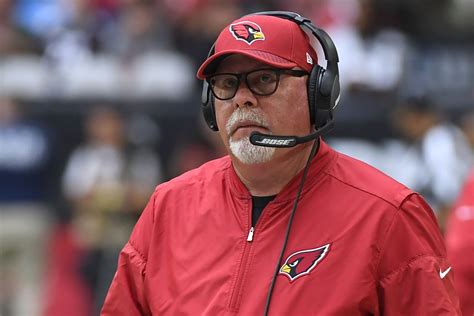
Tampa Bay hired him on January 8, 2019. He was 66. The Buccaneers had gone 5-11 the year before and had Jameis Winston at quarterback, who was talented but inconsistent. In 2019, Arians helped Winston throw for 5,109 yards, the first 5,000-yard passing season in Buccaneers history. Winston also threw 30 interceptions that year, which is a different problem, but the offense worked.
Then Tom Brady called. Or the Buccaneers called Brady. Either way, Brady signed in Tampa Bay in March 2020, at 42 years old, and the question the entire league asked was whether an aging quarterback and a 67-year-old head coach could do anything meaningful together.
They won the Super Bowl.
The 2020 season ended with Tampa Bay beating Kansas City 31-9 on February 7, 2021. The Buccaneers had to win three road games in the playoffs to get there, which no team had ever done before. Arians became the first head coach to win a Super Bowl in a game played in his home stadium. Raymond James Stadium is in Tampa. The Buccaneers played there all season due to COVID protocols, and they were there for the Super Bowl too.
The “No Risk It, No Biscuit” Philosophy
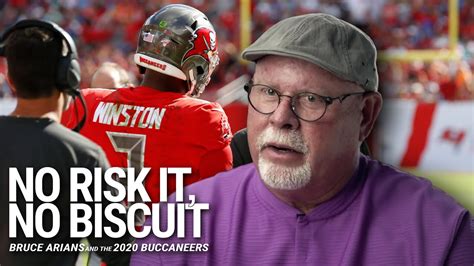
Arians has used that phrase for years, and it’s not just a slogan. It describes how his offenses actually operate. He favors vertical passing, aggressive throws downfield, and trusting his quarterback to take chances rather than check down constantly. His teams consistently ranked in the top 10 in offensive output. With Pittsburgh, Indianapolis, Arizona, and Tampa Bay, he directed top-10 offenses at four different franchises across 11 seasons as a play-caller or head coach.
What’s interesting about that record is the range of quarterbacks involved. Ben Roethlisberger, a physical bruiser who improvised constantly. Peyton Manning in his early development years. Carson Palmer in Arizona, who most people had written off after injury. Jameis Winston, who had talent but questionable decision-making. And then Tom Brady, arguably the most technically precise quarterback who ever played the game. Arians got production from all of them, which says something about how he adapts his system to the personnel rather than demanding personnel fit a fixed scheme.
The offense under Arians has never been conservative. He’s talked openly about his belief that close games are won by the team willing to take the bigger swing, not the one playing to avoid mistakes. That approach did occasionally blow up – Winston’s interception totals in 2019 were partly a product of Arians letting him throw aggressively – but over a career, the win-loss record makes a fairly convincing argument for it.
Diversity and the Coaching Staff Nobody Else Built
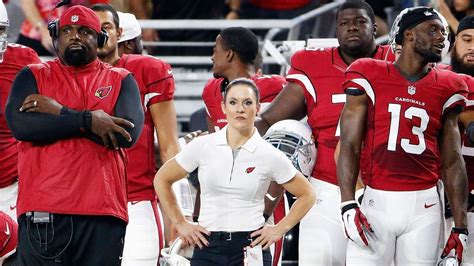
In July 2015, while coaching Arizona, Arians hired Jen Welter as a training camp intern working with inside linebackers. She was the first woman to hold any coaching position in NFL history. When a reporter asked Arians what he thought about that being a historic moment, his answer was fairly characteristic: “The minute they can prove they can make a player better, they’ll be hired.”
He wasn’t done. When he came to Tampa Bay in 2019, he hired Lori Locust as assistant defensive line coach and Maral Javadifar as assistant strength and conditioning coach, making the Buccaneers the first team in league history with two full-time female coaches. He also hired three Black coordinators simultaneously – Todd Bowles on defense, Byron Leftwich on offense, and Keith Armstrong on special teams – the first head coach in NFL history to have that configuration.
What pushed him from offering internships to full-time hires was, reportedly, his wife Christine. She told him internships were essentially a way of keeping women involved without actually committing to them. He listened. Locust had coached defensive line in the AAF, knew the position, and could make Buccaneers linemen better. That was enough for Arians.
Billie Jean King’s Women’s Sports Foundation gave him the Champion for Equality Award in October 2020 for his work opening doors in the league. He told reporters his philosophy was simple: “If you can teach, you can coach.” He also said, at the league meetings in 2019, when asked about hiring two female coaches, something that gets quoted regularly: “Who gives a s—? They’re good coaches.”
What’s slightly complicated about his legacy here is that the pipeline he built didn’t immediately produce widespread change. After Arians made history in Arizona in 2015, only one team – the Buffalo Bills – hired a woman in 2016. Rex Ryan called Arians before doing it, primarily to ask about the media attention. Progress was slow. But the Buccaneers’ model under Arians did eventually push the league toward normalizing the practice, and by the time he retired in 2022, multiple teams had female coaches on full-time staff.
The Coaching Record in Full
As an NFL head coach across eight seasons (2013-2021), Arians went 80-48-1 in the regular season and 6-3 in the playoffs. Including his 2012 interim run in Indianapolis, his overall NFL head coaching record is 89-51-1, with a .635 winning percentage that ranks eighth among coaches who have managed at least 100 games in the Super Bowl era. His postseason winning percentage of .667 ranks among the top five since the AFL-NFL merger.
He won two AP Coach of the Year awards (2012 and 2014) and three Greasy Neale Awards. He holds the all-time wins record for the Arizona Cardinals and the highest winning percentage in Tampa Bay Buccaneers history. As an assistant he was part of three Super Bowl teams – XL and XLIII in Pittsburgh as wide receivers coach and offensive coordinator, and LV as head coach. Three Super Bowl rings total across a career that started in 1975.
His coaching tree includes Todd Bowles, who became the Buccaneers’ head coach in 2022, and Freddie Kitchens, who ran the Cleveland Browns in 2019. Byron Leftwich got the Carolina Panthers job after Arians retired. None of those hires have won a championship, but that’s a different kind of accounting.
Retirement, Health, and What He’s Doing Now
Arians officially stepped down on March 30, 2022. Todd Bowles, his defensive coordinator, replaced him. Arians moved into a senior football consultant role with the Buccaneers, which he has held since.
In February 2026, he appeared on NBC’s Today show alongside Rob Gronkowski to promote a prostate cancer screening advertisement ahead of the Super Bowl. At the end of the segment, host Craig Melvin wished him luck watching the game. Arians disclosed he would be watching from a hospital room in Philadelphia – he was scheduled for open heart surgery the following day. He is a prostate cancer survivor. The cardiac procedure came as news to most people watching.
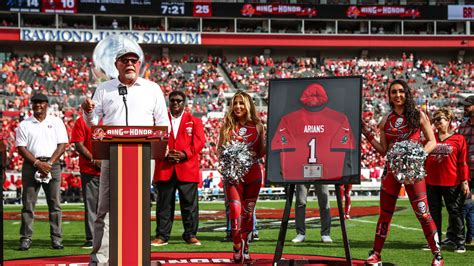
He was inducted into the Tampa Bay Buccaneers Ring of Honor in 2023. General Manager Jason Licht, at the time of Arians’ retirement, said he considered him a Hall of Fame coach. That’s the prevailing opinion among people who covered him closely. The Pro Football Hall of Fame hasn’t inducted him yet, and the argument for doing so sits on real numbers: a top-ten winning percentage in the Super Bowl era, two Coach of the Year awards, a Super Bowl championship, and a trail of franchise records at two different teams. The counter-argument is that eight head coaching seasons isn’t a large sample, and the Hall has traditionally weighted longevity. Both things are true simultaneously, which is an uncomfortable place to leave it – but that’s where it sits.
Comments