
Bill Walsh: The Coach Who Rewired How the NFL Thinks About Offense
Bill Walsh got his first NFL head coaching job at 47. The team he inherited had gone 2-14 the year before and had cycled through six head coaches in five seasons. Ten years later he retired with three Super Bowl rings, a 102-63-1 record, and a system that almost every team in the league still runs in some form. He died in 2007. His coaching tree keeps producing Super Bowl winners.
Early Life and the Long Road to the NFL
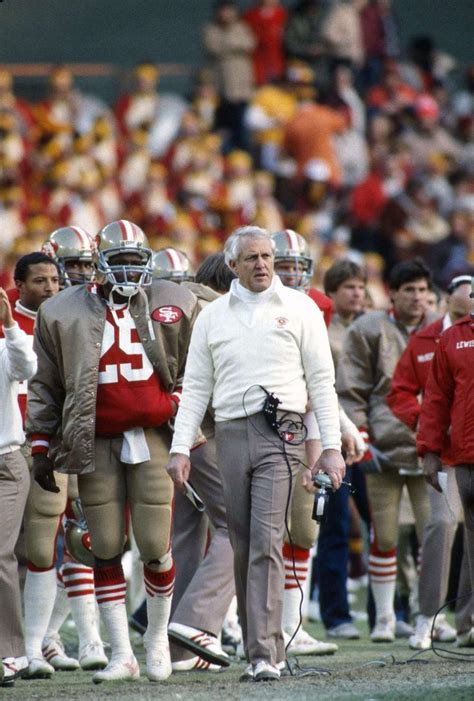
William Ernest Walsh was born in Los Angeles on November 30, 1931. His father worked as a laborer and moved the family around California during Walsh’s childhood. He played running back at Hayward High School but wasn’t good enough to get a scholarship anywhere. He spent two years at the College of San Mateo playing quarterback, transferred to San Jose State, switched to wide receiver, and graduated in 1955 with a degree in physical education. He also boxed in college. Not a detail you’d expect from the man later nicknamed “The Genius.”
His first head coaching job was at Washington Union High School in Fremont in 1957. He inherited a losing program and went 9-1 in his first season. He drove the team bus. His graduate advisor at San Jose State, Bob Bronzan, was paying close enough attention that he wrote in Walsh’s placement file: “I predict Bill Walsh will become the outstanding football coach in the United States.” Walsh was 27 and coaching high school football at the time.
He spent the early 1960s as an assistant at Cal and Stanford before joining the Oakland Raiders staff in 1966. Then the Cincinnati Bengals in 1968 under Paul Brown. Eight years with Brown’s staff, during which he quietly built the system that would change the league.
Cincinnati and the Offense Nobody Asked For
The West Coast offense wasn’t designed in a laboratory. It was a workaround.
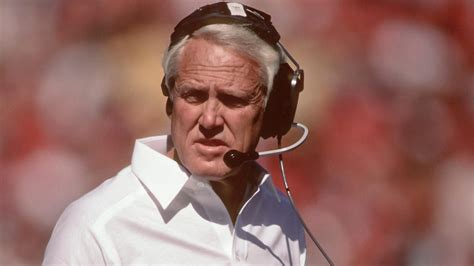
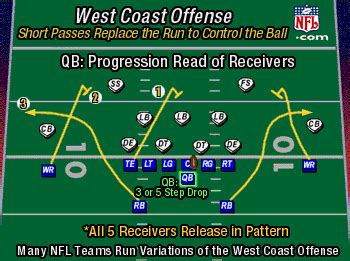
In 1971 the Bengals acquired quarterback Virgil Carter. Smart player, good mobility, accurate on short throws. His arm couldn’t reach the deep routes Walsh had learned under Al Davis in Oakland. Walsh had a choice: limit Carter’s role or rebuild the offense around what he could actually do. He went horizontal. Short, precisely timed passes to every eligible receiver. Running backs catching swing routes out of the backfield. The full width of the field treated as a resource instead of just the vertical seam down the middle.
It worked. Carter’s completion percentage jumped. The offense became functional with a limited quarterback. Then Ken Anderson took over, a more complete player, and the system scaled up.
John Madden described the before-and-after plainly years later: before Walsh, teams ran on first down, ran on second down, and passed on third when they had to. Walsh passed on first, passed on second, and used that to set up the run. That’s not a minor adjustment. That’s inverting the entire decision tree an NFL offense runs on.
Paul Brown never gave Walsh the offensive coordinator title despite Walsh doing the job. When Brown hired a new head coach after the 1975 season without offering Walsh the job or even talking to him about it, Walsh left. He went to San Diego as Don Coryell’s offensive coordinator and helped Dan Fouts become one of the best quarterbacks in the league. Then Stanford offered him the head coaching job in 1977. He went 17-7 in two seasons. The NFL still didn’t come calling with a head coaching offer. Walsh later said he thought his career had reached a dead end.
Taking Over the Worst Team in the League
The San Francisco 49ers in 1978 were 2-14. Six coaches in five years. Eddie DeBartolo had owned the franchise for two years and hadn’t figured out how to fix it. He hired Walsh in 1979 and gave him an unusual arrangement: head coach, general manager, and team president simultaneously. Walsh was 47.
The first two seasons were bad. 2-14 again in 1979. 6-10 in 1980. Walsh later said there were moments during those years when he genuinely doubted whether the rebuild would work. He had drafted Joe Montana in the third round of the 1979 draft, a pick that raised eyebrows because Montana had struggled with consistency at Notre Dame and most teams had already passed on him twice. Walsh saw something in the timing of his release and the accuracy of his short throws.
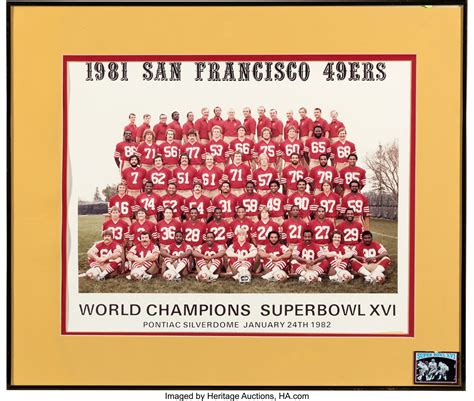
In 1981, the 49ers went 13-3 and won Super Bowl XVI over the Cincinnati Bengals, 26-21. Walsh had beaten Paul Brown’s franchise for his first championship. He never commented publicly on whether that had any particular meaning for him.
The Dynasty Years: 1981, 1984, 1988
Three Super Bowls in eight seasons. Six NFC West division titles. Ten wins in 14 postseason games. The numbers are clean enough that they can make the decade look inevitable, which it wasn’t.
The 1984 season produced a 15-1 record, then a 38-16 demolition of the Miami Dolphins in Super Bowl XIX. Montana threw for 331 yards and three touchdowns. That team is routinely ranked among the best single-season squads in NFL history.
The 1988 championship, Super Bowl XXIII against the Bengals again, ended on a 92-yard touchdown drive with 3:10 left in the fourth quarter. Montana to John Taylor with 34 seconds remaining. Walsh had scripted the first 25 offensive plays of every game, a practice he developed specifically to control decision-making under pressure at the start of games when anxiety runs highest. That drive at the end of Super Bowl XXIII was not scripted. Montana ran it on instinct built from a decade of Walsh’s system.
Walsh retired after that game. He was 57, at the top of the profession, with a championship in his pocket. He said the grind had worn him down in ways the public didn’t see. His successor George Seifert won two more Super Bowls with the roster Walsh had built. The dynasty continued without him.
The Players Walsh Turned Into Hall of Famers
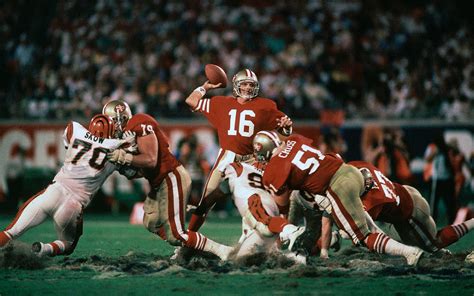
Joe Montana is the most obvious case. Third-round pick, 82nd overall, passed over by 81 teams and franchises that had longer film on him than Walsh did. Walsh saw the quick release and the accuracy on short timing routes and built an entire system to maximize those traits. Montana won four Super Bowls, three Super Bowl MVPs, and never threw an interception in a Super Bowl across 122 attempts.
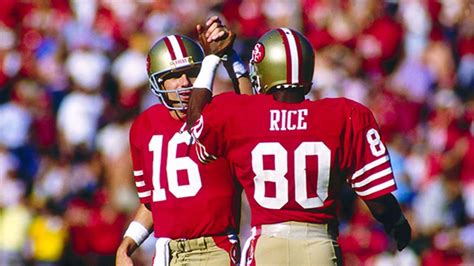
Jerry Rice came out of Mississippi Valley State in 1985, a Division I-AA program most scouts had barely watched. Walsh drafted him in the first round. The 49ers’ own offensive coordinator Sam Wyche thought it was a reach. Rice became the greatest wide receiver in NFL history by almost any measure, still holds the record for career receiving yards (22,895) and touchdown receptions (197). Walsh gave him a precise route tree that played to his ability to run after the catch in space rather than win contested jump balls.
Roger Craig, in 1988, became the first player in NFL history to rush for 1,000 yards and record 1,000 receiving yards in the same season. The design was Walsh’s: running backs as receiving weapons, not just blockers and ball-carriers. Steve Young arrived in 1987 as a backup, eventually replaced Montana, and won a Super Bowl under Walsh’s successor using Walsh’s system. Ronnie Lott. Dwight Clark. The list keeps going.
What’s worth noting is that Walsh often identified players other teams had undervalued. Montana was a third-round pick. Rice came from a tiny program. Walsh’s scouting relied heavily on mechanics and system fit rather than measurables, which ran against the grain of how most teams evaluated talent in the 1980s.
The Coaching Tree That Won’t Stop Growing
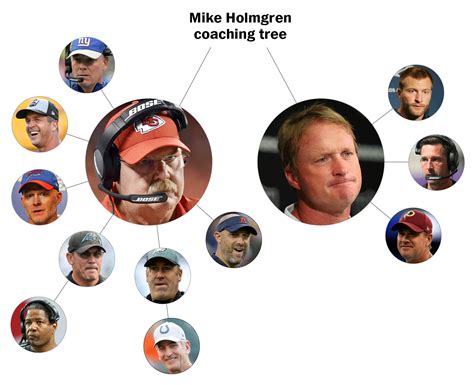
Walsh’s six direct assistant coaches who became NFL head coaches: Mike Holmgren, George Seifert, Dennis Green, Sam Wyche, Ray Rhodes, Bruce Coslet. Seifert won two more Super Bowls in San Francisco after Walsh left. Holmgren won one in Green Bay and went to another with Seattle. Dennis Green built a consistent winner in Minnesota. That’s the first generation.
Holmgren’s staff produced a second generation. Green’s staff produced Tony Dungy. Dungy produced Mike Tomlin. Walsh coaching tree members have won Super Bowls in every decade from the 1980s through the 2020s. Andy Reid, Jon Gruden, Brian Billick, Pete Carroll, John Harbaugh, Gary Kubiak, Mike Shanahan, Sean Payton, Mike McCarthy. The total count of NFL head coaches tracing their lineage through Walsh’s tree had reached 32 as of his death and has grown since.
To put that number in context: Walsh ranks 46th all-time in career wins as a head coach. What he built wasn’t a win total. It was a methodology that kept replicating itself through other people’s careers long after he left the sideline.
He also created the Minority Coaching Fellowship in 1987, a program that placed minority coaches in internships across NFL organizations. Tyrone Willingham and Marvin Lewis came through it. The league eventually adopted the program league-wide. When Willingham and John Arrillaga visited Walsh at his home the day before he died, they brought him the Amos Alonzo Stagg Award for his service to football. Walsh accepted it on a Sunday. He died Monday morning.
The Leadership Philosophy That Outlasted the Football
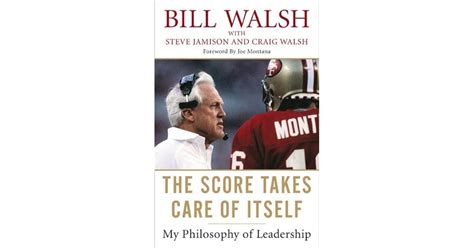
Walsh spent the final years of his life in a series of extended conversations with writer Steve Jamison. Those conversations became “The Score Takes Care of Itself,” published in 2009, two years after Walsh died. His son Craig Walsh helped complete it.
The central idea is counterintuitive enough that it reads strange the first time: don’t focus on winning. Focus on building the conditions in which winning becomes likely, and the scoreboard takes care of itself. Walsh called this the Standard of Performance. It wasn’t a motivational concept. It was an operational one, a detailed specification of how everyone in the organization should behave, prepare, and communicate, every day, whether the team was 13-3 or 2-14.
He wrote that he directed his teams’ focus “less to the prize of victory than to the process of improving.” This was, as he acknowledged, radical in professional football, where the usual prime directive is winning. Walsh thought obsessing over wins and losses was actually counterproductive because it produced anxiety that impaired execution. The radical thing he believed was that a team that executes its process with full commitment will win more than a team motivated primarily by fear of losing.
The book has found a substantial audience in business and technology. Silicon Valley investors and startup founders cite it regularly. The argument works outside football because the underlying problem is the same: how do you build an organization that performs consistently under pressure? Walsh’s answer doesn’t require the NFL as context. It requires building systems, developing people, and measuring the process rather than only the outcome.
His five-part framework in the book covers the standard of performance itself, the role of opportunity and innovation (the West Coast offense was born from a constraint, not a luxury), the fundamentals of leadership behavior, the conditions for a winning team, and what he calls “looking for lessons in my mirror.” That last section is more honest than most leadership books. Walsh writes about the psychological cost of coaching at that level, the depression that hit him after some Super Bowl wins, the ways the job eroded parts of his personality he valued. He doesn’t resolve it neatly. The book is better for it.
Career Record and Awards
With the San Francisco 49ers from 1979 to 1988: 92-59-1 in the regular season, 10-4 in the postseason. Overall NFL head coaching record: 102-63-1. Three Super Bowl wins (XVI, XIX, XXIII). Six NFC West titles. Three NFC Championship appearances. NFL Coach of the Year in 1981 and 1984. At Stanford across two separate tenures (1977-1978 and 1992-1994): 34-24-1, including the Pac-8 Coach of the Year award in 1977.
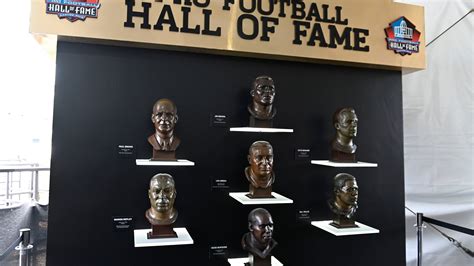
Inducted into the Pro Football Hall of Fame in 1993, his first year of eligibility. Named to the NFL 100th Anniversary All-Time Team in 2019. Named to the NFL 1980s All-Decade Team. Member of the San Francisco 49ers Hall of Fame. Amos Alonzo Stagg Award, 2007.
He also served as the 49ers’ general manager from 1979 to 1982, team president from 1983 to 1987, and returned as vice president and general manager from 1999 to 2000. Three separate front-office stints with the same franchise, which tells you something about what DeBartolo thought of him, or couldn’t let go of.
Death and Memorial
Walsh was diagnosed with leukemia and fought it for several years before his death on July 30, 2007, at his home in Woodside, California. He was 75.
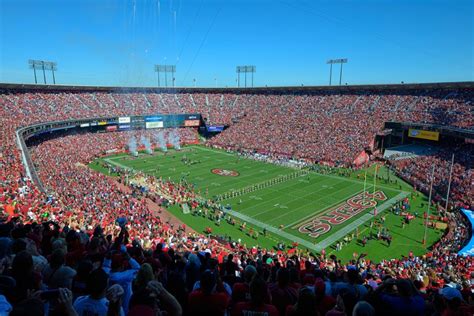
More than 10,000 people attended the memorial service at Candlestick Park. The playing field there was renamed Bill Walsh Field. The annual San Jose State vs. Stanford game was renamed the Bill Walsh Legacy Game. Joe Montana said that outside of his own father, Walsh was the most influential person in his life. NFL Commissioner Roger Goodell described him as “an extraordinary teacher.” Jim Harbaugh, who had known Walsh for 18 years, said he hung on every word Walsh ever said.
His book came out two years later. His coaching tree kept winning. The West Coast offense kept spreading into college football, into spread systems, into the RPO concepts that define current NFL offenses. You can still find Walsh’s fingerprints on a Sunday afternoon if you know what to look for: the running back releasing into the flat, the quick slant timed to the snap count, the quarterback reading horizontally before going vertical. The system he built from a limited quarterback in Cincinnati in 1971 is still running.
Comments