
Arian Foster: The Undrafted Running Back Who Ran Past Everyone
From Albuquerque to Knoxville
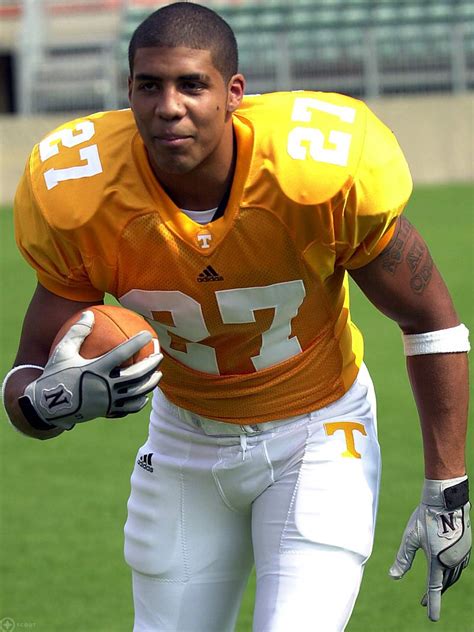
Arian Isa Foster was born on August 24, 1986, in Albuquerque, New Mexico. His father Carl had been a wide receiver at the University of New Mexico and got a tryout with the Denver Broncos before Arian was born. Football was already in the house. Arian started playing in first grade, which his father actually didn’t want. Carl thought the kid was too young. The kid kept playing anyway.
At Valley High School in Albuquerque, Foster built a quiet reputation as a good but not nationally celebrated prospect. He transferred to Mission Bay High School in San Diego for his senior year, and that’s where the numbers got loud. Against Claremont High, he rushed for 321 yards in a single game. He finished the season with 2,000 yards and 30 touchdowns. The Buccaneers lost in the playoffs, but Foster scored four touchdowns in that game, including kick return scores of 97 and 88 yards.
His elementary school teacher once laughed when he said he’d play in the NFL. He kept that, apparently. Used it.
The Tennessee Years: Smooth Runner, Complicated Story
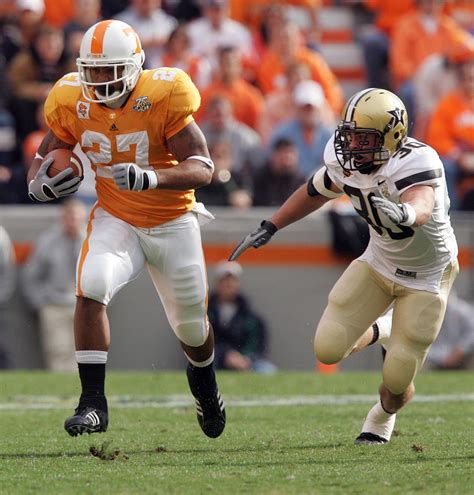
Foster played for Tennessee from 2004 to 2008. By the time he left Knoxville, he was the program’s second all-time leading rusher. That sounds clean. It wasn’t.
The Tennessee program was in genuine disarray during most of his time there. Coaching changes, losing seasons, a program sliding from its SEC footing. Foster became, fairly or not, a symbol of what wasn’t working. His final season he ran for only 570 yards and one touchdown, finishing 114 yards short of a single-season rushing record. Scouts who watched the system around him saw the dysfunction. Scouts who watched Foster saw a back with exceptional patience, vision, and what one observer later called “almost a gliding quality” when he ran.
The pre-draft process did him no favors. Injuries during workouts, noise from the program’s chaos, a statistical line that didn’t tell the full story. When the 2009 NFL Draft came around, 254 picks were made. Foster’s name was not called once.
Houston Signs an Undrafted Free Agent Nobody Wanted
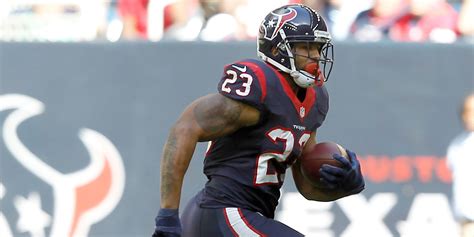
The Houston Texans signed Foster shortly after the 2009 draft concluded. He played in six games that rookie season and rushed for 257 yards. Modest. The kind of numbers that don’t make you think anything historic is coming.
What the Texans had, which turned out to matter enormously, was a zone-blocking offensive scheme. Zone blocking rewards a specific type of runner: patient, able to read developing gaps, willing to wait a half-second longer than most backs would. Foster was built for exactly that. Not every running back is, and plenty of physically superior players have struggled inside the same system because they couldn’t slow their instincts down long enough to let the blocks open.
During training camp and the 2010 preseason, Foster earned the starting job outright. What happened next is still the most remarkable single-season performance in the history of undrafted running backs.
The 2010 Season
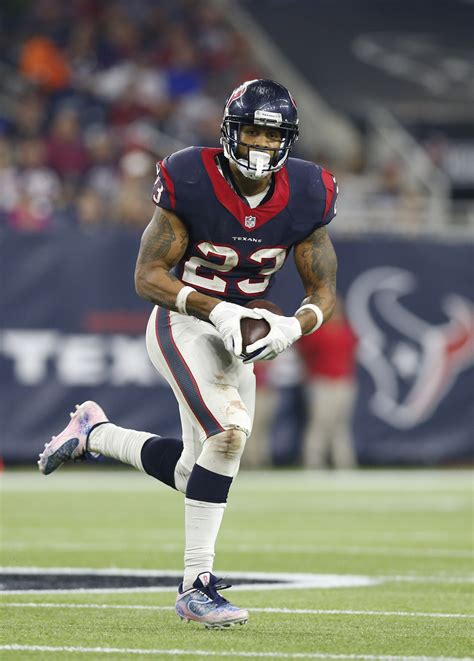
Week 1, 2010. Houston versus Indianapolis. Foster carried the ball 33 times for 231 yards. Thirty-three carries is a workload you give a horse. Two hundred thirty-one yards is what you get when the horse is also fast and reads blocks better than most backs who went in the first two rounds that same April.
He didn’t slow down. By the end of the year, Foster had led the entire NFL in rushing yards (1,616), rushing touchdowns (16), and yards from scrimmage. First-Team All-Pro. First Pro Bowl. Per the Elias Sports Bureau, those 1,616 rushing yards were the most ever produced in a single season by an undrafted running back. That record still stands.
For context on how good that season was: Adrian Peterson was active that year. LeSean McCoy was active. Foster’s scrimmage yards per game ranked second in the league. He was, by most measures, the best running back in the NFL that year, and he’d done it after nobody thought enough of him to spend a seventh-round pick on him.
What strikes me about 2010, looking back, is that it wasn’t a fluke riding a hot offensive line. Foster averaged 4.4 yards per carry in that season but what made him genuinely hard to defend was that he also caught 66 passes. Defensive coordinators couldn’t stack the box without paying for it.
Prime Years: 2011–2014
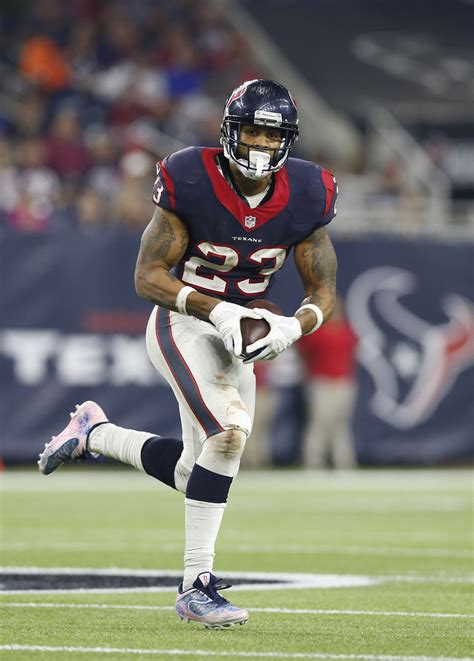
Second-Team All-Pro in 2011. Four Pro Bowl selections in total: 2010, 2011, 2012, 2014. In 2012 he led the NFL in rushing touchdowns again with 15 and cleared 1,600 yards from scrimmage for the second time in three seasons. Those two years, 2010 and 2012, were the only seasons in his entire career where he played all 16 games.
The Texans were genuinely good during this stretch. They reached the playoffs in 2011 and 2012, won their division both years, and won a wild card game in January 2012 against Cincinnati when Foster rushed for 153 yards and two touchdowns. There was a real sense that Houston was building something. The offensive line was strong. J.J. Watt was already becoming terrifying on defense. Foster was at the center of it.
2013 is where the story starts to bend. He played only eight games, underwent surgery on a ruptured disc in his back, and spent the offseason reportedly questioning whether he’d continue playing at all. He came back in 2014 and played 13 productive games before a torn Achilles in 2015 ended his season after four games. The Texans released him in March 2016.
Career Numbers, in Full
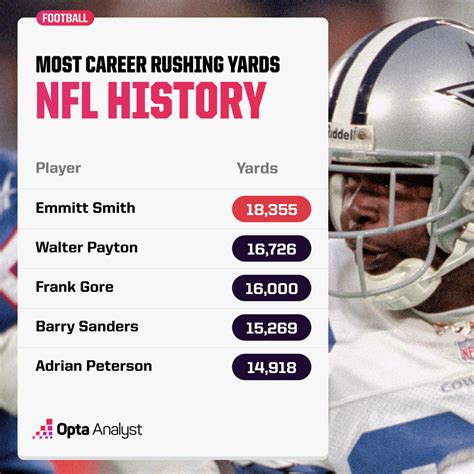
1,476 rushing attempts. 6,527 rushing yards. 54 rushing touchdowns. 255 receptions for 2,346 yards and 14 more touchdowns. Eighty games played across eight seasons.
His 110.9 scrimmage yards per game for his career ranks fifth all-time among players who appeared in at least 80 NFL games. The four ahead of him are Jim Brown, Barry Sanders, Adrian Peterson, and Walter Payton. That is not a list where you expect to find someone who went undrafted. His 6,527 rushing yards are second-most ever by an undrafted player in the Super Bowl era, behind Priest Holmes’ 8,172. Holmes is also not in the Hall of Fame, for what it’s worth.
Foster holds the Houston Texans franchise records for career rushing yards (6,472 in a Texans uniform) and rushing touchdowns (54). Both records still stand today, well over a decade after he left the building.
Injuries and the Career That Might Have Been
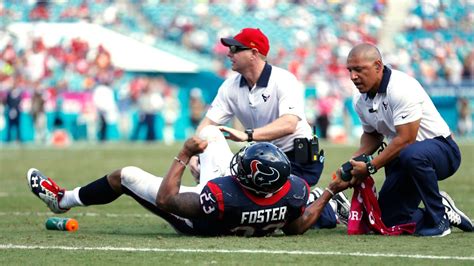
The honest way to say it: he played all 16 games exactly twice, in 2010 and 2012. Every other season was shortened by something. Hamstring issues. A ruptured disc. A torn Achilles. By the time he signed with the Miami Dolphins in 2016, his body had been through enough that the new contract was essentially a bet on health he couldn’t win. He appeared in four games for Miami and retired on October 24, 2016, releasing a statement that said he was “proud to have taken part in that legacy.”
If you project his per-game production – 110.9 scrimmage yards – across a full 16-game career from 2009 to 2016, you’re looking at somewhere north of 10,000 total scrimmage yards. That puts him in a different historical conversation entirely. Some of that projection is obviously too generous; bodies break differently as they age. But 80 games played out of a possible 128 is the defining fact of his career, and there’s no way to talk around it.
What gets complicated here is that Foster knew this, thought about it constantly, and seemed genuinely philosophical about it in a way that made some people uncomfortable. He once told ESPN that he stood on the sideline during pregame ceremonies and thought, “This is just a game. In the grand scheme of things, it really doesn’t matter that much.” He was aware he couldn’t say that publicly, which is partly why he did say it publicly.
The Hall of Fame Question
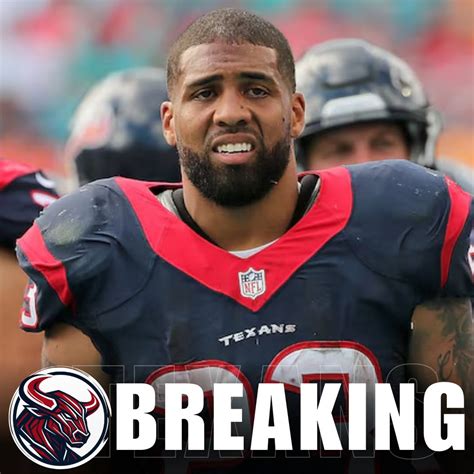
He’s not in the Hall of Fame. Probably won’t be, for reasons that are straightforward and somewhat unfair at the same time.
The argument for enshrinement is real. His per-game numbers put him in historically elite company. During his peak, 2010 to 2012, he was arguably the most productive back in football. He holds franchise records for a team that has never had another player come close to what he did on the ground. And he did all of it after no NFL team saw fit to use a draft pick on him.
The argument against is simpler: 80 games. Hall of Fame selectors weight longevity heavily, and selectors have passed on comparable résumés for that exact reason. Priest Holmes, who accumulated 8,000+ rushing yards and has a strong per-game case, isn’t in either. The Hall tends to reward players whose careers went long enough that the bulk of the statistics made the argument unavoidable. Foster’s career was too injury-shortened for the bulk to accumulate.
There is something slightly off about that logic, though. We don’t discount Sandy Koufax’s Hall of Fame case because his arm gave out at 30. Foster’s peak was historically good. That the injuries took over is not really a moral failing – it’s a medical one.
After Football
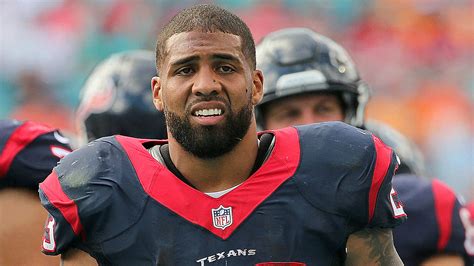
Foster retired at 30, which meant he had time to do other things seriously rather than just filling time. He’d already signaled during his playing days that football wasn’t the whole of him: he’d declined media obligations for most of the 2014 offseason, agreed to a press conference under threat of an NFL fine, and responded to every question with “I’m just trying to be the best teammate I can be.”
He appeared in the 2014 film Draft Day, playing Ray Jennings, a fictional Ohio State running back who is the top prospect in Kevin Costner’s fictional draft. The choice of role has a certain irony he must have been aware of. He launched a music career under the name Bobby Feeno, and co-hosts the podcast Macrodosing with PFT Commenter, which has built a real audience. He joined Colin Kaepernick in kneeling during the national anthem before Kaepernick made it a national story.
The throughline in all of it is that Foster spent his NFL career being a different kind of person than the league tends to produce – curious, skeptical of the culture surrounding him, unwilling to perform gratitude he didn’t feel. That quality made him occasionally frustrating to cover and probably shortened some of his employment opportunities. It also makes him more interesting to read about now than most of his contemporaries.
Career stats sourced from Pro Football Reference and the Elias Sports Bureau. Season-by-season records and franchise data via NFL.com and ESPN Stats & Info.
Comments