
Al Harris: From 6th-Round Pick to Packers Hall of Famer and Elite NFL Coach
On January 4, 2004, Matt Hasselbeck won the overtime coin toss at Lambeau Field, grabbed the microphone, and told the stadium and the national television audience exactly what he planned to do. “We want the ball and we’re going to score.” Two drives later, Al Harris read Hasselbeck’s throw to Alex Bannister in the left flat, jumped it, and ran 52 yards untouched into the end zone. The Green Bay Packers won 33-27. It was the first defensive touchdown to end a playoff overtime game in NFL history. Harris later said his only thought during the return was don’t drop it – he’d dropped two interceptions in the weeks before.
That play is the hinge point of a career people undervalue. Harris never made Canton. He probably won’t. But Deion Sanders, when asked at the end of the 2009 season to name his All-Decade team for the 2000s, put Harris alongside Champ Bailey at cornerback. Not Charles Woodson. Not Darrelle Revis. Harris. Both Woodson and Revis are now in the Pro Football Hall of Fame. Sanders made that pick without prompting.
A Path Nobody Would Have Drawn Up
Alshinard Harris was born December 7, 1974, in Pompano Beach, Florida. He played high school ball at Blanche Ely in Pompano Beach, where coach Jimmy Grant noticed something. Harris has said Grant believed in him more than he believed in himself at that age – which, if you follow his career trajectory, explains a lot about how he eventually got where he did.
He didn’t go to a major program. He started at Trinity Valley Community College in Athens, Texas, where he was part of a national championship team in 1994. Transferred to Texas A&M-Kingsville for two years, earned first-team All-Lone Star Conference honors in 1996. The Tampa Bay Buccaneers took him 169th overall in the sixth round of the 1997 draft – the 26th cornerback selected that year.
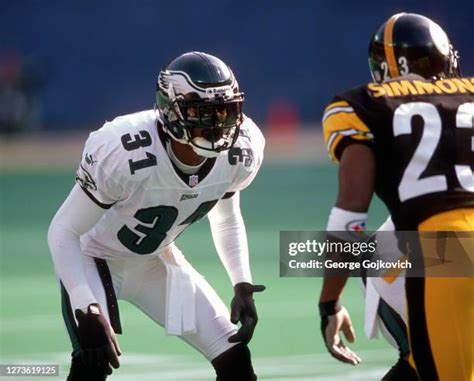
He never played a regular-season snap for Tampa Bay. Spent 1997 on the practice squad, got cut in the final roster trim the following August, and was claimed off waivers by the Philadelphia Eagles on August 31, 1998. Head coach Ray Rhodes immediately put him on the field. Harris played all 16 games his first season in Philadelphia.
Five Years as the Best Nickel Back Nobody Talked About
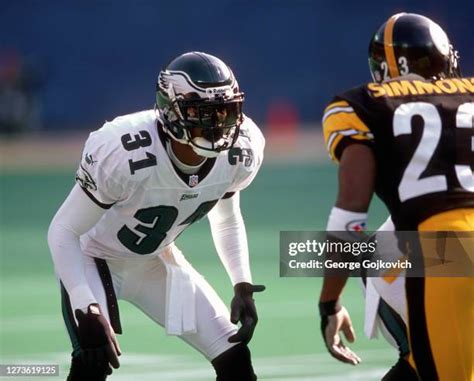
Troy Vincent and Bobby Taylor started ahead of Harris in Philadelphia for five straight years. Both were accomplished players – Vincent made five Pro Bowls. Harris played as the Eagles’ primary nickel cornerback, and by most accounts was the best in the league at that role. He played in two NFC Championship Games with Philadelphia, in 2001 and 2002, and never started a game at cornerback. That’s a strange thing to sit with. He was genuinely elite in a limited role, and the counting stats didn’t show it because nickel backs in the early 2000s didn’t get the snap counts they get today.
In March 2003, the Eagles traded him to Green Bay. General manager Mike Sherman gave up a second-round pick to get Harris and a fourth-rounder. That’s not what teams pay for a depth piece.
Green Bay: Seven Years, 102 Starts, One Define-It-All Play
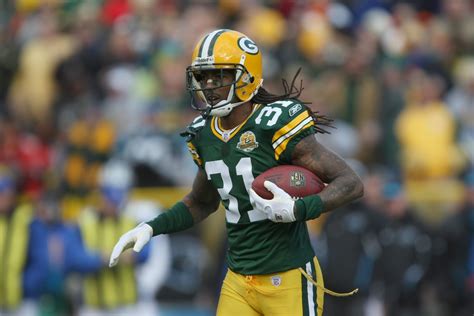
Harris immediately became the Packers’ starting right cornerback and held that job for seven seasons. He started 102 of 128 regular-season games in Green Bay, missed just 10 games across that entire stretch before his injury in 2009. What made him effective wasn’t speed – scouts always questioned his speed, and he played for years proving those questions wrong – it was physicality, positioning, and an obsessive film routine that let him anticipate routes before receivers broke on them.
His stance was unusual: hips and shoulders parallel to the line of scrimmage at the snap, which gave him leverage to jam at the line and then redirect. At 6-foot-1, he had rare size for a cornerback. In 2005, he allowed exactly one touchdown in coverage for the entire season, while finishing with three sacks and ten pass deflections. That is not a statistic that gets mentioned enough.
He made the Pro Bowl after the 2007 and 2008 seasons, earned second-team All-Pro recognition in 2007, and was playing alongside Charles Woodson during Woodson’s own peak years. There was a real debate inside Green Bay circles about which of the two was better. Woodson is in Canton. The Sanders comment exists in part because people needed to be reminded that Harris was right there with him.
The Overtime Play in Full
The context that usually gets dropped: Hasselbeck won the coin toss and, with his words broadcast live through the referee’s microphone, guaranteed a score. Green Bay’s defense heard it. Both teams went three-and-out on their first overtime drives. On Seattle’s second drive, the Packers called a blitz. Hasselbeck looked left for Bannister in the flat. Harris had the route read before the ball left Hasselbeck’s hand – he’d spent the week in the film room and he knew exactly where it was going. He took it 52 yards. Hasselbeck, to his credit, said afterward he could have thrown it away and didn’t. Harris said he thought about the Lambeau Leap and then got buried under teammates before he had time to try it.
NFL Films later ranked it among the 100 greatest plays in league history. It was the first time in NFL history a playoff overtime ended on a defensive score.
The Knee and What Came After
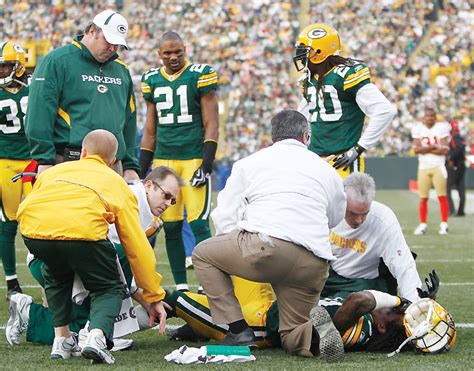
November 22, 2009. Home game against San Francisco. Harris was trailing Michael Crabtree downfield when his left foot caught the turf. No contact. He went down, and the damage was severe – torn ACL, torn lateral collateral ligament, torn iliotibial band, torn fibular collateral ligament, torn lateral hamstring. Five structures. The Packers reconstructed his knee surgically eight days later.
He spent the following year on the physically unable to perform list, came back to practice in October 2010, got waived by Green Bay on November 8 as Tramon Williams and Sam Shields had taken firm hold of the cornerback spots. He signed with Miami, played one year. One final season with the St. Louis Rams in 2011, where he actually started five games at age 36. Retired in 2013 as a ceremonial member of the Packers, which is a gesture the franchise doesn’t extend to everyone.
Career totals: 21 interceptions, 407 interception return yards, 470 combined tackles, 4 sacks, 3 defensive touchdowns, 148 passes defended across 194 regular-season games.
The Packers Hall of Fame and Where He Actually Stands
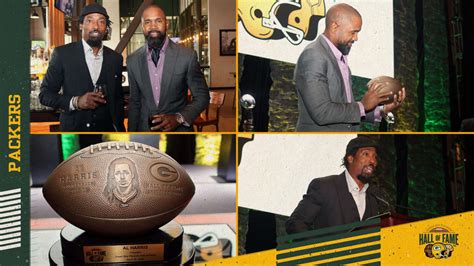
On September 2, 2021, Harris was inducted into the Green Bay Packers Hall of Fame at Lambeau Field. That honor is specific to the franchise – it’s not Canton – but it matters within the organization’s history, and Green Bay’s history carries weight in a way most franchises’ don’t.
The argument against Harris in the Pro Football Hall of Fame is straightforward: 21 career interceptions is not a Canton number, he spent five of his best years in a nickel role where he couldn’t accumulate the stats that drive Hall of Fame cases, and the injury cut his peak short before he could build the kind of longevity that typically gets voters interested. None of that is wrong. What bothers me about the discussion is that the Deion Sanders comment gets cited and then immediately set aside, as though Sanders – arguably the greatest evaluator of cornerback talent who ever played – was being polite. He wasn’t being polite. He watched those defenses more closely than any voter did.
Coaching: A Second Career With Numbers That Don’t Lie
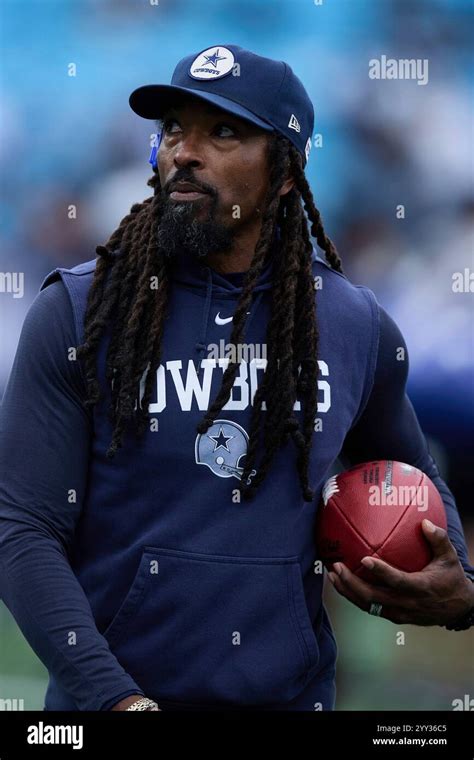
Harris started coaching as an intern with the Miami Dolphins in 2012. Spent six seasons in Kansas City as a defensive assistant and then secondary coach. The Chiefs finished top-10 in interceptions in five of those six seasons. In 2016, they led the NFL with 19. From 2015 to 2017, Marcus Peters had 19 interceptions – the most of any player in the league over that three-year stretch. Peters was a first-round pick with raw talent; Harris was the one who shaped what he did with it.
One year at Florida Atlantic in 2019, then four seasons with the Dallas Cowboys starting in 2020. Those Cowboys defensive backs produced 72 interceptions from 2021 to 2024, the most by any team in the NFL over that span. Elevated to assistant head coach in 2024. The Bears hired him in January 2025 as defensive backs coach and defensive pass game coordinator – the Packers’ oldest rival, which generated the predictable jokes in Wisconsin.
In his first season with Chicago, the Bears led the NFL with 22 takeaways through Week 11. Four takeaways in a single game against New Orleans in Week 7, which Harris had predicted publicly beforehand. Defenses he’s coached have finished top-10 in interceptions seven times, including five years in the top five. Three players under his watch have finished a season with eight or more interceptions – a threshold only eleven players reached in the entire decade.
That consistency across four organizations and thirteen seasons is not a coaching accident. There’s a specific philosophy behind it: set a takeaway number at the start of the year, talk about it publicly, hold players to it, and build your scheme around ball production rather than coverage statistics. It’s the same aggression he played with, translated into a coaching language.
The Coordinator Question
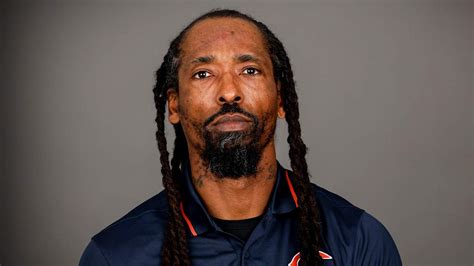
After the 2025 season, Harris had defensive coordinator interviews with multiple teams, including Green Bay. The Packers hired Jonathan Gannon instead. The Washington Commanders, another team that considered him, filled their opening before he could get there. He’s back with Chicago for 2026 as of this writing, which is good for the Bears and probably frustrating for Harris, who has built a case over thirteen years that’s hard to argue with.
The coordinator job will come. The question is when and where. A player who went 169th overall in 1997, spent five years as a nickel back, made two Pro Bowls, got inducted into a franchise Hall of Fame, and then built one of the better defensive coaching records in the league across four teams – that story doesn’t typically end with him waiting.
Comments