
Giants 21, Chargers 18: Jaxson Dart’s First Start Ends Los Angeles’ Undefeated Season
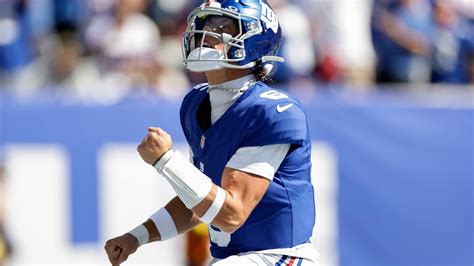
Jaxson Dart jogged onto the field at MetLife Stadium on September 28, 2025, and the crowd stood up. Not because anyone expected him to win. The Giants were 0-3, had just benched a 200-game starter in Russell Wilson, and were facing the only undefeated team in the AFC. They won 21-18. Dart threw for a touchdown, ran for another, and Justin Herbert threw two interceptions. By the time Omarion Hampton’s 54-yard run briefly made it a three-point game in the fourth quarter, the Chargers had already given New York too much of a head start to overcome.
Quarter-by-Quarter: How New York Built and Held the Lead
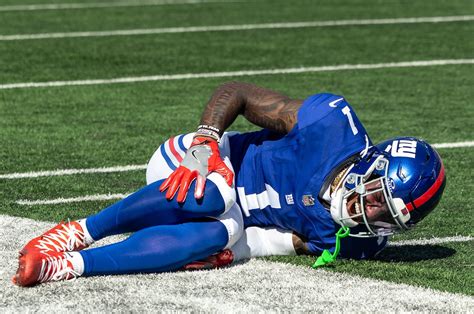
The Chargers punted on their first possession. Dart took over at his own 10-yard line and connected with Malik Nabers for 13 yards. Two plays later, he ran it in himself to put the Giants up 7-0. Nabers left the game with a knee injury shortly after, feared to be an ACL tear, and that’s the number that will haunt New York more than any score line.
The second Chargers possession is where the game got genuinely strange. Dexter Lawrence, a 342-pound defensive tackle, tipped Herbert’s pass at the line, caught it out of the air, and rumbled 38 yards before Herbert himself had to run him down at the 3-yard line. New York settled for a 22-yard field goal from Jude McAtamney (filling in for the injured Graham Gano) and went up 10-0. Lawrence catching his own tipped pass and gaining 38 yards is the kind of thing that feels like a sign.
The Chargers finally moved the ball late in the second quarter. Herbert and Quentin Johnston connected on a 36-yard touchdown, Johnston running a clean double move down the sideline. Herbert dropped it exactly where it needed to be. Los Angeles went into halftime down 13-10, still very much in the game.
Third quarter is where it fell apart for the Chargers. Herbert threw his second interception of the game, returned deep into Los Angeles territory, and New York turned it into a touchdown and two-point conversion to go up 21-10. Herbert came into this game having thrown zero interceptions in nine consecutive regular-season starts. He threw two in this one. That streak ending in back-to-back picks, rather than just once, is what made the difference.
Hampton’s 54-yard run in the third pulled the Chargers to 21-18. Herbert converted the two-point attempt himself on a scramble. From there, Los Angeles ran out of answers. The defense got a stop, forced a Giants punt, but the offense went three-and-out after a 31-yard punt gave New York good field position. Tuli Tuipulotu stopped a Chargers drive with a run stop on third-and-goal from the 1. The Giants then ran the clock down, converted a third down, and forced Los Angeles to burn all three timeouts. The Chargers’ final drive didn’t get close.
Box Score: Player Stats That Explain the Result
Passing: Herbert finished 23 of 41 for 203 yards, one touchdown, two interceptions. Dart went 13 of 20 for 111 yards and one touchdown, with one TD rush. The raw numbers favor neither quarterback by a wide margin, but Herbert’s two turnovers both led directly to Giants points. That’s the actual difference.
Rushing: Hampton carried 12 times for 128 yards and a touchdown for the Chargers. Cam Skattebo had 25 carries for 79 yards for New York. The Chargers ran the ball well; they just needed to do more of it earlier when the game was still open.
Receiving: Johnston caught eight passes for 98 yards and a touchdown. Theo Johnson caught three for 17 yards and a touchdown for the Giants.
Defense: Tuipulotu recorded four sacks. Four. Khalil Mack missed the game, and Tuipulotu absorbed the load in a way that made Mack’s absence feel less significant than it was on paper. Dexter Lawrence added an interception. Andru Phillips had the other.
What Went Wrong for the Chargers (and What Didn’t)
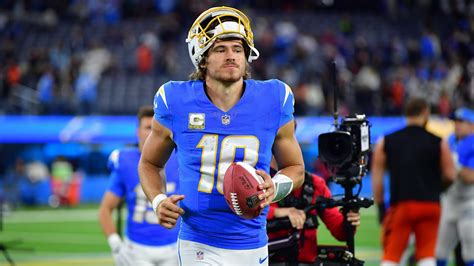
Herbert had gone nine straight regular-season starts protecting the football. Two interceptions in one afternoon doesn’t erase that, but it does raise a question worth sitting with: both picks came from situations where Herbert forced the ball into coverage he should have avoided. The first was tipped at the line by Lawrence, which is bad luck as much as anything. The second, in the third quarter, was the one that killed the game.
The Chargers also dropped passes early, committed penalties that extended Giants drives, and got off to a start slow enough that they were playing catch-up from the opening drive on. Jim Harbaugh’s teams don’t usually look sloppy. This one did for most of the first half.
The Hampton run was real. The two-point conversion was real. If the Chargers’ offense had generated one more scoring drive in the fourth quarter, this game is different. The defense held New York without points late in the game, giving the offense two chances to tie or go ahead. Both stalled. The pass protection in particular couldn’t hold up on third downs when Los Angeles needed to extend drives.
Tuipulotu’s four sacks don’t fit neatly into the loss narrative, but they’re worth noting separately. That’s not a product of a soft game plan. The Giants schemed for it, Tuipulotu executed, and Los Angeles had no answer. Whatever the Chargers expected from him in Mack’s absence, this wasn’t it.
Dart Delivered. The Nabers Injury Is the Problem Now.
Brian Daboll said after the game that Dart’s performance wasn’t perfect. He was right. Dart also went 13 of 20, scored twice, and didn’t turn the ball over against an undefeated defense. For a rookie’s first NFL start, that’s about as good as you can ask for.
Nabers leaving with a knee injury in the second quarter is the unavoidable asterisk. The Giants won, got Dart started on the right foot, and possibly lost their best offensive player for the season. Nabers exited after just a handful of snaps. He was ruled out and the fear of an ACL tear, based on reporting at the time, was real enough that it overshadowed the postgame celebration.
There’s something slightly uncomfortable about the Giants’ situation even in victory. They won a game they weren’t supposed to win, did it with a rookie at quarterback, and may have done it at the cost of the receiver who made the offense functional. The 1-3 record doesn’t feel like a turning point yet. One game against a team that was arguably overdue for a letdown isn’t evidence of a rebuilt roster.
Chargers vs. Giants Series Record: 14 Games Since 1971
Los Angeles leads the all-time series 8-6. The teams have met 14 times total, which works out to roughly once every four years as interconference opponents. The Chargers had won five straight before September 28, a run that started with a 45-23 win in 2005 and ran through a 37-21 win in December 2021. New York’s last win before this game came in 1998, a 34-16 road victory in which the Giants intercepted Ryan Leaf four times. Leaf was the No. 2 overall pick that year. It went poorly.
The biggest margin in series history belongs to the Chargers: a 44-7 win in 1980. The two franchises have never met in the playoffs. They play so infrequently that the series has no real momentum in either direction. The 2025 result shifted the all-time ledger to 8-6, with Los Angeles still ahead.
The first game between these teams was November 7, 1971, a 35-17 Giants win. Fifty-four years and 14 games later, the Giants are still looking for a way to make this series feel like something more than a scheduling footnote. They won when it counted in 2025, against the better team on paper, which is more than they could say about the previous five meetings.
Comments