
Tedy Bruschi and the New England Patriots: The Full Story of the Player Belichick Called Perfect
The Draft Pick Nobody Panicked Over
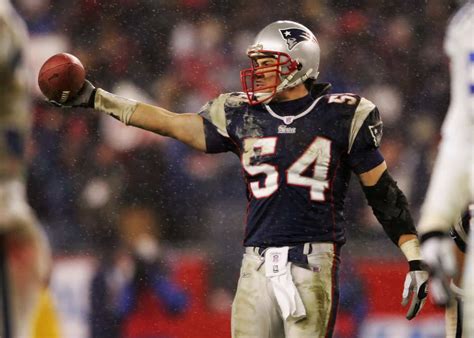
Bill Belichick doesn’t hand out superlatives. In 20-plus years coaching the Patriots, he called exactly one player “the perfect player.” That was Tedy Bruschi. At his retirement press conference in 2009.
Which makes the 1996 NFL Draft a little strange to look back on. The Patriots took Bruschi 86th overall – third round, 22nd pick in that round. Not a priority selection. Not a statement about the future of the defense. Bruschi came out of Arizona having tied the NCAA Division I-A sack record (52, over four seasons with the Desert Swarm defense) and won the Butkus Award in 1995. Two-time consensus All-American. And he fell to pick 86.
He was 6-foot-1, 247 pounds – undersized by the standards teams used to evaluate linebackers then. That’s the piece of this that doesn’t quite resolve: the resume screamed first-round talent, and the draft result said otherwise. Bruschi never complained about it publicly. He just showed up to Foxborough and played.
Born June 9, 1973, in San Francisco, he grew up in Roseville, California, lettered in football, wrestling, and track at Roseville High, and landed a scholarship to Arizona. His four years in Tucson were legitimate. The Desert Swarm defense under Dick Tomey was one of the best in college football in the mid-90s, and Bruschi was its anchor. The Patriots were getting someone who had already been tested at a high level. They just didn’t pay first-round prices to find out.
What He Actually Did on the Field
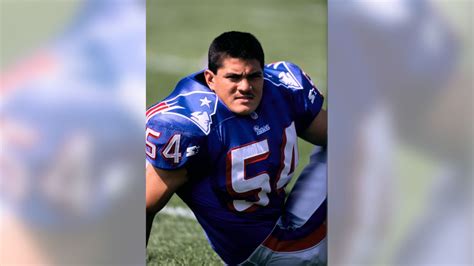
Bruschi played in his first Super Bowl in his rookie season, 1996. That detail gets lost. The Patriots made it to Super Bowl XXXI that year – they lost to Green Bay – but Bruschi was there, in the middle of the defense, as a 23-year-old in his first NFL season. The dynasty people talk about came later, but he was present from the beginning.
The three championships – Super Bowls XXXVI, XXXVIII, and XXXIX – came in February 2002, February 2004, and February 2005. In all three, the Patriots defense was the story. The 2001 defense held the high-scoring Rams to 17 points. The 2003 unit won despite losing key players to injury throughout the year. In 2004, the defense allowed just 16.25 points per game during the regular season, third fewest in franchise history at the time.
Bruschi’s role in that defense was specific and not easy to summarize in a box score. He was the communication hub – the player who translated Belichick’s scheme into real-time adjustments on the field. Alignments, pre-snap checks, coverage calls. A Belichick defense runs complex schemes at full speed, and it needs someone in the middle who processes everything before the snap and communicates it in under five seconds. Bruschi did that for 13 years.
He was also genuinely versatile. He could rush the passer (30.5 career sacks), drop into coverage (12 interceptions, four returned for touchdowns – more than any other player in franchise history at the time of his retirement), and play the run. He’s the only player in NFL history to return four consecutive interceptions for touchdowns. That’s not a minor footnote. It’s a record that still stands.
Seven times he was named a team captain. In 211 career games, counting playoffs, the Patriots went 144-67. That’s a .682 winning percentage. The team didn’t win because of him alone – they had Brady, they had Belichick, they had Seymour and Harrison and McGinest. But that record in his games is the most honest summary of what his presence meant.
The 2004 Pro Bowl was his only selection. One. For a career that long, at that level of consistent performance, one Pro Bowl is the most telling thing about how he was perceived nationally versus how he was valued inside the building. Robert Kraft called him “the heart and soul of the defense.” National voters gave him one trip to Hawaii.
February 15, 2005
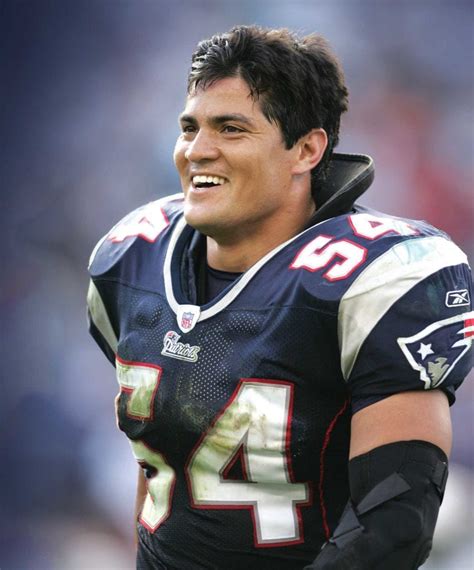
Three Super Bowls in four years. Pro Bowl selection. Then, two weeks after Super Bowl XXXIX, Tedy Bruschi woke up at 31 years old with his fists clenched, his left arm numb, and something wrong with his vision.
At Massachusetts General Hospital, doctors confirmed he’d suffered an ischemic stroke – a blood clot, traced to a congenital hole in his heart called a patent foramen ovale. The hole had allowed a clot to pass from one side of the heart to the other and travel to his brain. The MRI showed the stroke had hit the back right side.
He was partially paralyzed on his left side. Rehabilitation began at Spaulding Rehabilitation Hospital. In March 2005, he announced he was retiring from football permanently.
He had the hole in his heart repaired through a catheter-based procedure. Rehabilitation continued. And then somewhere in the summer of 2005, he changed his mind – not all at once, but in stages. He told Belichick he wanted to try. He started working out with the team. By early October, team doctors cleared him.
October 30, 2005. Patriots versus Bills at Gillette Stadium. Bruschi walked out for warmups eight months and fifteen days after his stroke. The crowd reacted before the game even started.
He played 37 snaps. Ten tackles. The Patriots won. He was named AFC Defensive Player of the Week – which, given the circumstances, felt slightly absurd as a frame for what had happened. At the end of that season, the NFL gave him the Comeback Player of the Year award, shared with Carolina’s Steve Smith.
When he retired four years later, in August 2009, he mentioned a specific number in his statement: 366 tackles as a stroke survivor. He said he was proud of that. He wasn’t being performative about it. Those 366 tackles happened in a body that had partially stopped working, on a brain that had been injured, for a team he could have just watched from a press box. He chose to play instead, and he made it count.
Tedy’s Team and the Work After the Comeback
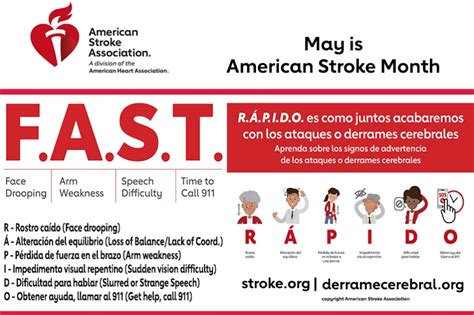
Before the 2005 season was over, Bruschi had started Tedy’s Team – a fundraising and awareness organization built around the American Stroke Association. The premise was simple: stroke kills and disables people who don’t know they’re at risk, and a professional athlete who survived one at 31 was in a position to say something about it that the general public might actually hear.
He wrote about the experience in a 2007 memoir, Never Give Up: My Stroke, My Recovery, and My Return to the NFL. He ran the Boston Marathon in 2012 with Tedy’s Team members, finishing in 5 hours, 26 minutes, and 2 seconds – not a competitive time, but that wasn’t the point. He ran it again in 2014 (4:47:44) and in 2019 (4:35:35). The improving times across seven years say something about how he approached recovery work: as a process, not a moment.
In July 2019, at 46, he suffered a second stroke. The Patriots and Tedy’s Team both released statements. He recovered, returned to his ESPN duties, and the organization he’d built continued operating. The second stroke, if anything, underlined why the foundation existed – Bruschi wasn’t an anomaly who had one unlucky event. He was someone living with real cardiovascular risk, doing public work about it, which is a harder and more honest kind of advocacy than the ceremonial kind.
Career Numbers
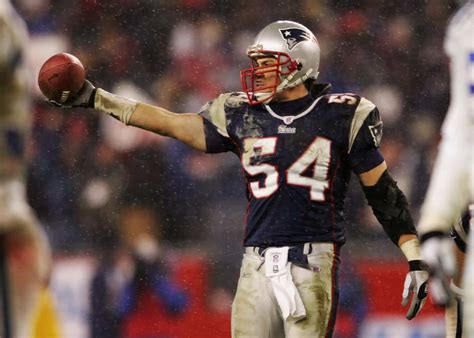
For anyone who wants the full stat line: 189 regular-season games, 139 starts. 1,074 career tackles. 30.5 sacks. 12 interceptions, 187 return yards, four returned for touchdowns. 17 forced fumbles, 7 recoveries. 57 pass deflections. Five total touchdowns.
He also tied the NCAA Division I-A career sack record (52) in college, which is worth repeating because it explains why the “undersized linebacker” knock never really held up – he was a pass rusher at Arizona who then converted into a complete linebacker in New England. Those are different skill sets. He developed the second one entirely in the NFL.
One thing in the numbers that doesn’t get much attention: the .727 playoff winning percentage. In 22 postseason games, the Patriots went 16-6 with Bruschi on the roster. Big-game players exist, but that kind of sustained postseason success across a decade is rarer than one signature moment.
Pro Football Reference lists him as not yet inducted into the Pro Football Hall of Fame. That’s accurate. Whether the omission holds up long-term is a separate conversation – but the honest version of it is that his candidacy is complicated by a modest All-Pro resume (two second-team selections, 2003 and 2004) and only one Pro Bowl trip. The counting stats – 30.5 sacks, 12 interceptions – are solid but not dominant by historical standards. His value was real and substantial and partly invisible to the metrics that drive Hall of Fame voting. That’s an acknowledged tension, not a clean resolution.
What the Patriots Hall of Fame Induction Actually Showed
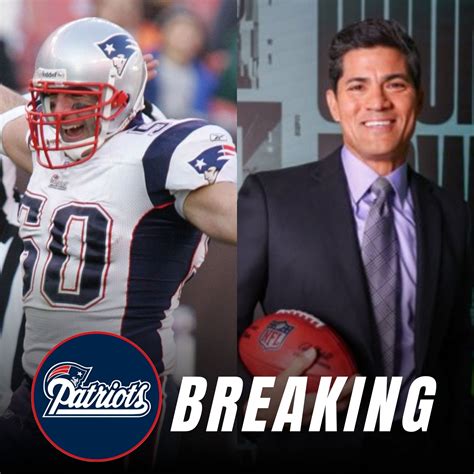
The Patriots inducted Bruschi into their Hall of Fame on August 11, 2013. He was the 19th player and 21st member overall. What made the induction notable, beyond the honor itself, was that fans voted him in during his first year of eligibility – he was only the third player in the history of the vote to achieve that (after Drew Bledsoe in 2011 and Troy Brown in 2012). Bledsoe was the franchise quarterback for a decade. Brown was a beloved receiver who played on all three championship teams. Bruschi, the linebacker, ranked alongside them in how quickly and decisively the fan base responded.
Robert Kraft’s statement for the induction described him as “the heart and soul of the defense” during “the most successful era in the history of the franchise.” Belichick had already said what he said in 2009. The ceremony honored Bruschi alongside Gil Santos, the radio voice of the Patriots for 37 seasons – which created an odd but fitting pairing: the man who described the dynasty and the player who embodied it, inducted the same night.
His number 54 was later worn by Dont’a Hightower, which is the kind of unofficial tribute that means more inside a locker room than any banner. Hightower became the defensive captain of the next Patriots era – same position, same role, different player. The lineage was intentional enough that it read as institutional memory rather than coincidence.
After Football: ESPN and the Broadcast Years
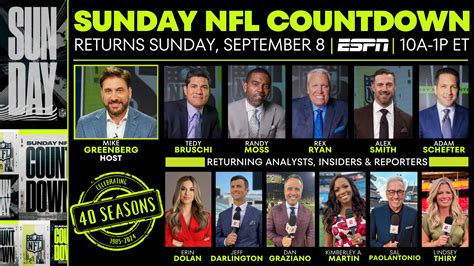
One week after retiring in August 2009, Bruschi joined ESPN. The timing was almost immediate – he went from player to analyst without a gap year. He appeared on Sunday NFL Countdown, First Take, Get Up, SportsCenter, and ESPN Radio. During his first season, he joined the Monday Night Countdown crew at both Patriots Monday Night Football games, which gave him a natural on-ramp: he was talking about his own franchise, in stadiums he knew, about players he’d played with or against.
The halftime ceremony at the Jets-Patriots Monday Night game in December 2010 honored him formally, a year after his retirement. ESPN covered it as part of the broadcast.
His broadcast career has run alongside his foundation work rather than replacing it. He’s been a regular presence on ESPN’s Super Bowl coverage and draft programming, which means he’s appeared on screen more consistently than most retired players manage. Whether that’s by design or circumstance, he’s remained in the public conversation about the NFL in a way that most linebackers from his era haven’t.
What I find genuinely surprising in this story is how little national attention the first stroke got at the time compared to how prominent it became in retrospect. In February 2005, the dominant narrative was the Super Bowl hangover and what New England would do next. A 31-year-old linebacker having a stroke was covered, but not obsessively. Eight months later, when he walked back onto the field, suddenly the story had weight. The comeback needed the context of the attempt – and the attempt only registered once it worked. That’s not unique to Bruschi, but it’s a strange feature of how sports media processes adversity: it often only becomes the story after the person survives it cleanly.
Comments