
Bill Romanowski: The NFL Linebacker Who Won Four Super Bowls and Never Stopped Making Headlines
Who Is Bill Romanowski?
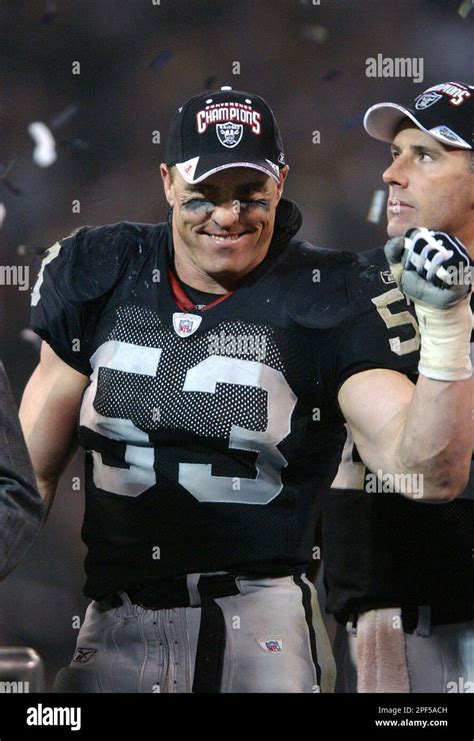
Bill Romanowski played 16 seasons in the NFL, started five Super Bowls, won four of them, and set a record for consecutive games played at linebacker that still stands. He was also fined repeatedly for on-field violence, linked to a federal steroid investigation, and ended his career by shattering a teammate’s eye socket during training camp. Both things are true at once, and that tension is basically what his entire story is about.
Born April 2, 1966, in Vernon, Connecticut, Romanowski went from a Boston College linebacker to a third-round draft pick to one of the most decorated – and most penalized – defensive players of his era. He played for four franchises: the San Francisco 49ers, Philadelphia Eagles, Denver Broncos, and Oakland Raiders. His nicknames, “Romo” and “RomoCop,” said something about how teammates and opponents saw him: part professional, part machine, part threat.
College Career at Boston College
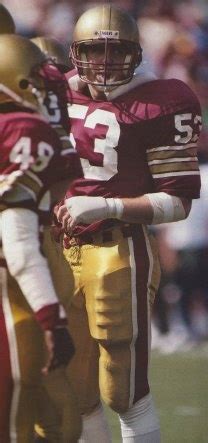
Romanowski was a four-year starter at Boston College from 1984 to 1987, which wasn’t unusual. What was unusual was what he did as a freshman: he won a starting job on the 1984 Lambert Trophy team and was named Defensive MVP of the Cotton Bowl victory over Houston, recording 13 tackles (11 solo) in the game. As a freshman.
His senior season produced a school-record 156 tackles, 101 of them solo. That earned him the George “Bulger” Lowe Award as New England’s top college football player. He also received the Scanlan Memorial Award – given to BC’s top football scholar-athlete – which tends to get left out of most Romanowski writeups, possibly because it complicates the “unhinged enforcer” image that follows him everywhere.
He was a second-team All-American in 1987, played in the East-West Shrine Game, and was selected 80th overall by San Francisco in the 1988 NFL Draft. Third round. Not a reach pick – a value pick by a 49ers team that knew exactly what they were getting.
NFL Teams and Career Statistics
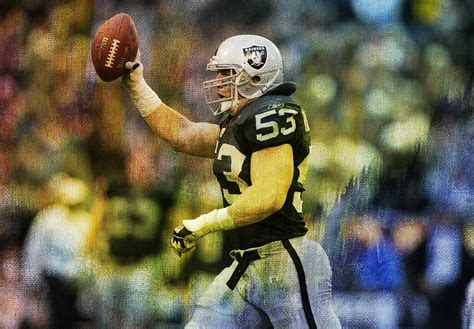
The career numbers: 1,118 tackles, 39.5 sacks, 18 interceptions, 18 forced fumbles, one defensive touchdown. He played 243 consecutive games – a record for linebackers in NFL history. He missed exactly zero games across 16 seasons, which is the kind of durability that gets more remarkable the longer you think about it, especially given the position and the era.
San Francisco (1988–1993) was where he developed. He won two Super Bowls with the 49ers, played alongside Joe Montana and Jerry Rice, and averaged over 80 tackles a season once he settled into the lineup. The 49ers traded him to Philadelphia after the 1993 season, a move that surprised some observers at the time given his production.
Two seasons with the Eagles (1994–1995) produced solid play and no championships. Then Denver signed him in February 1996, and things got interesting again.
The Broncos years (1996–2001) were his peak. He made two Pro Bowls – 1996 and 1998 – and won back-to-back Super Bowls with John Elway. In 1996 alone he posted 77 tackles, three interceptions, three sacks, and three fumble recoveries. He also broke Kerry Collins’ jaw in a preseason hit that cost him $20,000 in fines. Both facts belong in the same paragraph because that was what Broncos-era Romanowski looked like in practice.
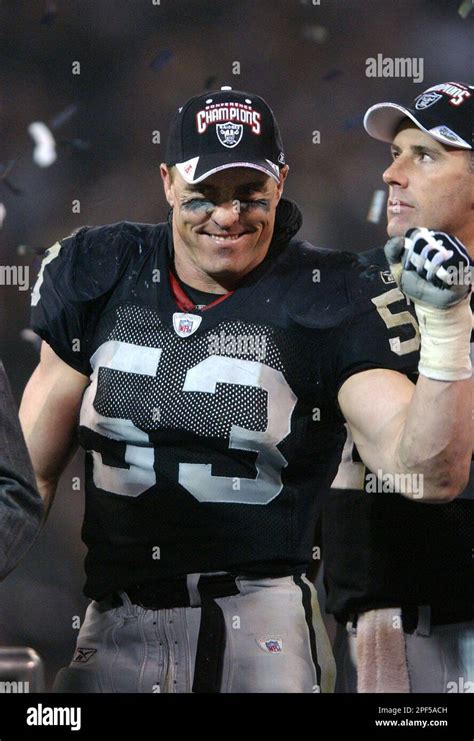
Oakland (2002–2003) was the end. He helped the Raiders reach Super Bowl XXXVII, where they lost to Tampa Bay 48–21. The 2003 season brought the Marcus Williams incident, a positive drug test, and the end of the streak – not because he finally got hurt but because his career was effectively over.
Super Bowl History: Four Rings, Five Starts
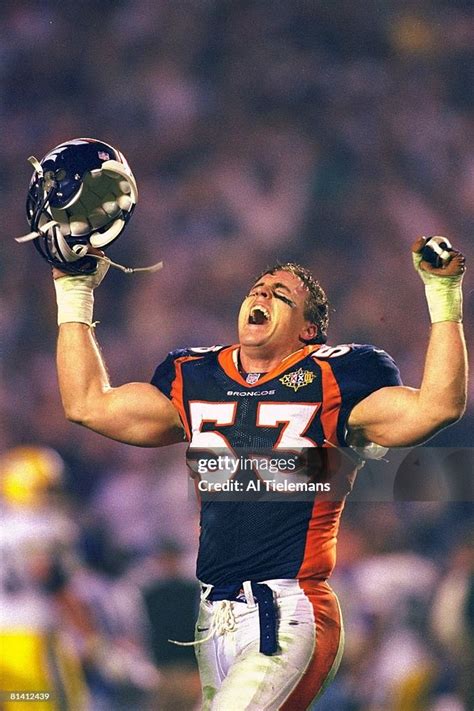
No linebacker in NFL history started five Super Bowls. Romanowski is the only one. He won Super Bowls XXIII and XXIV with San Francisco (over Cincinnati and Denver, respectively), then XXXII and XXXIII with Denver (over Green Bay and Atlanta). He started but lost Super Bowl XXXVII with the Raiders. Four wins. One loss. Five starts.
He is also one of three players in NFL history to win back-to-back Super Bowls with two different organizations – a distinction that tends to get buried under everything else. The other two are not linebackers.
What doesn’t always get acknowledged is that this wasn’t coincidence or roster luck. Romanowski was a starter on every one of those teams, playing meaningful snaps in every game. His consecutive games record means he was available for all of it, not collecting rings from the sideline with a hamstring issue.
Playing Style and Preparation
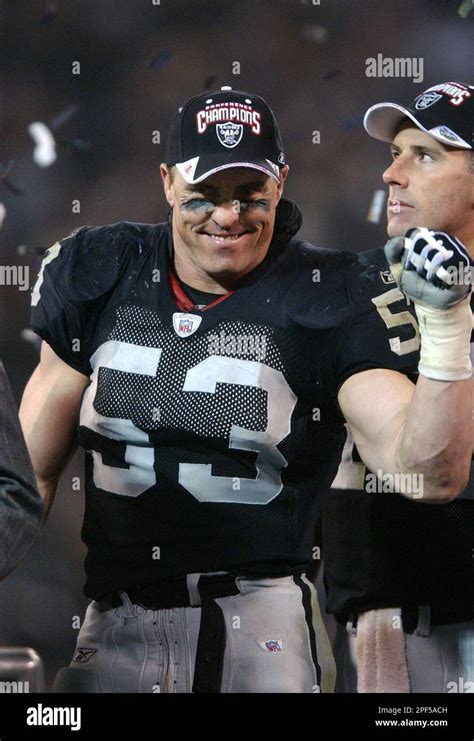
At 6’4″ and 245 pounds, Romanowski had the size to control tight ends and the lateral quickness to track down running backs in space. But the thing coaches cited most was preparation. He studied film obsessively. His nutrition and supplement regimen was, by the 1990s, so extensive that it became the foundation for a post-career business. He treated off-season training like a year-round job in an era when many players did not.
His sideline-to-sideline range and ability to read formations pre-snap made him a legitimate defensive anchor for multiple championship teams. That part is real. The problem is that Romanowski apparently could not always separate “play hard” from “hurt people on purpose” – and the line between those two things moved depending on who you asked.
What gets me is that the preparation argument and the conduct argument keep running into each other. You can be obsessively disciplined and also cross serious lines. Romanowski was both, and trying to resolve that into a clean narrative doesn’t really work.
On-Field Incidents and Fines
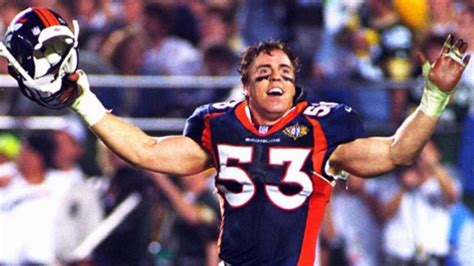
The incidents started accumulating early and never really stopped. In a 1997 preseason game, he delivered a helmet-to-helmet hit on Carolina Panthers quarterback Kerry Collins, breaking his jaw. Fine: $20,000. In 1999, he spit on 49ers receiver J.J. Stokes during an on-field altercation. Fine: $7,500. He was cited as one of the league’s leading fine recipients during his Broncos tenure – though the exact total across his career is harder to pin down than the individual incidents.
There were also allegations of racist language directed at opponents and at least one teammate. Romanowski denied those claims repeatedly. The denials were consistent; the allegations also kept coming from multiple directions.
The most serious incident came in August 2003, during a Raiders training camp scrimmage. Romanowski punched teammate Marcus Williams in the face, crushing his eye socket. Williams never played in the NFL again. He sued Romanowski for $3.4 million; a court awarded him $340,000 for medical expenses and lost wages. Romanowski, in his 2005 book and in the 60 Minutes interview, said he felt awful about it. Williams said publicly that an apology never came.
The BALCO Scandal and Steroid Admission
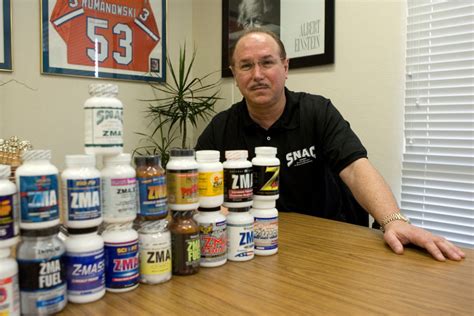
In November 2003, the NFL informed Romanowski that he had tested positive for THG – tetrahydrogestrinone, a designer steroid that was at the center of a federal investigation into the Bay Area Laboratory Co-Operative (BALCO). BALCO’s owner, Victor Conte, had supplied performance-enhancing drugs to athletes across multiple sports, including track and field and baseball. Government records that came out of the investigation linked Romanowski to both THG and synthetic testosterone.
Two years later, on October 16, 2005, Romanowski sat down with Scott Pelley on 60 Minutes and confirmed it. He said he took steroids and human growth hormone supplied by Conte, starting around 2001. His reasoning, explained more fully in other interviews and in his autobiography, was essentially this: if a substance wasn’t on the banned list and he didn’t believe it would hurt him, he’d take it. He described staying ahead of the testing calendar deliberately – stopping a substance once the league found a way to test for it.
That’s not a defense. It’s a description of a system, and Romanowski was unusually candid about how it worked, which is worth something even if the candor came two years after the career ended.
He denied that steroid use caused the Marcus Williams incident. Whether you find that credible probably depends on how much of the rest you believed.
Hall of Fame Case: The Numbers vs. The Record
Pro-Football-Reference confirms the obvious: Bill Romanowski has not been elected to the Pro Football Hall of Fame. Given the combination of career length, Super Bowl wins, and statistical production, that’s at least worth examining.
The argument for induction is real. 243 consecutive games is an NFL record at linebacker. Four Super Bowl titles, starting all four. Career totals that compare favorably to several linebackers who are already in Canton. Two Pro Bowl selections during what was arguably the strongest linebacker era in league history, competing against Junior Seau, Derrick Brooks, and Ray Lewis for recognition.
But the steroid admission is a problem that doesn’t go away on its own. The durability argument – the consecutive games streak, the 16-year career – is the centerpiece of his Hall case. And that durability was, by his own account, partly chemical. Hall of Fame voters have been inconsistent about how they treat PED-connected players, but Romanowski admitted it publicly on national television. That’s a different situation than a failed test with a denial.
Add the on-field conduct, the Marcus Williams settlement, and the absence of a consensus All-Pro season, and you have a legitimate case that he falls short. His supporters aren’t wrong about the records. His critics aren’t wrong about the rest.
Life After Football: Business, Film, and Financial Trouble
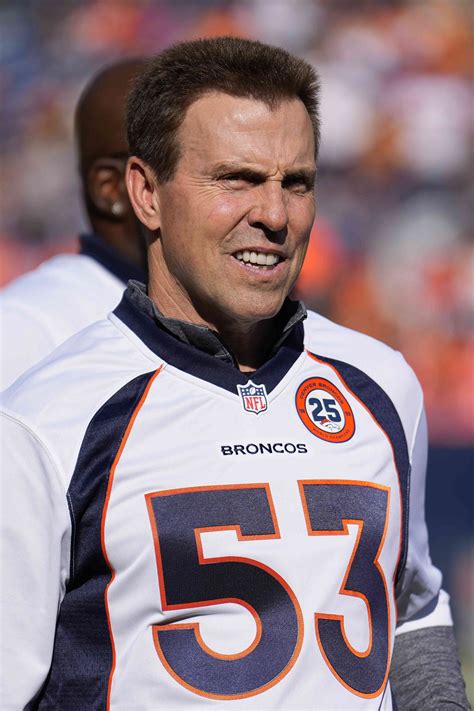
After retiring in 2003, Romanowski leaned into the nutrition and recovery obsession that had defined his playing career. He built a supplements business, drawing on the reputation – controversial as it was – for being someone who had spent 16 seasons engineering his own body for performance. The business had varying results.
He appeared in several films, most notably the 2005 Adam Sandler remake of The Longest Yard, where he played one of the prison guards. He also appeared in The Benchwarmers and Get Smart, and voiced a character in the video game Blitz: The League. Not a dramatic career pivot, but it kept him visible.
His autobiography, “Romo: My Life on the Edge,” came out in 2005 alongside the 60 Minutes interview. The book was, by most accounts, unusually candid – including admissions about specific violent incidents that most players would never put in writing.
He pursued coaching. After sending a reported 30-page PowerPoint presentation to Broncos owner Pat Bowlen outlining his ideas for a strength and conditioning role, he was passed over for Josh McDaniels. Mike Shanahan brought him in for an interview with the Washington Redskins for a similar position; that didn’t go forward either.
In 2011, he was inducted into the National Polish-American Sports Hall of Fame in Troy, Michigan.
The more recent news is harder. The Department of Justice has alleged that Romanowski owes more than $15.3 million in back taxes – a claim that made headlines again in late 2024. The case involves allegations of tax evasion over multiple years. It is a federal allegation, not a conviction, but the dollar amount is not small.
What His Career Actually Meant
Romanowski played during a specific window in NFL history when the league’s drug testing infrastructure was genuinely years behind what players were doing, when the line between “physical play” and deliberate injury was enforced inconsistently, and when the culture around linebacker play rewarded exactly the kind of borderline conduct he became known for. That context doesn’t excuse what he did. But it does mean that judging him in isolation from that era gets the history slightly wrong.
He was one of the better linebackers of the 1990s. Not the best – Ray Lewis exists – but a real, substantive contributor to four championship teams across two separate dynasties. The consecutive games record is a genuine athletic achievement even accounting for everything that complicated it. Those things belong on the ledger.
So does the rest. The punch that ended Marcus Williams’ career. The BALCO admission. The allegations from multiple players over multiple years. These aren’t footnotes; they’re part of the same story as the Super Bowl rings and the tackle numbers.
What the career doesn’t have is a clean ending or a clean reading. He came clean about the drugs before he had to, and then spent years dealing with the consequences. He regretted some things publicly and apparently not others. The record is what it is, complicated and real, sitting in Canton’s waiting room without a clear answer.
Comments