
Fred Dryer’s Football Career: The Defensive End Who Owns an Unbreakable NFL Record
Who Fred Dryer Was on the Football Field
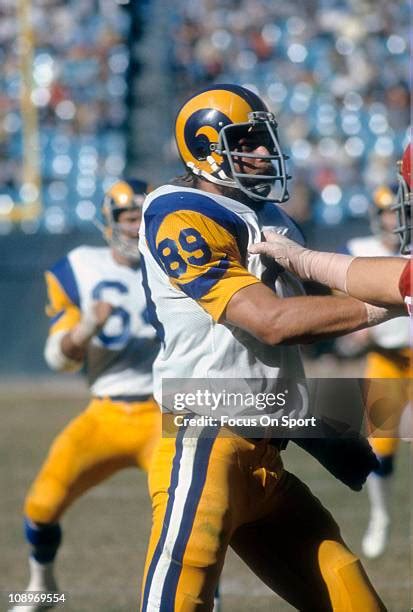
Fred Dryer played defensive end in the NFL from 1969 to 1981 – 13 seasons, 176 games, 103 sacks. He is the only player in NFL history to record two safeties in a single game. That record has stood for over 50 years and nobody has come close to matching it.
Most people who recognize his name today know him from Hunter, the NBC crime drama where he played Sgt. Rick Hunter for seven seasons. That’s fine. But the football career is worth understanding on its own terms, because it’s genuinely unusual – not in a “well-rounded athlete” PR way, but in specific, verifiable ways that hold up when you look at the numbers.
John Frederick Dryer was born July 6, 1946, in Hawthorne, California. He grew up in Lawndale, played high school football there, and never really left Southern California mentally even when the NFL tried to send him elsewhere. That detail matters more than it sounds, as we’ll get to.
College Football: San Diego State, Don Coryell, and a Recruiter Named John Madden
Dryer started at El Camino Junior College in 1965 and 1966, where he was named a Junior College All-American. He transferred to San Diego State, where the head coach was Don Coryell – the same Coryell who would later build the Air Coryell offense with the Chargers and get inducted into the Pro Football Hall of Fame.
The defensive coordinator who recruited Dryer to SDSU was John Madden.
In Dryer’s two seasons with the Aztecs (1967 and 1968), the team went 19-1-1 and won the College Division national championship both years. He was named First-Team Little All-American in 1968, played in the East-West Shrine Game, the Hula Bowl, and the College All-Star Game. At 6 feet 6 inches and 238 pounds, he was considered one of the most physically imposing pass rushers college football had seen at that level.
San Diego State inducted him into their Athletic Hall of Fame in 1988. In 1997, he was voted into the College Football Hall of Fame – the highest honor in the college game. The induction ceremony was held in South Bend, Indiana in August of that year.
The Giants, The Trade He Refused, and How He Got to the Rams
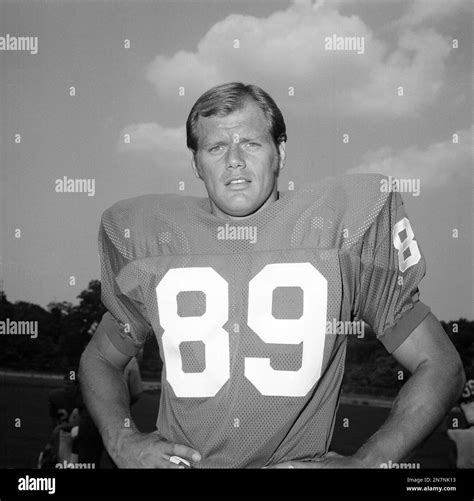
The New York Giants selected Dryer with the 13th pick in the first round of the 1969 NFL Draft. He won a starting job as a rookie and led the Giants in sacks in each of his three seasons there: 8.5 in 1969, 12 in 1970, 8.5 in 1971.
He was good. He also hated New York.
In February 1972, the Giants traded him to the New England Patriots in a deal that brought back a first-round pick, a second-round pick, and a sixth-round pick. Dryer refused to sign with New England unless they met his contract demands. They declined. With days left before he would have become a free agent, the Patriots flipped him to the Los Angeles Rams for a 1973 first-round pick and backup defensive end Rick Cash.
Dryer got what he’d wanted the whole time: California. He signed a multi-year deal with the Rams without much drama and played there for the next ten seasons.
His first year in Los Angeles was rocky. He came in with a broken hand and broken nose, backed up Jack Youngblood, made only four starts. Still finished with 40 tackles and 4.5 sacks. The following year, 1973, he started all 14 games on the right side of the defensive line – and the season produced the moment that defines his football legacy.
October 21, 1973: The Game That No One Has Ever Matched
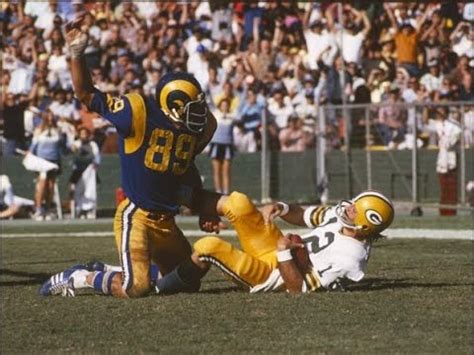
The Rams beat the Green Bay Packers 24-7 that day. Late in the fourth quarter, with the game already decided, Dryer chased down Scott Hunter – Green Bay’s starting quarterback – in the end zone for a safety. Then, a few minutes later, he did it again, this time sacking backup quarterback Jim Del Gaizo in the end zone for a second safety.
Both came in the fourth quarter. The only two safeties Dryer scored in his entire 13-year career, both in the same game, both in the same quarter.
What makes this genuinely hard to wrap your head around: a safety requires a defender to tackle the ball carrier in the offense’s own end zone. It happens maybe once every few games league-wide. Getting two in a single game is the kind of thing that requires an unusual combination of defensive pressure, poor offensive decision-making, and some luck with where plays develop. Dryer had all of it converge on one afternoon in October 1973 against a Packers team that finished 5-7-2 that season.
The record has never been equaled. Over 50 years of NFL football, across roughly 14,000 regular-season games, no defender has put up two safeties in a single contest. Dryer has spoken about the game on camera for the Rams’ official YouTube channel, and his account of it is worth watching – he describes it with the kind of calm specificity that makes it clear he’s thought about why it happened and doesn’t fully have an answer either.
The Rams’ Fearsome Foursome and the 1970s Defense
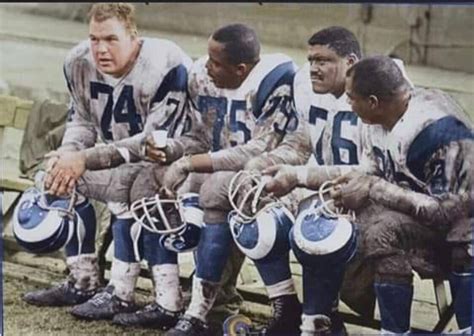
When Dryer arrived in Los Angeles, the Rams already had Jack Youngblood at left defensive end. Merlin Olsen, who had been one of the original Fearsome Foursome players from the 1960s, was still on the team at defensive tackle. Larry Brooks played the other tackle spot. What emerged from that combination was one of the most effective defensive fronts in the league for most of the decade.
Dryer was the right end opposite Youngblood. They played alongside each other for nine seasons. In 1974, both finished with 15 sacks – the unofficial league lead, since sacks weren’t tracked as an official NFL statistic until 1982. Dryer was voted Second-Team All-Pro that year and went to the Pro Bowl the following season in 1975. He also scored his only NFL touchdown in 1975, on a 20-yard interception return against the Philadelphia Eagles during a 42-3 Monday night blowout.
The Rams won seven consecutive NFC West titles from 1973 through 1979. They were consistent, dominant, and frustrating in the postseason – good enough to keep winning divisions, never quite good enough to break through in January until the 1979 season, when they reached Super Bowl XIV.
That game, played in January 1980 at the Rose Bowl in Pasadena, went badly. The Rams led 19-17 going into the fourth quarter and gave up 14 unanswered points to the Pittsburgh Steelers, losing 31-19. Dryer had 5.5 sacks and 31 total tackles during the regular season that year. He played one more season after the Super Bowl, then appeared in only two games in 1981 before retiring.
Career Numbers and What They Actually Mean
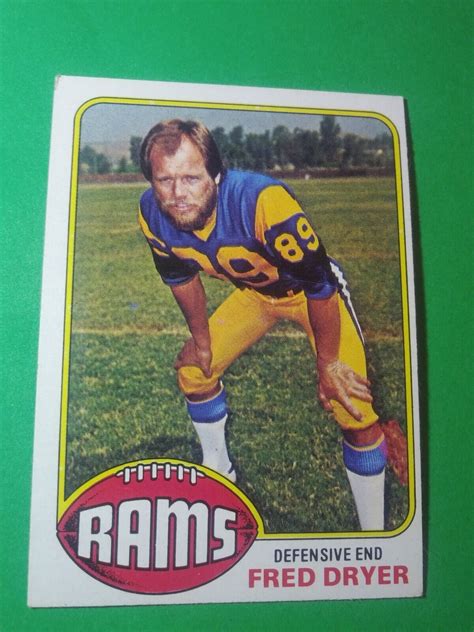
103 career sacks. 176 games. 20 fumble recoveries. One interception. One touchdown. Two safeties.
Here’s the thing about those 103 sacks that most write-ups skip past: they were accumulated before the NFL made sacks an official statistic. The league didn’t start tracking them officially until 1982, the year after Dryer retired. His total comes from retroactive tracking – largely by Pro Football Reference and independent researchers going back through game film and box scores. Which means the number is probably accurate but carries a margin of uncertainty that official post-1982 sack totals don’t have. It doesn’t diminish what he did, but it’s an honest detail worth knowing.
74 of those 103 sacks came with the Rams. The other 29 were with the Giants. He led New York in sacks in each of his three seasons there, which is often overlooked because the Giants of 1969-1971 were not a good team and didn’t generate much national attention.
His career numbers place him among the most productive defensive ends of his era. He was not a Pro Bowl regular – one selection in 1975 – but the All-Pro recognition in 1974 came in a year when he genuinely was one of the best players at his position in the sport.
Honors and Hall of Fame Questions
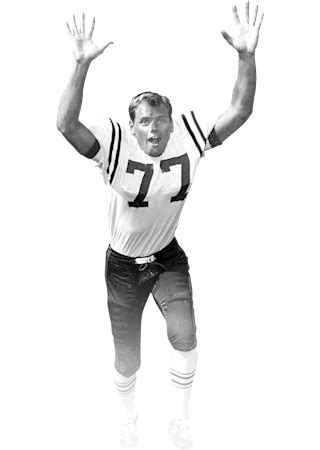
Dryer’s formal football honors:
College Football Hall of Fame inductee (1997). San Diego State Athletic Hall of Fame (1988). El Camino Community College Athletic Hall of Fame charter member (1988). First-Team Little All-American (1968). NFL sacks co-leader (1974). Second-Team All-Pro (1974). Pro Bowl selection (1975).
He is not in the Pro Football Hall of Fame. His name comes up occasionally in discussions of overlooked candidates from the 1970s defensive end class, but he hasn’t been a finalist in recent memory. The case for him rests on the 103 sacks, the unique record, and his role in one of the more dominant defensive units of the decade. The case against is that his peak recognition was limited – one Pro Bowl, one All-Pro year – and he played alongside more celebrated players who drew more attention during voting cycles.
Jack Youngblood, his linemate for nine seasons, is in the Hall of Fame. Merlin Olsen is in the Hall of Fame. Dryer isn’t. That gap is real, though how much it reflects actual career value versus perception and timing is something reasonable people disagree on.
The Transition Out and What Came After Football
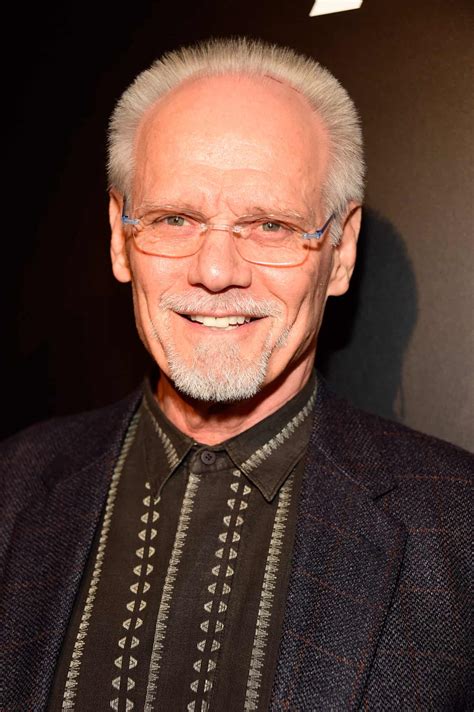
Dryer retired after the 1981 season. He went directly into broadcasting, working as an NFL color commentator for CBS. He appeared on Cheers in a recurring role as Dave Richards, a sportscaster and former Red Sox player. He had a guest turn on CHiPs. He nearly got the role of Sam Malone on Cheers – the writers had originally conceived the character as a former football player, but switched to baseball when Ted Danson was cast, which made the bar-owner premise work better.
In March 1984, producer Stephen J. Cannell hired him to play Sgt. Rick Hunter on Hunter. The show ran on NBC for seven seasons, from 1984 to 1991, and was one of the network’s more reliable crime dramas of that period. Dryer’s size – still 6’6″ well into his late 30s – gave the character a physical presence that worked for the role in ways casting a smaller actor wouldn’t have.
His football career and his acting career are usually discussed as if they happened to two different people. They didn’t. The same person who holds an unrepeated NFL record also had a seven-season network television run. That’s not common. It’s not even close to common. Most NFL players don’t get either one.
Comments