
Bubba Smith Football: The Colts Defensive End Who Was Too Big to Stop
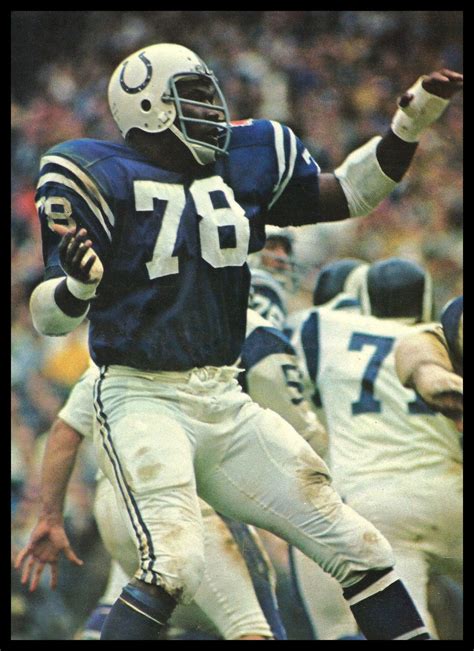
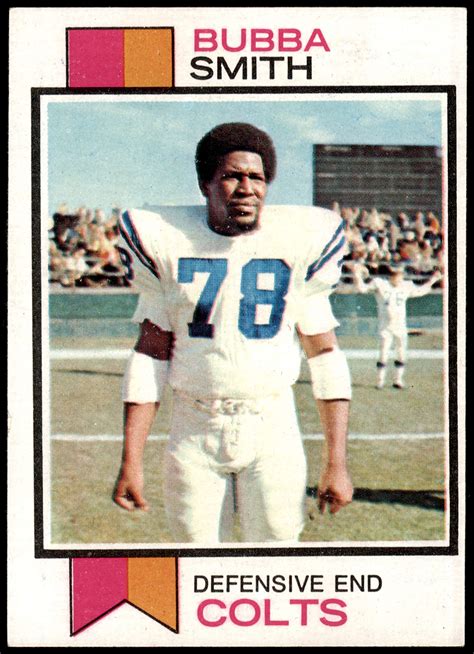
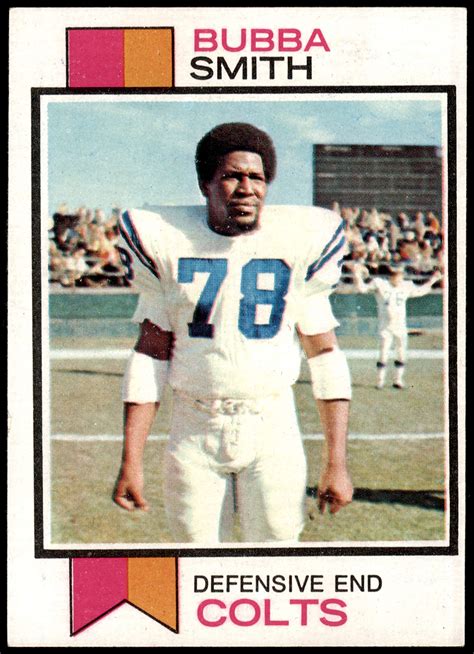
Charles Aaron Smith was born February 28, 1945, in Orange, Texas, and by the time he arrived in Baltimore as the first overall pick of the 1967 NFL Draft, opposing offensive linemen had already been dreading him for three years. At Michigan State, where fans chanted “Kill, Bubba, Kill” until it became as much a part of game day as the coin toss, he had already helped the Spartans hold Notre Dame, Ohio State, and Michigan to negative rushing yards in the same season. That was 1965. He hadn’t even played his best college football yet.
Growing Up in a Football Household
His father, Willie Ray Smith Sr., coached high school football at three different Beaumont-area schools and finished with 235 career victories. He coached all three of his sons. Bubba’s younger brother Tody would eventually play for USC and then the Dallas Cowboys. The middle brother, Willie Ray Jr., also played collegiately. Football wasn’t a pastime in that house. It was the occupation.
Smith wanted to play at the University of Texas. The school wasn’t taking Black players yet. This wasn’t an unusual situation in the early 1960s South – it was the rule – and it pushed many of the most talented Black athletes in Texas and Louisiana north toward programs that would actually recruit them. Michigan State’s Duffy Daugherty was among the most aggressive of those coaches, and Bubba ended up in East Lansing alongside a remarkable collection of players who couldn’t get a fair look in their home states.
Michigan State: Where the Chant Started
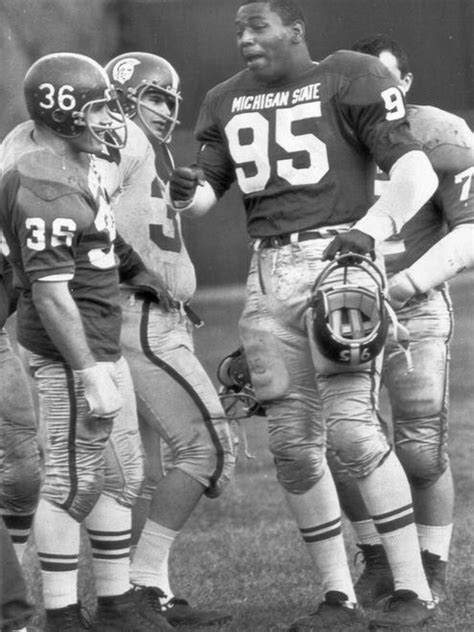
He played for the Spartans from 1964 to 1966 and was named first-team All-American by nine separate organizations in his senior year. Nine. The American Football Coaches Association, the Associated Press, UPI, the Football Writers Association of America – they all agreed. That doesn’t happen often. ESPN’s CFB150 project, which ranked the greatest college football players across the sport’s first 150 years, placed him 31st overall and third among all defensive ends, behind only Hugh Green of Pitt and Reggie White of Tennessee.
The 1966 Michigan State defense was something else. The Spartans led the NCAA in rushing defense and scoring defense that year, giving up 6.2 points per game. Smith lined up at 6’7″ and 283 pounds and was, by that point, drawing double teams on almost every snap.
October 22, 1966: Michigan State vs. Notre Dame, number one against number two, billed at the time as the Game of the Century. It ended 10-10, a result that still irritates Michigan State fans because Notre Dame’s Ara Parseghian ran out the clock rather than press for a win. Smith played most of that game against two blockers. His jersey number, 95, was retired by Michigan State in 2006. He’s one of six players in program history to receive that honor.
The 1967 NFL Draft: First Pick, Only Pick
The Baltimore Colts had traded for the top selection after a 9-5 season, dealing with the New Orleans Saints after that year ended. They already had Johnny Unitas. They already had a defense that could win games. Adding Smith wasn’t a rebuild; it was the kind of move a team makes when it thinks it’s close to something.
No Michigan State player has ever been taken first overall in the NFL Draft before or since. That 1967 selection remains unique.
His rookie year was rough – injuries slowed him – but his second season, 1968, he helped the Colts to a 15-1 record. Baltimore lost Super Bowl III that January to Joe Namath and the Jets, 16-7, in one of the most shocking upsets in professional sports history. What’s less remembered is that Smith’s own account of that loss, published years later in his 1983 autobiography Kill, Bubba, Kill, suggested it was possible the game had been arranged to ensure the AFL-NFL merger went smoothly. He never produced evidence. Most football historians have dismissed the claim. But he made it, in print, under his own name, which is not something you do if you don’t believe it on some level.
Baltimore Colts: Super Bowl Champion
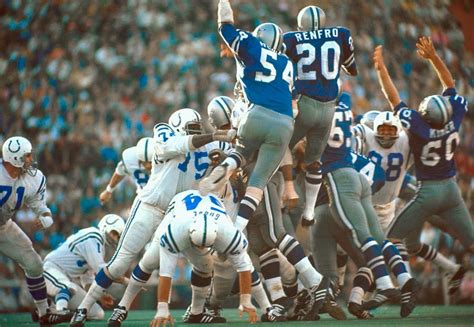
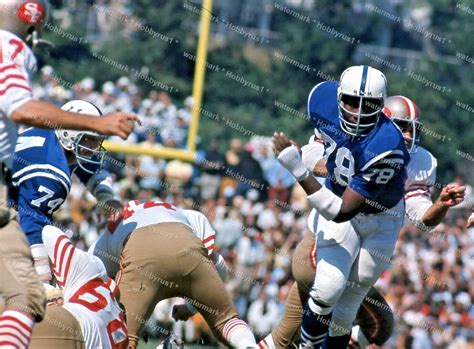
Smith spent six seasons with the Colts, from 1967 through 1972. He went to two Pro Bowls, earned First-Team All-Pro honors in 1971, and won a Super Bowl ring when Baltimore beat the Dallas Cowboys 16-13 in Super Bowl V following the 1970 season. He recorded ten sacks that year, often against double coverage.
The double-team issue is worth sitting with. For most of his career in Baltimore, offensive coordinators simply assigned two blockers to him and tried to run the other direction. He was still effective. His career total of 52.5 sacks came against consistent extra attention from opposing offenses, which also freed up teammates like Ted Hendricks. Trying to isolate his individual impact from what his presence did to an entire offensive game plan is not really possible from box scores.
He was traded from Baltimore after the 1972 season.
Oakland and Houston: The Back End of a Career
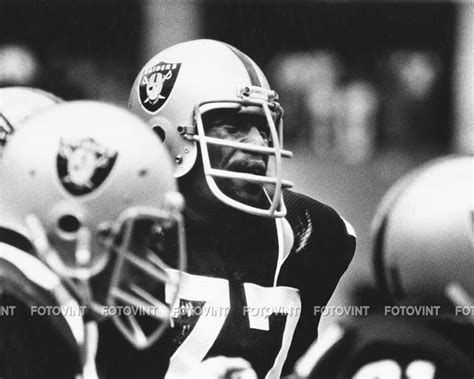
Two seasons with the Oakland Raiders, 1973-1974. Two seasons with the Houston Oilers, 1975-1976. A knee injury ended things, reportedly stemming from landing on a sideline marker during an exhibition game – that kind of injury, the one that doesn’t come from a dramatic play but from bad luck on bad turf, was more common before stadiums improved their sideline setups.
He played 111 games over his nine-year career. Pro Football Reference’s Hall of Fame Monitor gives him a score of 42.13 among defensive ends, against an average of 102.38 for inducted players at the position. The shortened career explains most of that gap. Whether a fully healthy Bubba Smith gets to Canton is a reasonable question with no clean answer, because the knee ended things when he was 31 and still producing.
Career Statistics
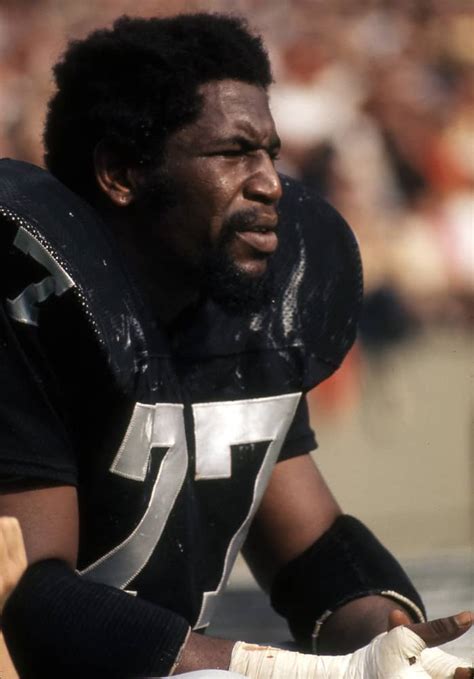
Across Baltimore, Oakland, and Houston: 111 games played, 52.5 career sacks, 4 fumble recoveries. Two Pro Bowl selections (1970, 1971). First-Team All-Pro in 1971, Second-Team All-Pro in 1968. One Super Bowl ring. College Football Hall of Fame inductee in 1988.
The Big Ten now names its annual Defensive Lineman of the Year Award after him.
After Football: Miller Lite, Police Academy, and a Decision That Cost Him Money
The Miller Lite commercials came first. Through the late 1970s and into the early 1980s, Smith and Dick Butkus appeared together in a series of ads that became genuinely popular – two enormous former football players doing deadpan comedy about a beer. Smith eventually walked away from that campaign. His stated reason was that he didn’t want to market alcohol to children who looked up to him as a sports figure. That decision cost him real money and he made it anyway.
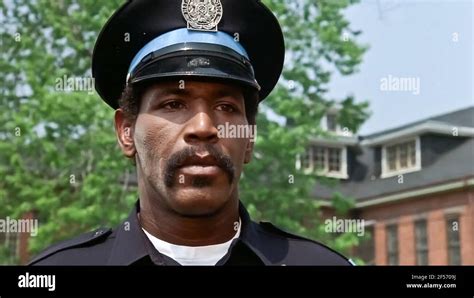
Police Academy opened in 1984. Smith played Moses Hightower, a florist-turned-police-recruit whose size was played entirely for gentle comedy. He appeared in six of the seven films. The character was the opposite of his football reputation: quiet, patient, slightly baffled. Whether that contrast was deliberate casting or happy accident, it worked. He was, to at least two generations of people who couldn’t name a Baltimore Colt, Moses Hightower first and a football player second.
His autobiography, Kill, Bubba, Kill – the title taken from the crowd chant at Michigan State – came out in 1983 and covered both his football career and his transition into entertainment. The Super Bowl III section got most of the attention at the time.
Death and the CTE Diagnosis
He was found dead in his Los Angeles home on August 3, 2011. He was 66. The Los Angeles County coroner listed the cause as acute phentermine intoxication combined with heart disease. His heart weighed more than twice what would be expected for a man his size. Phentermine is a prescription weight-loss drug.
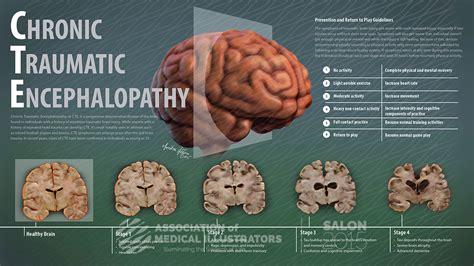
In May 2016, the Concussion Legacy Foundation announced that researchers at Boston University’s CTE Center, working with the VA and the UNITE Brain Bank, had posthumously diagnosed him with Stage 3 chronic traumatic encephalopathy. Stage 3 of 4. Symptoms associated with that stage include cognitive impairment and problems with planning and judgment. He was the 90th former NFL player found to have CTE out of the first 94 former pros the bank had examined at that point.
His family had donated his brain specifically so researchers could study it. What I keep coming back to is that number – 90 out of 94. That is not a pattern that gets explained away. Smith’s case was one entry in what was already, by 2016, an undeniable body of evidence about what the sport does to the people who play it at the highest level for the longest time.
It’s not known how many concussions he experienced during his playing years. Documentation of head injuries in the 1960s and 1970s was essentially nonexistent by current standards. What is known is that he spent nine years as a starting defensive end in the NFL at 6’7″ and over 265 pounds, lining up against offensive guards who were paid specifically to hit him as hard as possible on every play, multiple times a game, for 111 games.
What His Football Legacy Actually Amounts To
The College Football Hall of Fame has had him since 1988. Michigan State’s No. 95 hasn’t been issued since his jersey retirement in 2006. A documentary, Through the Banks of the Red Cedar, directed by MSU teammate Gene Washington’s daughter, preserves his story and those of the other Black athletes who came north to play for Daugherty in the mid-1960s.
The Pro Football Hall of Fame in Canton has not inducted him, and given his Monitor score, that’s unlikely to change. Whether that’s the right call is harder to answer than it looks. His career was shortened by injury. He played much of it against double coverage. He won the games that matter – the Colts didn’t go 15-1 in 1968 because of one player, but they didn’t go 15-1 in spite of him either.
What he did at Michigan State, from 1964 to 1966, was by any measure the work of one of the greatest college defensive players who ever played the game. ESPN put him 31st all-time for a reason. He arrived in the NFL as the first overall pick in a combined draft, became a starter immediately on one of the league’s best defenses, went to two Super Bowls, won one, and retired because a knee injury – not age, not a loss of ability – ended things at 31. His name is on a Big Ten award. His number doesn’t get worn anymore in East Lansing. That’s a football legacy, whatever Canton has decided.
Comments