
Bruce Smith and the Buffalo Bills: 200 Sacks, Four Super Bowls, and a Record Nobody’s Touching
The First Pick and What the Bills Were Actually Getting
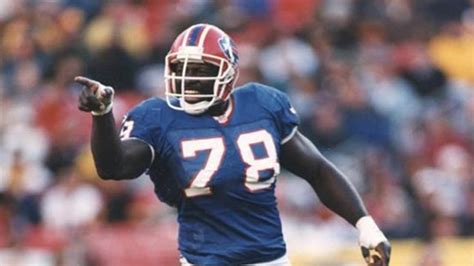
The Buffalo Bills used the first overall pick in the 1985 NFL Draft on a 21-year-old defensive end from Norfolk, Virginia who showed up to training camp weighing 310 pounds. That is not how the story is usually told. The version you hear more often starts with 200 sacks and a gold jacket in Canton. But the actual beginning involved a guy who, by his own account, hadn’t yet figured out how bad he wanted it.
At Virginia Tech, Smith had been genuinely dominant – 46 sacks, 71 tackles for loss, and the 1984 Outland Trophy, which goes to the best interior or edge lineman in college football. The Bills weren’t taking a flier. They knew exactly what they were picking. The question in 1985 was whether Smith knew.
His rookie year: 6.5 sacks in 13 starts. Solid, not spectacular. The following year he had 15. After that, he was never below 10 in a Bills uniform for a decade.
What 15 Seasons Actually Looked Like
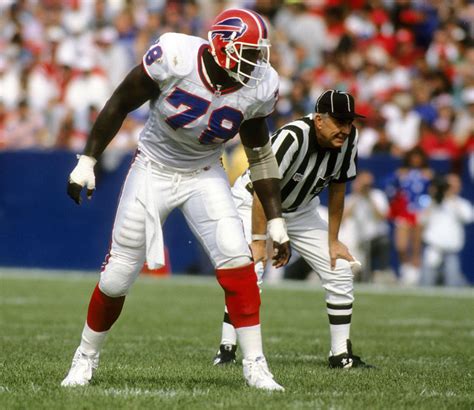
From 1986 through 1998, Smith recorded double-digit sacks in 12 of 13 seasons with Buffalo. That is the kind of consistency that makes a career record make sense. It wasn’t one or two transcendent years pulling the total up. It was relentless, annual production against every offensive scheme teams could devise to slow him down – and every team devised something, because leaving Smith one-on-one was not a real option.
Bill Polian, who was the Bills’ general manager through most of Smith’s peak years, has said he doesn’t think Smith takes a backseat to anyone in the modern era. That includes Reggie White, who Polian acknowledged might have been slightly more dominant against the run. Joe Montana, who quarterbacked against Smith multiple times including in Super Bowl XXVI, called him the best player he ever saw at the position. Montana saw a few players.
The 1990 season is the one that stands alone. Nineteen sacks. A hundred and one solo tackles. Fourteen quarterback pressures. Those tackle numbers are linebacker territory, which is what made that year genuinely strange – a 262-pound edge rusher recording 101 solo stops while also leading the conference in sacks. He won the NFL Defensive Player of the Year award that year, the first of two he’d collect. The Bills won their first AFC Championship. They were going to the Super Bowl.
Four Super Bowls, Zero Rings
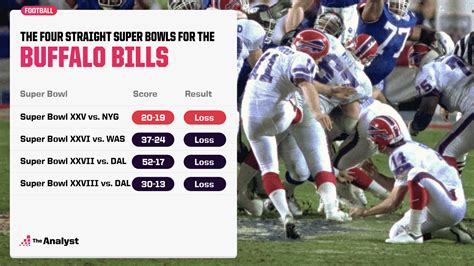
The Bills went to four straight Super Bowls from the 1990 through 1993 seasons. They lost all four. No franchise in NFL history has made four consecutive Super Bowl appearances – and no franchise has lost four consecutive Super Bowls either, so the Bills hold both records simultaneously, which says something about how strange and painful that run was.
Smith was the anchor of those defenses. In Super Bowl XXV against the Giants, he dropped Jeff Hostetler in the end zone for a safety in the second quarter, making him the fifth player in Super Bowl history to record one. Buffalo led 12-3 at that point. The Giants won 20-19, partly because Bill Belichick, then New York’s defensive coordinator, rushed only two defenders for most of the game and dared the Bills to beat zone coverage with short passes. They couldn’t. Scott Norwood’s missed field goal at the end is what everyone remembers. Smith’s safety is what most people forget.
The three losses that followed weren’t as close. Dallas won the next two by 35 and 17 points. The Cowboys in 1992 and 1993 were arguably the best team in football. Smith continued to play well – he had 14 sacks in 1992, 13 in 1993 – but the games weren’t competitive in the way Super Bowl XXV had been.
What’s genuinely hard to square is that the Bills’ four-year run required winning 12 playoff games, including four AFC Championship games. That’s not a team that got lucky and stumbled into the Super Bowl. They were excellent for four straight years and still couldn’t win the one that mattered. Smith has talked about it in the years since without bitterness, which is more than most people could manage.
1996: The Second Wind
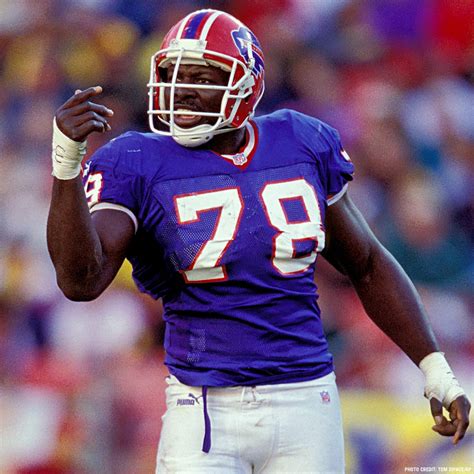
After the Super Bowl era ended, some players would have coasted. Smith had 10 sacks in 1994, led the NFL in forced fumbles that year, then posted 10.5 in 1995. In 1996, at 33 years old, he had 13.5 sacks, 90 tackles, and five forced fumbles – his career best in that category – and won his second NFL Defensive Player of the Year award.
Thirteen seasons with 10 or more sacks. That is the NFL record, and it will not be broken anytime soon. For context, Myles Garrett, who is currently one of the best pass rushers in the league, had 10 or more sacks in six of his first eight seasons. He would need to sustain that pace for seven more years, healthy, to match Smith’s record. Pass rushers don’t usually work that way.
The Record, and What It Cost to Get It
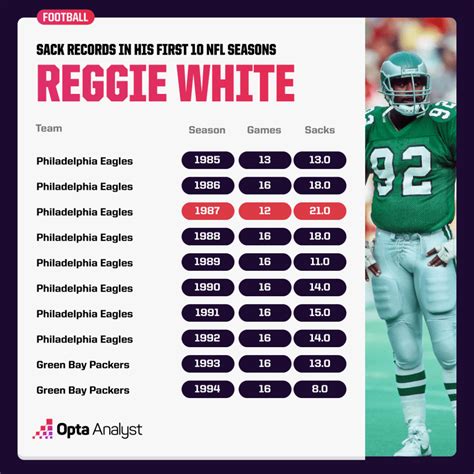
Reggie White retired after the 1998 season with 198 career sacks. The Bills released Smith after 1999 – along with Thurman Thomas and Andre Reed – for salary cap reasons, which remains one of the more painful housekeeping decisions in franchise history given what those three players had meant to Buffalo for 15 years. Smith signed with Washington.
He spent four seasons with the Redskins. He was not the same player. He had one double-digit sack year in Washington (10.0 in 2000) and 26 total across four seasons. But he was there for a specific reason, and he got there: in Week 14 of the 2003 season, he sacked Giants quarterback Jesse Palmer for career sack number 199, passing White’s record. He finished the year at exactly 200 and retired.
What I find genuinely interesting about that sequence – and nobody really talks about it this way – is that Smith almost certainly would have finished at around 171 sacks if he’d stayed in Buffalo through his natural career end. His Bills total was 171. He played four more years in Washington specifically to chase the record. He was 40 years old when he got it. There’s something both admirable and a little melancholy about a Hall of Famer grinding through his late 30s in a diminished role just to own a number outright.
He owns it. Nobody is close. Reggie White is second at 198. Kevin Greene is third at 160. The gap between first and third is 40 sacks.
Hall of Fame, 2009
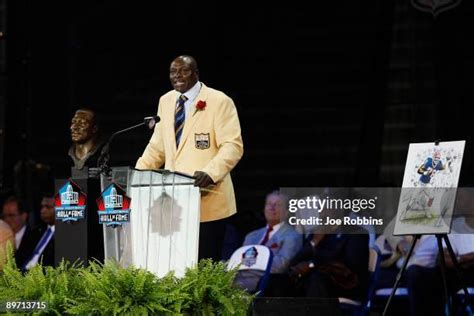
Smith was inducted into the Pro Football Hall of Fame in 2009, his first year of eligibility. First-ballot induction isn’t automatic for great players – there are Hall of Famers who waited years – but Smith’s case was never complicated. Eight First-Team All-Pro selections. Eleven Pro Bowl appearances, a Bills franchise record. Two Defensive Player of the Year awards. Named to the NFL’s All-Decade Teams for both the 1980s and the 1990s, which puts him in very short company. He’s on the NFL 100th Anniversary All-Time Team as well.
The induction came nine years after he left Buffalo. Bills fans had watched Jim Kelly get inducted in 2002, Thurman Thomas in 2007, and then Smith two years after that. Marv Levy followed in 2001. The Bills of the early 1990s produced more Hall of Famers per roster than almost any team that never won a championship.
Number 78 – Retired September 2016
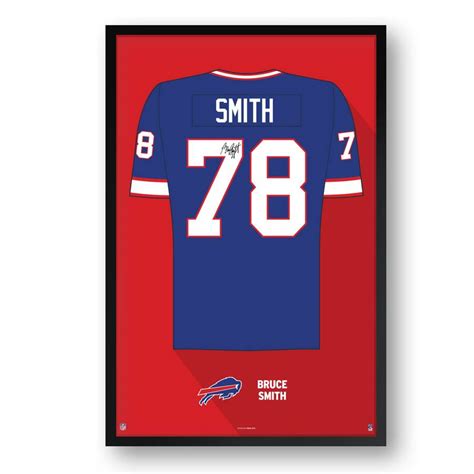
The Bills retired Smith’s No. 78 at halftime of their Thursday night home opener against the Jets on September 15, 2016. He was the second player in franchise history to have his number retired – Jim Kelly’s No. 12 went up in 2001. Smith joined his family at midfield while his name and number were unveiled above the east end zone.
Thirty-one years between being drafted and having your number retired. Smith also went into the Bills Wall of Fame in 2008, a year before Canton. His No. 78 is retired at Virginia Tech as well, so two programs – and one of the most storied defensive franchises in NFL history – have made sure nobody wears his number again.
Where He Ranks, Honestly
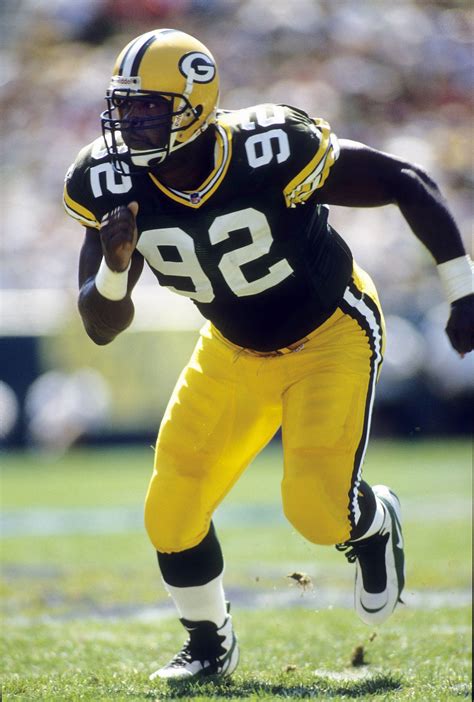
The debate about Smith versus Reggie White has been going on for 25 years and it is not going to resolve here. What can be said without much argument: Smith holds the all-time sack record by two, was more consistently productive across longer stretches (13 double-digit sack seasons versus White’s nine), and was selected to All-Decade Teams in two different decades. White was more dominant against the run, was arguably the more physically imposing player, and is often considered – particularly by people who watched both – the slightly better overall player.
Deacon Jones is part of this conversation too, even though sacks weren’t officially tracked during his career. Jones played from 1961 to 1974 and is credited unofficially with somewhere around 173.5 sacks depending on the methodology. He and Smith are linked by the fact that Jones invented the term “sack” and Smith holds the official record for accumulating them.
Smith’s supporters – Polian, Kelly, Montana among them – tend to focus on what it felt like to face him: the planning required before every snap, the double and triple teams that freed up teammates, the way he disrupted offenses even on plays where he didn’t make the stat sheet. His 43 forced fumbles across 19 seasons are not a number that gets discussed enough. Neither are his 14.5 postseason sacks, second in NFL history.
The honest answer, as far as there is one, is that Smith is clearly one of the two or three greatest defensive players in NFL history, the debate about exactly where he ranks among that group is legitimate and unresolvable, and the sack record is his regardless of how the ranking comes out.
The Physical Cost
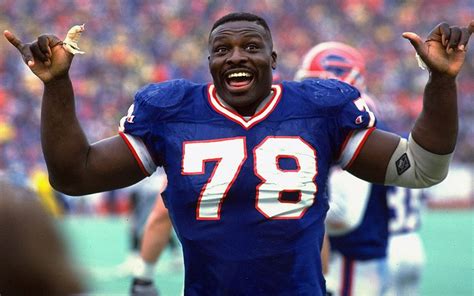
In 2016, around the time of his jersey retirement ceremony, Smith spoke at Jim Kelly’s charity golf tournament and said he was in pain every day – multiple joints, chronic and persistent. He mentioned memory issues, noting he forgets things and that his wife would be the better person to ask about the specifics. He was 52 at the time and had played 299 games including playoffs, spent 19 years absorbing blocks and taking hits in the trenches.
Two hundred sacks across 19 seasons means 19 years of offensive linemen coming for him on every single play, whether he got the quarterback or not. That math runs in both directions.
Comments