
Vic Fangio – The Coach Who Spent 40 Years Being Right About Defense
From Dunmore to the Superdome
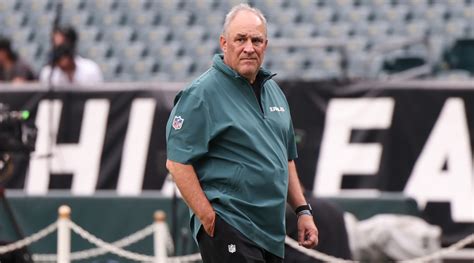
Victor John Fangio was born on August 22, 1958, in Dunmore, Pennsylvania – a borough of about 14,000 people just outside Scranton. He played safety at Dunmore High School and never played college football. He attended East Stroudsburg University, studied health and physical education, graduated in 1980, and went back to Dunmore High that same year to coach linebackers. By 1981 he was the defensive coordinator there. He was 22.
What’s strange about this, if you sit with it long enough: Fangio spent 1982 at Milford Academy in New Berlin, New York, then went to the University of North Carolina as a graduate assistant in 1983, then landed with the Philadelphia Stars of the USFL in 1984. He won a USFL Championship with that team before it relocated to Baltimore. His first NFL job came in 1986 with the New Orleans Saints, where he coached linebackers under Jim Mora Sr. He stayed there nine years.
Nine years in New Orleans. That’s the part nobody talks about. While other coaches bounced around building resumes, Fangio spent nearly a decade in one building, coaching one of the greatest linebacker groups the NFL has ever seen. Rickey Jackson, Pat Swilling, Vaughan Johnson, Sam Mills – the “Dome Patrol.” All four starting linebackers made the Pro Bowl in 1992. Jackson and Mills are in the Pro Football Hall of Fame. Mills was the 1991 AP Defensive Player of the Year runner-up; Pat Swilling won it outright.
27 Seasons as a Defensive Coordinator
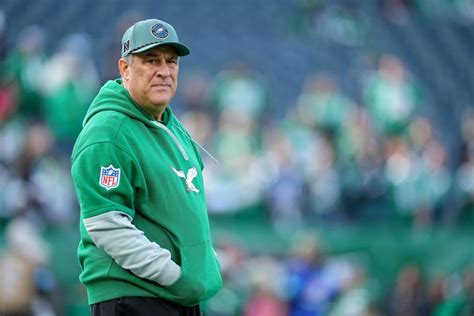
Fangio has been an NFL defensive coordinator for 27 seasons across seven franchises. The list: Carolina Panthers (1995–1998), Indianapolis Colts (1999–2001), Houston Texans (2002–2005), San Francisco 49ers (2011–2014), Chicago Bears (2015–2018), Miami Dolphins (2023), Philadelphia Eagles (2024–present). In between he spent three seasons as a special assistant and linebackers coach with the Baltimore Ravens under John Harbaugh, one season as Stanford’s defensive coordinator under Jim Harbaugh in 2010, and three seasons as Denver’s head coach from 2019 to 2021.
His defenses have finished in the NFL’s top five in yards allowed eight times over the past 13 years. Top five in points allowed seven times over that same span. Those numbers come from different rosters, different cities, different personnel groups. The consistency is the point.
The Bears defense in 2018 is what made him nationally famous outside football circles. Chicago allowed 17.7 points per game that year, ranked fifth in yards allowed, and generated 50 sacks. Khalil Mack, whom Fangio deployed in ways that made offensive coordinators visibly uncomfortable, called him an “evil genius.” The AP named Fangio its NFL Assistant Coach of the Year. He was 60 years old and had been coaching professionally for 35 years at that point.
Then the Denver experiment. From 2019 to 2021, Fangio went 19-30 as the Broncos’ head coach and was fired in January 2022. It’s the one chapter of his career that complicates the narrative, and it should. The Broncos had real talent problems at quarterback – Drew Lock, Teddy Bridgewater, and a brief mid-season Vic Fangio era quarterbacked by Tyrod Taylor – but 19 wins in three years is 19 wins in three years. What the Denver stint showed is that Fangio is a specialist. He thinks about defense the way a surgeon thinks about one procedure. Pulling him into a head coaching role meant asking him to think about cap management, offensive personnel, press conferences, and roster construction simultaneously. The fit was never right.
How the Fangio Defense Actually Works
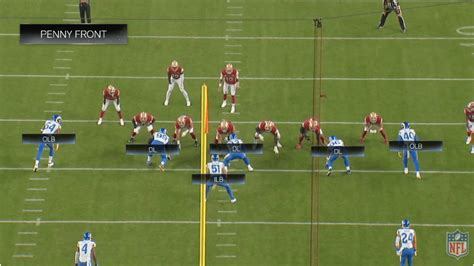
The foundation is this: Fangio believes defenders play better running forward than backpedaling. So he aligns his safeties deep pre-snap, giving them a downhill angle when the ball is snapped. Two deep safeties as a base look – Cover-2, Cover-4 variants – with extensive pre-snap disguise designed to make the quarterback guess whether he’s seeing zone or man until after the snap. By then, it’s usually too late.
What’s counterintuitive about his system is how many coaches have tried to copy it and gotten it wrong. Ed Donatell, Fangio’s defensive backs coach and right-hand for most of the 2011–2021 stretch, ran a version of the scheme in Minnesota as the Vikings’ defensive coordinator in 2022. It didn’t work. Kevin O’Connell wanted the Fangio defense; what he got was Fangio-adjacent, and it cost Donatell his job after one season. Brandon Staley, another Fangio disciple, ran a version of it with the Los Angeles Chargers. He was fired after three seasons with a combined 24-25 regular season record.
The scheme isn’t complicated to diagram. It’s complicated to execute because it demands that every player understand the full defensive structure, not just their own assignment. A cornerback in Fangio’s system needs to know what both safeties are doing, what the linebackers are doing in underneath zones, and how to adjust based on route combinations developing across the field. When it clicks, offenses see a defense that appears to be in one coverage and is suddenly in another. When it doesn’t – when players are guessing – it falls apart.
Fangio has never been a heavy blitzer. His career blitz rate is consistently below league average. He wins with the front four or he adjusts. Super Bowl LIX was the most extreme expression of this: the Eagles did not blitz once in the entire game and generated pressure on 38.1% of their defensive snaps. That number is extraordinary. Patrick Mahomes, one of the best quarterbacks in NFL history at diagnosing and neutralizing blitz packages, had nothing to work against.
The Fangio Tree
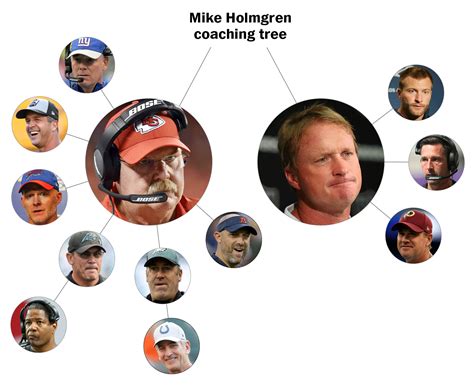
Seven coaches who worked directly under Fangio have gone on to become NFL defensive coordinators or head coaches: Brandon Staley, Ed Donatell, Sean Desai, Roy Anderson, Jay Rodgers, and others. Staley became the Chargers’ head coach in 2021. Donatell coordinated in Minnesota. Desai ran the Bears’ defense in 2022 and later joined the Seahawks staff. This is what people mean by the “Fangio Tree” – not just that he trained coaches, but that his specific system spread through the league organically because his former assistants took pieces of it everywhere they went.
The irony is that having the copies proliferate made the original harder to beat. By 2024, so many NFL offenses had spent years studying two-high safety shells and Fangio-influenced coverages that they had developed counters. Fangio then started using more single-high looks, more disguise, more personnel-driven adjustments to stay ahead of what offenses expected. His Eagles defense in 2024 played Cover-4 on only 20.7% of snaps – well below what most analysts assumed going in.
Five Hall of Famers and a List That Keeps Growing
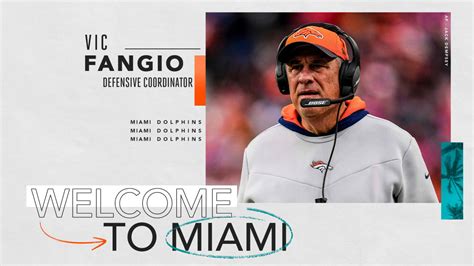
Fangio has coached five players who are now in the Pro Football Hall of Fame: Rickey Jackson and Sam Mills from the New Orleans years, Kevin Greene from Carolina, Ray Lewis during the Baltimore stint from 2006 to 2009, and Patrick Willis from San Francisco. That’s not a coincidence of assignment. Great players want to play for coaches who make them better, and Fangio has a four-decade record of doing exactly that.
What he did with Willis at the 49ers from 2011 to 2014 is worth a specific mention. Willis, already considered one of the best inside linebackers in football, became a different kind of player under Fangio – more assignment-sound, better in coverage, more disciplined against the run. The 49ers defense in 2011 ranked third in points allowed and second in yards. In 2013 they were second in points allowed. Willis retired in 2014 due to injury, but the five seasons he played under Fangio produced his best football.
In Philadelphia, that tradition continues with different positions. Quinyon Mitchell, a rookie cornerback in 2024 who went in the first round out of Toledo, led all cornerbacks in completion percentage allowed at 42.4%. Cooper DeJean, a second-round pick out of Iowa, did not allow a touchdown from the nickel position all season. Two first-year players, under a 66-year-old coordinator, becoming All-Pros.
The Eagles Turnaround – From 30th to First in One Year
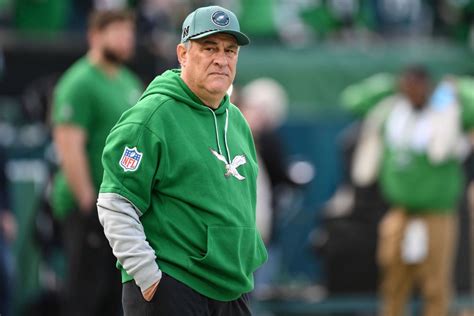
In 2023, the Philadelphia Eagles ranked 26th in yards allowed, 30th in points allowed, 31st in pass defense, 24th in sacks, 29th in first downs allowed, 31st on third down, and 30th in the red zone. They fired their defensive coordinator Sean Desai midseason and finished the year in chaos. That defense had the same roster core that would, 12 months later, rank first in the NFL in total defense and first in points allowed.
Same players. Different coordinator.
Fangio arrived in January 2024 and immediately changed the structure. Not the personnel – the understanding. He installed his system, which demands a level of film study and conceptual fluency that took time. The Eagles started the 2024 season 2-2. Then they won nine of their next ten. By December they were the best defense in football, and by February they were playing the Kansas City Chiefs in Super Bowl LIX in New Orleans – the same Superdome where Fangio had started his NFL career 38 years earlier coaching linebackers for the Saints.
The game itself: 40-22 Eagles. But the score flatters the Chiefs. Late in the third quarter it was 34-0. Mahomes had a passer rating of 18.3 at that point. The Eagles sacked him six times – the most of his career – and intercepted him twice, including DeJean’s pick-six on his 22nd birthday. Kansas City’s offense had 54 total yards on nine possessions at one point. The Chiefs scored their final touchdowns in garbage time.
Nick Sirianni said afterward: “Did you tackle well? Did you get off blocks well? Did you hustle to the ball? Our guys did that. Vic did an unbelievable job.” That’s one way to put it. Another way: Fangio had spent 40 years waiting for this, and when it arrived he held the Chiefs to 54 yards in nine possessions without blitzing once.
2025 Season and the Retirement Question
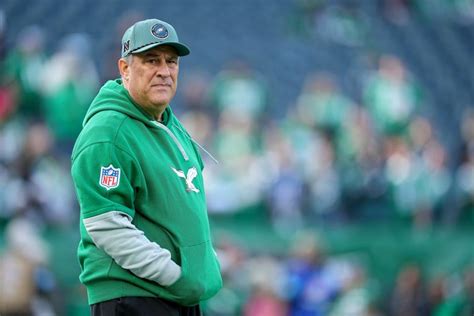
In the 2025 season – Fangio’s second in Philadelphia – the Eagles went 13-7, won another NFC East title, and lost in the wild-card round to the San Francisco 49ers. The defense remained exceptional. Philadelphia led the NFL in opponent catch rate allowed (56.8%), surrendered just 14 touchdown passes all season (the franchise’s best mark since 2001), finished second in passer rating allowed (75.4), and led the league on third down (59.4 passer rating allowed) and in the red zone (64.6).
In Fangio’s two seasons running the Eagles’ defense, Philadelphia ranks second in the NFL in points allowed per game (18.5), second in yards per game (286.3), and first in passer rating allowed (79.0). They are 25-9 combined.
After the playoff loss, reports surfaced that Fangio was considering retirement. He’s 67. He’s been coaching for 47 years. Those reports were accurate in the narrow sense that he thinks about it every offseason – but at Eagles OTAs in May 2026, he was direct: “I wasn’t close. I’ve had those thoughts the last few years. Every year at the end of the year, I just think about it. I never really got serious to where I would’ve done it.” He added that he considers himself good for at least two more years.
The Eagles are 25-9 with Fangio. They won a Super Bowl in his first season and had a top-three defense in his second. There is no version of Philadelphia’s near-term future that doesn’t hinge on whether he keeps showing up.
Where He Ranks – and the One Honest Complication
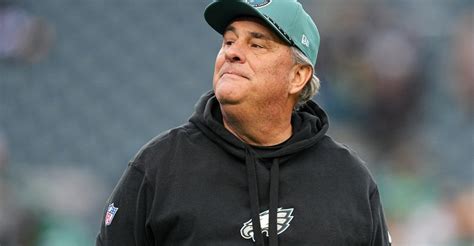
The case for Fangio as the most influential defensive coordinator in modern NFL history is straightforward: 27 seasons in the role, consistent top-five finishes across multiple organizations, five Hall of Famers mentored, a coaching tree that now touches a third of the league, and a scheme so widely imitated that the NFL’s defensive geometry has literally changed because of him. The two-high safety shell is now a league-wide standard partly because Fangio made it work at scale for two decades.
But the Denver years sit there, and they should. A 19-30 record over three seasons is not a footnote – it’s a data point. Fangio wasn’t a bad head coach because he lacked football intelligence. He was a bad head coach because running an NFL franchise requires a different kind of attention than designing a defense. That distinction matters. Bill Belichick could do both. Fangio can’t, or at least couldn’t. Whether that disqualifies him from any historical ranking is a genuine question without a clean answer, and I don’t think anyone who watched the Denver era honestly would pretend otherwise.
What the Super Bowl LIX performance added to his record is harder to dispute. Holding Patrick Mahomes to a passer rating of 18.3 for most of a Super Bowl, without blitzing, is a tactical achievement with essentially no comparable in recent history. Mike Shanahan once said of Fangio: “He’s going to try to take away what you do best. He’s going to try to make you beat yourself.” In New Orleans in February 2025, that’s exactly what happened – and Mahomes, who had beaten every defense he’d ever played, had no answer for it.
Fangio has now coached five decades of professional football. He started in 1979 at a high school in northeastern Pennsylvania. He won his first Super Bowl ring at 66. The gap between those two facts is 45 years of the same job, refined to the point where an offense quarterbacked by the best player of this generation scored 6 points in the first 57 minutes of a championship game.
Comments