
Spencer Paysinger: From South Central to the Super Bowl to the Show That Changed His Life Twice
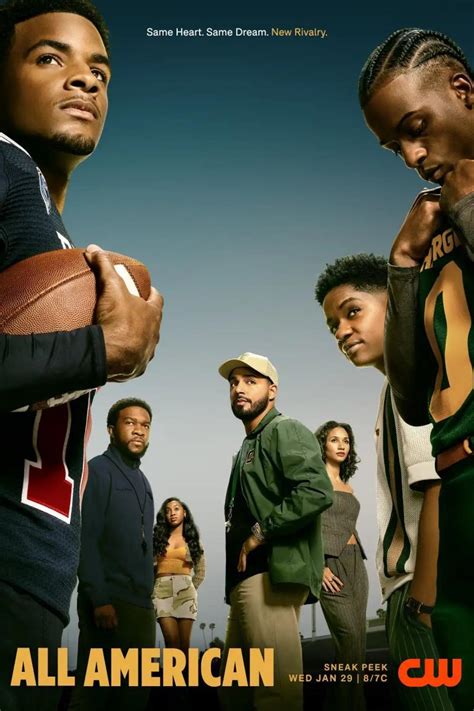
Spencer Paysinger won a Super Bowl in his first NFL season, went undrafted to get there, and spent seven years playing linebacker for four different teams before walking away at 29 because he had something else in mind. His life then became the backbone of All American, a drama that has run on The CW since 2018 and now streams on Netflix with millions of viewers who, for the most part, have no idea the show is built around a real person who is still very much alive and still very much involved.
Born June 28, 1988, in Los Angeles. Full name: Spencer Colin Christopher Paysinger. Height: 6 feet 2 inches. Weight during his playing career: 236 pounds. NFL career: 94 games, 224 total tackles, 1 sack. Super Bowl ring: one, with the 2011 New York Giants. Current occupation: writer, producer, entrepreneur, and the man whose director’s chair on the All American set reads “Real Spencer.”
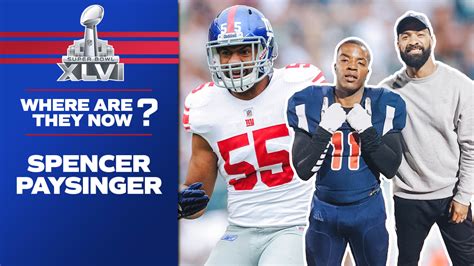
Growing Up in Crenshaw, Going to School in Beverly Hills
The part of Paysinger’s story that people find hardest to believe is that the show basically undersells it. He grew up in the Crenshaw district of South Central Los Angeles, in a neighborhood where, by his own account, he had been in cars that were shot at. His family had deep roots there. “There’s a rich family culture in South Central,” he said in one interview. “The block that I grew up on, all the kids were best friends.”
Every morning, he woke up at 4 a.m. to make the commute to Beverly Hills High School. Not because a coach recruited him off a football field the way the show depicts it. Because his father Donald and his uncles had attended Beverly Hills High decades earlier, gone to college, come back, and became coaches there. His uncle Carter Paysinger was the school’s head football coach from 1990 to 2009. His father served in some coaching capacity at the school for nearly 32 years. Spencer and his brothers attended on permits, a path that had been laid by the generation before them.
The commute, when he eventually got his own car, was 45 minutes each way through Los Angeles traffic. Before that, he drove to his uncle’s house first. Every day. “From K through eighth grades I was in Black and Mexican middle and elementary schools,” he told the Sun Sentinel. “So going there where kids’ first cars are $100,000 vehicles, it was a complete turn from what I was used to.” He later put it even more plainly: “Beverly Hills didn’t save me from anything. It exposed me to a whole new world of problems I didn’t know existed.”
That’s the line the show can’t quite capture, because drama needs a before and after, a rescue or a ruin. The real version is more complicated: two worlds, neither of them simple, and a kid navigating both of them before school even started.
What He Actually Did on the Football Field at Beverly Hills High
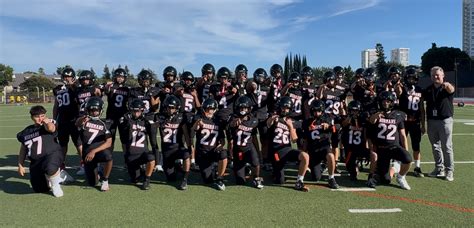
The show has Spencer James playing defensive back. The real Spencer Paysinger played wide receiver and linebacker simultaneously, and the numbers he put up as a senior receiver are the kind that would get attention in any era. Fifty-four receptions. 1,093 yards. An average of 20.2 yards per catch. Ten touchdowns. On defense: 87 tackles, 2.5 sacks, 2 interceptions.
He won Ocean League MVP that season. Beverly Hills went undefeated in league play. He was first-team All-CIF. Playing under his uncle Carter, he was also team captain, a detail that matters because the leadership piece showed up everywhere he went afterward, not just on football fields.
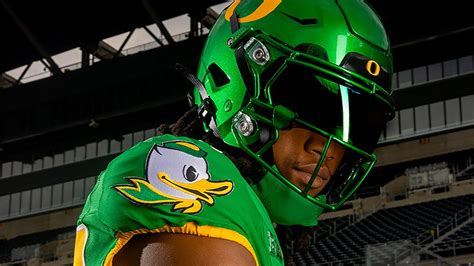
After high school, he took a scholarship to the University of Oregon, where he transitioned fully into the linebacker role. He was honorable mention All-Pac-10. As a sophomore he had 95 tackles and two sacks. By his senior year in 2010 he was team captain again, and the Ducks reached the BCS National Championship game. He graduated with a degree in economics. That part does not come up much, but it probably explains a few things about what happened after football.
Undrafted in 2011. Super Bowl Champion by February 2012.
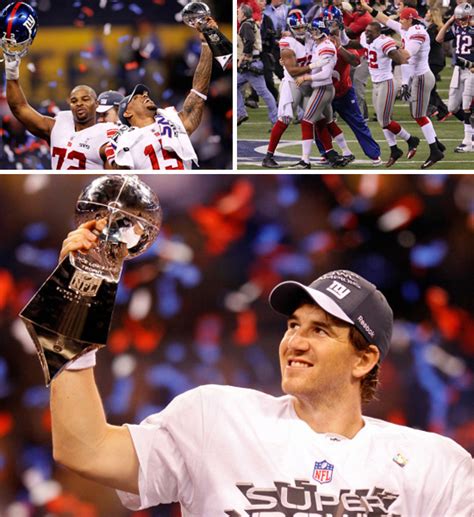
The 2011 NFL Draft came and went without his name being called. The New York Giants signed him as an undrafted free agent on July 28, 2011. Seven months later, he was standing on a field in Indianapolis with a Super Bowl XLVI championship ring, after the Giants beat the New England Patriots.
His rookie season was not a starring role. In 15 games, he recorded 12 tackles. He was a backup, a special teams contributor, the kind of player who makes a 53-man roster and stays there through effort and preparation rather than draft capital. Over the next three seasons with New York, he accumulated 104 tackles in 47 games. His one career NFL sack came in 2014.
He signed with the Miami Dolphins in April 2015, re-signed with them in March 2016, had a brief stint with the New York Jets in 2017 (signed in June, released in September before the season started), and then signed with the Carolina Panthers in December 2017. He played three games. The Panthers released him December 29, 2017. He retired.
Total NFL career: 94 regular-season games, 17 starts, 224 total tackles, 1 sack, 1 forced fumble, 5 fumble recoveries. Career earnings: approximately $4.55 million. Not a star by any statistical measure, though it’s worth noting that most people who win a Super Bowl ring in their first year as an undrafted rookie do not spend the next six seasons employed in the NFL. He did.
How All American Got Made, and What Paysinger Had to Do With It
The pitch happened in August 2017, while Paysinger was still with the New York Jets and preparing for a practice. Warner Bros. executives were back in Los Angeles trying to sell a show. He borrowed an assistant trainer’s office, propped his tablet on a pile of books, and recorded a three-minute video. Five minutes turned into twenty. The show was already partially written by that point; Paysinger had been developing it with help from his wife Blair, who had written some of the early football scenes.
The actual origin of the idea is more accidental than that, though. At some point before the pitch, Paysinger got talking with a former player who had gone to a rival high school. The man asked Paysinger what it was like growing up in Beverly Hills. “I said, ‘Oh, no, I didn’t grow up in Beverly Hills. I just commuted every day. I’m born and raised in South Central,'” Paysinger recalled. The two of them realized they had grown up ten miles apart in completely different worlds. That conversation became the pitch, which became the show.
Greg Berlanti (who produced Arrow, The Flash, and a lot of other things) came on as a producer. The CW ordered it. Within four months of Paysinger retiring from football, they were shooting the pilot.
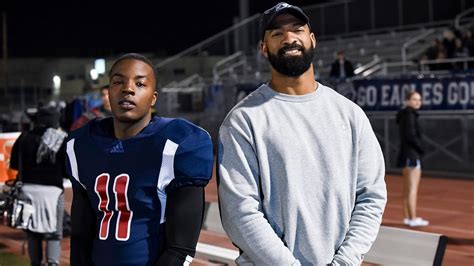
His role on the production is not ceremonial. He sat in the writers’ room and gave the writing staff real stories from his life for them to use, modify, or discard. He drove Taye Diggs and Daniel Ezra around his actual neighborhood, showed them his house, his schools, his barbershop, a local swap meet. He watched dailies. He attended production meetings. On set, the actor who plays the fictional Spencer is called “Spencer.” Paysinger is called “Real Spencer.” His director’s chair says exactly that.
He also appears on screen. He plays Assistant Coach Davis at Beverly Hills High, and has appeared across multiple episodes throughout the show’s run. As co-producer, he was credited on 83 episodes between 2019 and 2024.
What All American Gets Right and What It Changes
The show makes clear from its first episode that it is inspired by true events, not that it is a documentary. That caveat is doing some real work.
Here is what is accurate: the geography (South Central to Beverly Hills), the family coaching connection at BHHS, the culture shock of moving between the two worlds, the 4 a.m. commute, the football, and the sense that Paysinger never quite fully belonged in either place. He said himself that some lines in the pilot happened word for word the way they did in his real life.
Here is what the show changes, with no judgment on whether those changes were right or wrong. The character’s name becomes Spencer James. In real life, Paysinger attended only one school: Beverly Hills High. The TV version of Spencer transfers between two schools. The character plays receiver, running back, and defensive back at different points. Paysinger played linebacker professionally, and wide receiver in high school. The gang shooting in Season 2 has no parallel in Paysinger’s real life. The father’s storyline in the show bears little resemblance to his actual relationship with his father Donald, who coached at Beverly Hills High for nearly three decades. The Billy Baker character (Taye Diggs) is loosely based on Carter Paysinger, Spencer’s uncle and actual coach, not a father figure recruited him away from his community.
One thing that doesn’t get discussed enough: the show actually softens the South Central material. Paysinger has said he didn’t want Beverly Hills to look like a savior. “I just wanted to show those areas as an extension of myself and just show that the sun shines down there too.” Whether the show fully delivers on that is a separate debate, but the intent came from him.
The Paysinger Family’s Coaching Legacy, Briefly
His father Donald coached at Beverly Hills High in some capacity for nearly 32 years, retiring in 2013. His uncle Carter was the head football coach at BHHS from 1990 to 2009. Before that, Donald and Carter had attended Beverly Hills High themselves in the 1970s and early 1980s, then came back after college to coach there. Spencer’s access to the school was a direct result of that family history inside the institution, not an open enrollment policy or a random scholarship.
Spencer’s wife is Blair Paysinger. They have two children and are active in the Los Angeles community. His uncle Carter is directly referenced by Paysinger as the real-life inspiration for Billy Baker, the Taye Diggs character: “Billy Baker is loosely based on my uncle Carter Paysinger, who was the head football coach at Beverly Hills High School when I got to Beverly. He was a mentor back then, still to this day, I still look to him for guidance.”
What He Built After He Left the NFL
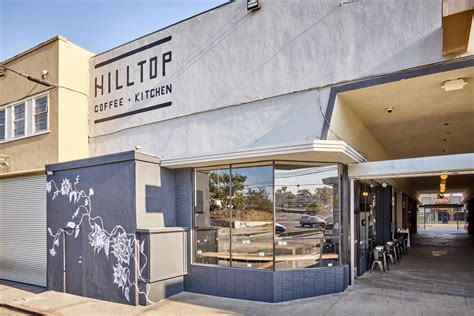
Hilltop Coffee + Kitchen has locations in Inglewood and Eagle Rock, both in South Los Angeles. It’s a fast-casual place with a deliberate community angle, positioned in neighborhoods that are not well-served by the kind of quality food and coffee options that show up in wealthier parts of the city. Paysinger co-owns it. The choice of location is not incidental; it mirrors where he came from, not where the money is.
Afterball LLC is his investment and advisory firm focused specifically on athletes transitioning out of professional sports. His friend Martellus Bennett, the former Pro Bowl tight end who built a children’s cartoon company after retiring, described the post-playing experience as “a form of PTSD.” Paysinger built Afterball in response to exactly that. The fund helps players manage the financial and psychological side of careers that end suddenly, often before they’ve had time to plan for what comes next.
Moore Street Productions is his development company, operating under partnerships with Uninterrupted (LeBron James and Maverick Carter’s media company) and Deviants Media. Most of what he’s developed there centers on sports and the Black experience in America. He has said he wants a career in this industry, not one show. He sits on the board of KIPP Public Schools’ Black and LatinX Leadership Committee.
He retired at 29 by choice. He said it directly: “I remember sitting in my locker that day, packing all my stuff, smiling. I never wanted football to be my highest peak.” That is either a remarkable thing to say about winning a Super Bowl, or the clearest possible signal about what kind of person he is.
Spencer Paysinger’s Career Stats and Fast Facts
Full name: Spencer Colin Christopher Paysinger. Born: June 28, 1988, Los Angeles, California. Age: 37. Height: 6 feet 2 inches. Playing weight: 236 pounds. Position: outside linebacker. High school: Beverly Hills High School. College: University of Oregon (2006-2010), degree in Economics. NFL Draft: 2011, undrafted.
NFL teams: New York Giants (2011-2014), Miami Dolphins (2015-2016), New York Jets (2017, practice squad/preseason only), Carolina Panthers (2017). Career games: 94. Career stats: 224 total tackles, 1 sack, 1 forced fumble, 5 fumble recoveries. Super Bowl: XLVI champion (New York Giants, February 2012). Last game: December 2017. Career NFL earnings: approximately $4.55 million.
Television: consulting and co-producer on All American (The CW, 2018-2024), 83 episodes credited. Also appears as a recurring on-screen character (Assistant Coach Davis). Co-hosted All American Stories, a limited docuseries. The show streams on Netflix in the United States.
Business: co-owner, Hilltop Coffee + Kitchen (South Los Angeles). Founder, Afterball LLC. Founder, Moore Street Productions. Speaker represented by APB Speakers. Board member, KIPP Public Schools Black and LatinX Leadership Committee.
Comments