
Phil Simms – New York Giants Quarterback, Super Bowl Record-Holder, and the Broadcaster Nobody Replaced
Who Is Phil Simms
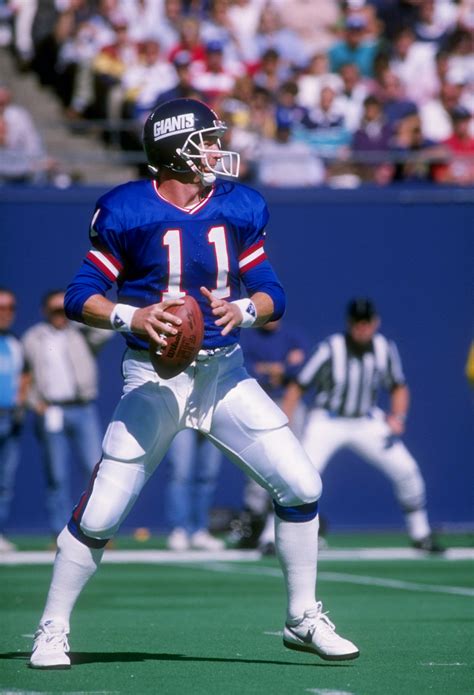
Phil Simms played quarterback for the New York Giants from 1979 to 1993. He won two Super Bowls, was named MVP of Super Bowl XXI, and retired holding 19 Giants franchise records. After that, he spent nearly three decades in television – first at NBC, then CBS for 19 seasons – calling eight Super Bowls as lead analyst. His number 11 jersey was retired by the Giants in 1994. He’s 70 years old, lives in Franklin Lakes, New Jersey, and still co-hosts a weekly segment on SiriusXM’s Mad Dog Radio during the NFL season.
That’s the short version. The longer one involves getting booed at his own draft, three major injuries in three years, and eventually putting together what is statistically the greatest individual performance by a quarterback in Super Bowl history.
Springfield, Kentucky to Morehead State
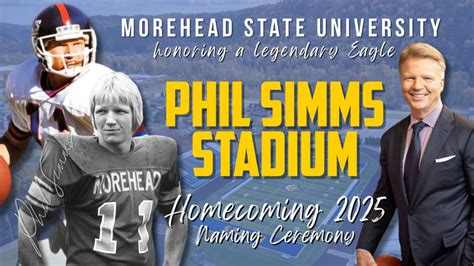
Simms grew up in Springfield, Kentucky, played high school ball at Southern High School in Louisville, and went to Morehead State University – a small school in eastern Kentucky that ran mostly a running offense. He played there from 1975 to 1978, lettered all four years, and was named Ohio Valley Conference Player of the Year in 1977. His college career ended with 5,545 passing yards and 32 touchdowns.
None of that screams top-ten pick. But NFL coaches were paying attention. Bill Walsh – then the new head coach of the San Francisco 49ers – flew to Morehead State with assistant Sam Wyche specifically to watch Simms throw. Walsh was impressed enough that he planned to take Simms in the third round. He took Joe Montana instead, which worked out fine for San Francisco, but it says something about the level of interest Simms was generating from small-school obscurity.
Morehead State renamed its football stadium Phil Simms Stadium before its 2025 homecoming game. Took about 45 years, but it happened.
The 1979 NFL Draft and the Boos
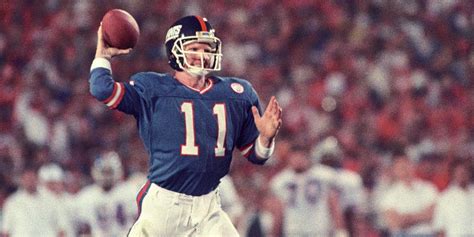
The Giants selected Simms with the seventh overall pick. The reaction from the crowd at the draft was immediate and unambiguous: they booed. Giants fans had never heard of him, didn’t recognize the school, and had no particular reason to be excited. Several NFL analysts questioned the pick publicly.
Simms responded by winning his first five starts as a rookie and earning a spot on the NFL All-Rookie Team. He wasn’t perfect – 134 completions in 265 attempts, 13 touchdowns, 14 interceptions – but he was clearly capable. The problem was that the next three years made it genuinely unclear whether he’d ever get to show it consistently.
Three Injuries, Three Years
1980: collarbone, missed three games. 1981: separated shoulder in November, done after 2,031 yards and 11 touchdowns. 1982: tore up his knee in the preseason, missed the entire season. He didn’t play a snap that year.
By 1983, Simms had played meaningful football in four of five professional years and looked like someone the Giants might eventually move on from. They didn’t. What changed things, and this is genuinely the hinge point of his career, was the arrival of Bill Parcells as head coach in 1983 and the slow construction of one of the better rosters in the NFC.
Lawrence Taylor was already there, drafted in 1981. Carl Banks came in 1984. Mark Bavaro in 1985. Parcells trusted Simms, gave him a structure he could work within, and stopped rotating quarterbacks at the first sign of trouble. Simms responded the way most quarterbacks respond to actual stability: he started playing well.
1986 – The Year It All Came Together
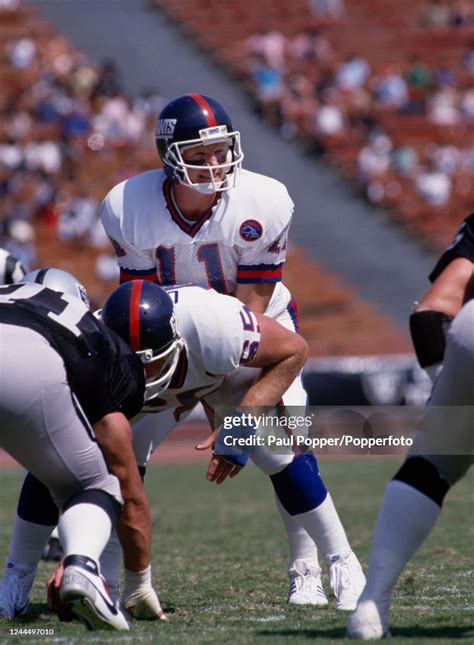
The 1986 season is when Simms became unambiguously the Giants’ quarterback. He was named All-Pro and league MVP by the NEA. The Giants finished 14-2. Their defense was suffocating – Taylor was at his absolute peak – but Simms was operating efficiently, posting a .598 win percentage that remains the highest for any Giants quarterback with over 50 starts.
What I find genuinely interesting about Simms’ career is how the injury narrative gets deployed selectively. People cite the early injuries to explain away his stats, but by 1986 he was healthy, playing behind a good line, and still producing numbers that were solid rather than spectacular by raw count. His 78.8 career passer rating looks modest now. In 1986 the NFL average was somewhere in the low 70s. Context matters, though the Hall of Fame voters don’t always apply it.
Super Bowl XXI – January 25, 1987
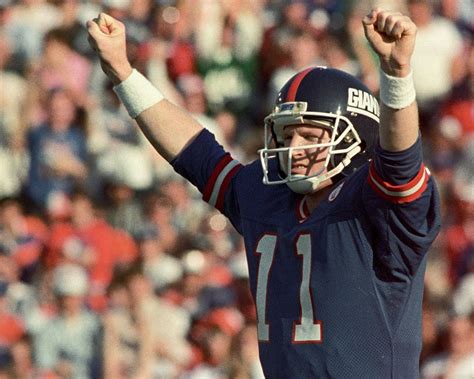
The Giants played the Denver Broncos at the Rose Bowl in Pasadena. New York led 9-10 at halftime, which meant the offense hadn’t exactly been rolling. Simms said afterward that he didn’t want to spend the first quarter settling in like other quarterbacks described doing – he wanted to be sharp from the first snap. In the first half, he wasn’t.
The second half was different. The Giants scored 30 points. Simms completed his last ten passes of the game. Final line: 22 completions in 25 attempts, 268 yards, three touchdowns, zero interceptions. That’s an 88% completion rate and a 150.9 passer rating.
Both records still stand. No quarterback in Super Bowl history – not Montana, not Brady, not Mahomes – has completed a higher percentage of passes or posted a higher passer rating in the Super Bowl, minimum 14 attempts. Montana came close in Super Bowl XXIV with 147.6. Simms’ 150.9 has sat untouched for 38 years.
The Giants won 39-20. Simms was named Super Bowl MVP. The three incompletions: one dropped, one thrown away intentionally, one on a play where he was hit as he released.
Super Bowl XXV – The One He Didn’t Play
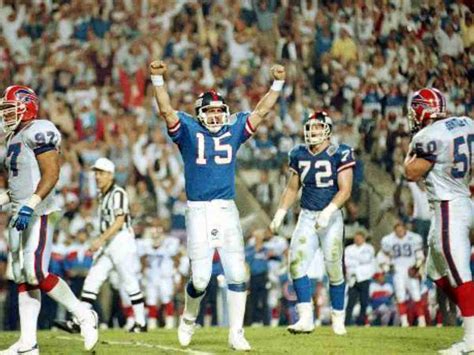
The 1990 season ended with the Giants winning Super Bowl XXV over the Buffalo Bills, 20-19. Scott Norwood missed a 47-yard field goal wide right as time expired. It remains one of the most replayed moments in Super Bowl history.
Simms wasn’t on the field. He’d injured his foot late in the regular season, and backup Jeff Hostetler played the entire postseason and the Super Bowl. Hostetler was good. The Giants were deserving champions. But the second ring belongs to Simms in the sense that he built the foundation of that team and was the starter who got them to that position – and it doesn’t belong to him in the sense that he didn’t throw a pass in any of those games. Both things are true and they don’t fully resolve into a clean narrative, which is fine.
The Rest of the Playing Career
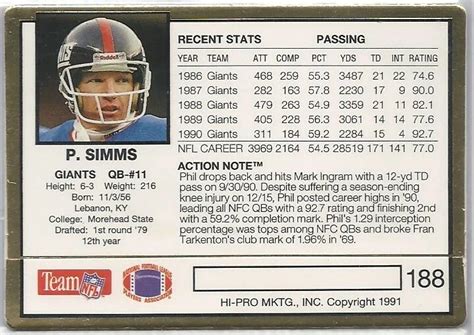
After the 1991 Super Bowl, Simms played two more seasons. He made the Pro Bowl in 1993 – his second selection, the first had been in 1985 when he was also named Pro Bowl MVP – which was his final NFL season. He retired with 33,462 passing yards, 199 touchdown passes, 2,576 completions in 4,647 attempts, and 19 Giants franchise records. The Giants put a ceremony together in September 1994 and retired number 11.
He played 164 games over 14 seasons. Given the three major injuries in years two, three, and four, the career volume is harder to accumulate than the raw numbers suggest. A healthy 1982 might have pushed the final TD count past 220. Might not have. That’s not a point in favor of Hall of Fame induction – just an observation about what the injury years actually cost.
Phil Simms the Broadcaster
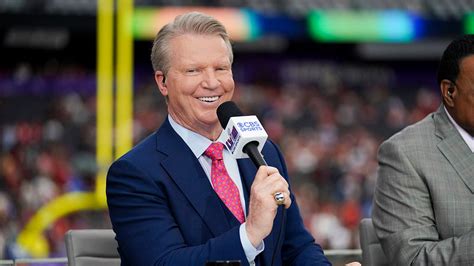
Simms started in television at ESPN after retiring, then moved to NBC in 1995 as part of Dick Enberg’s top broadcast team alongside Paul Maguire. He called two Super Bowls for NBC – XXX in 1996 and XXXIII in 1999 – before the NFL contract moved to CBS.
He joined CBS in 1998 and stayed as lead game analyst for 19 seasons. During that run he called six more Super Bowls: XXXV (2001), XXXVIII (2004), XLI (2007), XLIV (2010), XLVII (2013), and 50 (2016). Eight Super Bowls total as lead analyst. That’s an uncommon level of sustained trust from a network.
CBS transitioned him to studio analyst on The NFL Today starting in 2016, where he worked until 2024. He’s still on SiriusXM’s Mad Dog Radio weekly during the season. He also evaluates quarterbacks – high school, college, and professional – and shares those assessments with NFL personnel departments. That last part doesn’t get mentioned much but it’s what he seems to actually care about.
His broadcasting style was blunt. He’d criticize quarterbacks mid-game when other analysts hedged. That made him polarizing among some viewers and respected among people who wanted someone to actually say what was happening on the field.
The Hall of Fame Question
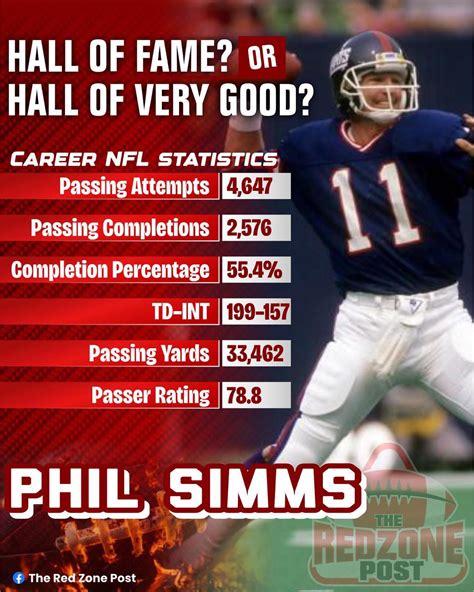
Simms has been on the Pro Football Hall of Fame Senior Ballot since 2018. He hasn’t been selected. He’s publicly said he doesn’t believe he belongs, which is either genuine humility or a very effective preemptive defense against the disappointment of not getting in – probably some of both.
The case against is straightforward: 55.4% career completion rate, 78.8 passer rating, 199 touchdowns against 157 interceptions. By modern standards those numbers don’t project as dominant. By the standards of his era they’re competitive but not elite on a season-to-season basis. He was great in two Super Bowls and good-to-very-good for stretches in between.
The case for starts and mostly ends with Super Bowl XXI. The highest completion percentage in Super Bowl history. The highest passer rating in Super Bowl history. A 39-20 blowout of a Broncos team that was 11-5 in the regular season. Two championships on the roster. A .598 win percentage that no other Giants quarterback has matched at meaningful sample size. The 2022 Davey O’Brien Legends Award, which recognizes career contributions to the position. Inducted into the New Jersey Hall of Fame in November 2024.
The counterargument to the counterargument is that if a 150.9 Super Bowl passer rating achieved 38 years ago – one that still hasn’t been broken – doesn’t get a quarterback into Canton, the bar for quarterbacks with complicated career stats is set somewhere unusual.
He’s not in. Whether that’s right depends on what the Hall is selecting for.
The Family, the Records, the Remaining Work
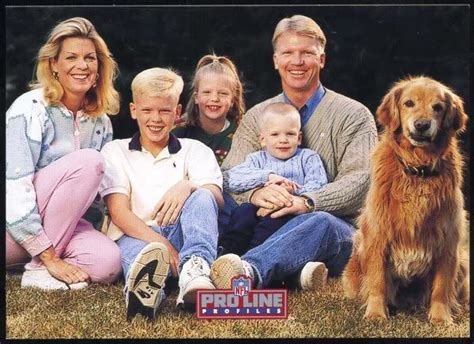
Simms and his wife Diana have three children. Two of them – Chris and Matt Simms – played quarterback in the NFL, which is either a remarkable genetic coincidence or the result of growing up with Phil Simms throwing spiral footballs at you from the time you could catch. Chris had the longer pro career; Matt had cups of coffee with several teams in the early 2010s.
The Giants Ring of Honor includes Simms. The Kentucky Pro Football Hall of Fame inducted him in 2011. He authored “Sunday Morning Quarterback: Going Deep on the Strategies, Myths and Mayhem of Football,” which made the New York Times bestseller list. He announced weightlifting at the 1996 Atlanta Olympics for NBC, which is an extremely specific credit on an already unusual resume.
When Morehead State renamed its stadium after him in October 2025, school officials noted he’d finished his college career with a 48.9% completion rate in a run-first system. He completed 88% of his passes in the biggest game of his life. Those two numbers together tell you most of what you need to know about Phil Simms.
Career Statistics
Passing attempts: 4,647. Completions: 2,576. Completion percentage: 55.4%. Passing yards: 33,462. Touchdowns: 199. Interceptions: 157. Passer rating: 78.8. Games played: 164. Win-loss record as starter: 95-64. Super Bowl appearances: 2 (played in 1). Super Bowl MVP: Super Bowl XXI. Pro Bowl selections: 1985, 1993. Pro Bowl MVP: 1985. All-Pro: 1986.
Super Bowl XXI specifically: 22 of 25, 268 yards, 3 touchdowns, 0 interceptions, 88.0% completion rate, 150.9 passer rating. Both the completion percentage and passer rating are NFL Super Bowl records as of 2025.
Comments