
Champ Bailey and the Washington Redskins: Five Seasons, Four Pro Bowls, One Trade That Still Stings
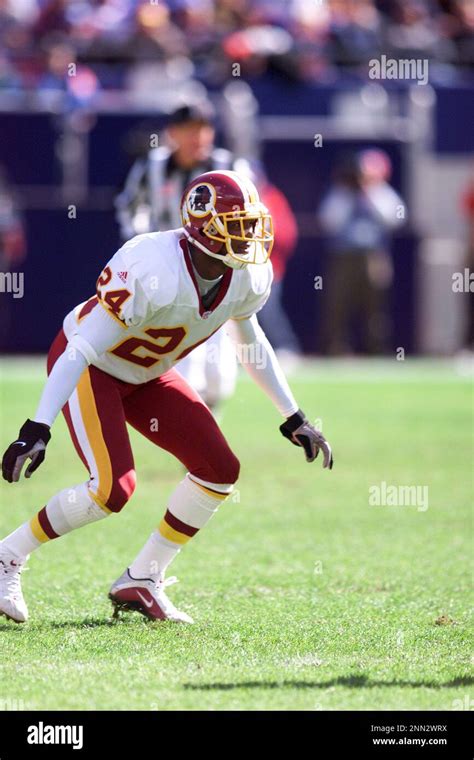
On October 17, 1999, a 21-year-old cornerback playing in his seventh NFL game picked off three passes thrown by Jake Plummer and returned one 59 yards for a touchdown. Washington won 24–10. The kid’s name was Champ Bailey, and that afternoon in Arizona made it pretty clear the Redskins had found something special with the seventh pick in the draft.
He spent five years in Washington – 1999 through 2003 – before the franchise traded him to Denver for running back Clinton Portis. Most people remember Bailey as a Bronco. That’s fair; he played ten seasons in Denver and that’s where he made first-team All-Pro three straight years. But the foundation was built in Washington, under coaches who kept changing and on teams that kept disappointing, and the fact that he emerged from all of that as one of the best defensive backs in the league says more about him than almost any single stat.
From Folkston, Georgia to the Seventh Pick
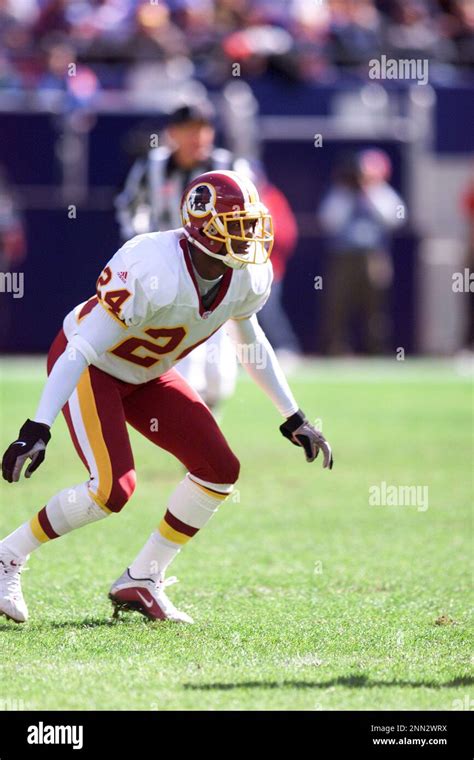
Bailey grew up in Folkston, Georgia – population around 2,500 – and became the highest-drafted player ever to come out of that town. At Charlton County High School he was a two-way threat: 3,573 rushing yards, 58 touchdowns on the ground, and eight interceptions on defense. He also long-jumped 7.89 meters at the SEC Indoor Track and Field Championships in 1998, finishing third.
At Georgia he played both ways too. His college career ended with 147 tackles, eight interceptions, 27 pass breakups – and 978 receiving yards and five touchdowns on offense. He won the Bronko Nagurski Trophy in 1998 as the best defensive player in college football. The Associated Press named him a consensus All-American.
At the 1999 NFL Combine he ran the 40 in 4.28 seconds. That number traveled fast.
Washington’s path to selecting Bailey was a little convoluted. The Redskins originally held the fifth pick, which they traded to New Orleans – New Orleans used it on Ricky Williams. Washington flipped a subsequent pick to Chicago and wound up at seven, where Bailey was sitting. On July 24, 1999, they signed him to a five-year deal worth up to $12 million with incentives, including a $5.25 million signing bonus. Head coach Norv Turner paired him immediately with Darrell Green as a starting cornerback.
The Redskins Years, Season by Season
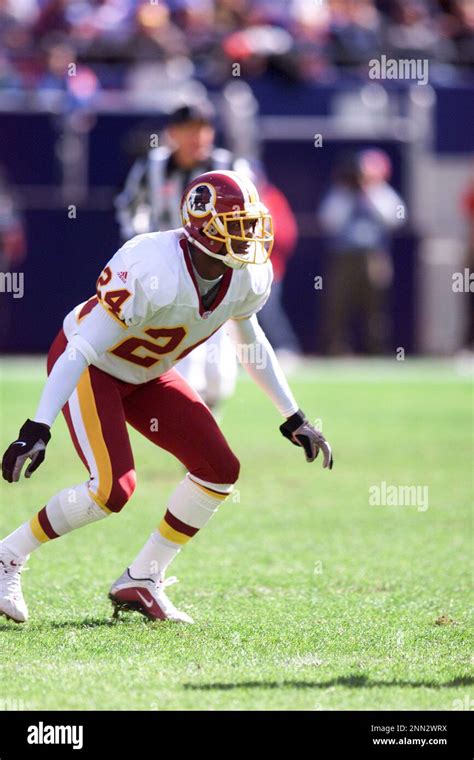
1999 was as good a rookie season as any cornerback had put up in years. Bailey started all 16 games, recorded five interceptions, defended 19 passes, added a sack, and made the NFL All-Rookie Team. The three-interception game against Arizona in Week 7 made him the youngest player in league history to accomplish that in a single game. Washington went 10–6 and won the NFC East – their first division title in years. They lost to Tampa Bay in the wild-card round, but Bailey intercepted a pass in that game too.
2000 through 2002 were rougher for the team, less so for him. The Redskins went 8–8, then 8–8, then 7–9. Washington cycled through quarterbacks and struggled to build anything consistent on offense. Bailey just kept making Pro Bowls. He was selected after the 1999, 2000, 2001, and 2002 seasons – four straight. By his fourth year he had 18 career interceptions and was widely considered among the two or three best cornerbacks in the NFL.
What gets lost in the simple stat lines: Bailey was in the Washington secondary alongside Deion Sanders in 2000 and Darrell Green for four straight seasons. Green didn’t retire until after 2002 at age 42. Corners don’t often get to learn from future Hall of Famers playing beside them rather than against them. Bailey has credited both with shaping how he read routes and managed leverage. That environment, as chaotic as the broader franchise was, gave him something most young corners never get.
After the 2003 season – his fifth – Bailey’s rookie contract expired. Washington placed the franchise tag on him. He pushed back, made clear he wouldn’t report without a new long-term deal. Joe Gibbs had just returned as head coach, and the front office decided the offense needed more firepower than the defense needed to retain its best player. The logic wasn’t crazy. It just turned out to be wrong in the long run.
The Bailey-for-Portis Trade and What Washington Was Thinking
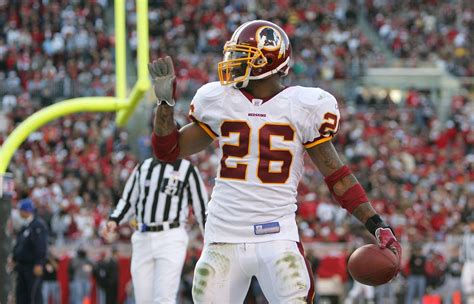
On March 4, 2004, the Redskins sent Bailey and a second-round pick to Denver for Clinton Portis. Portis was 22 years old and had just posted back-to-back 1,500-yard rushing seasons at 5.5 yards per carry – numbers that would make any offensive-minded coach salivate. Gibbs ran a fullback-heavy, run-first system. The fit made sense on paper.
Portis delivered real value in Washington. He rushed for at least 1,300 yards in four of his first five Redskins seasons and went to one Pro Bowl. The Redskins weren’t exactly wrong that Portis was special. He retired with 9,923 rushing yards and 75 touchdowns total – just 77 yards short of 10,000. Washington made him a ceremonial retiree in their franchise, which tells you something.
Still. Bailey went to Denver and immediately played at a higher level than he had in Washington. In his first Broncos season he was first-team All-Pro. He made eight more Pro Bowls in Denver. In 2006 he intercepted 10 passes – the second-highest single-season total in Broncos history – and finished second in AP Defensive Player of the Year voting. He led Denver to five playoff appearances, including a Super Bowl in 2013 (which they lost 43–8 to Seattle, a result that still doesn’t make sense). He played 10 seasons there.
Denver also got Tatum Bell out of the second-round pick included in the trade. Bell was fine. He was not the point.
Bailey himself, years later, acknowledged Denver got the better end of it. Clinton Portis disagreed, which is understandable. Both players were genuinely good in their new cities. The gap in Hall of Fame outcomes – Bailey was inducted in 2019, Portis was not – probably settles the argument for most people.
What Bailey’s Numbers Actually Look Like Across His Full Career
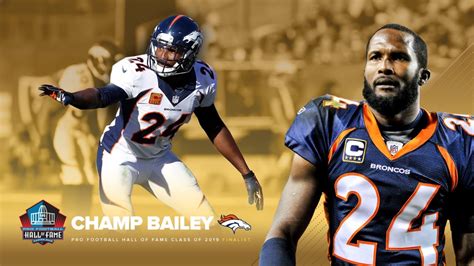
Across 215 regular-season games with Washington and Denver, Bailey finished with 52 interceptions, 203 passes defensed (an NFL record), 931 tackles, three sacks, seven forced fumbles, and four defensive touchdowns. His 12 Pro Bowl selections are the most ever by a defensive back in NFL history. He was first-team All-Pro in 2004, 2005, and 2006. The Hall of Fame named him to the NFL All-Decade Team for the 2000s. He was inducted in Canton in August 2019 alongside Ed Reed, Tony Gonzalez, and Ty Law, in what was a genuinely loaded class for defensive backs.
Washington put him on their list of the 90 Greatest players in franchise history. That feels both right and a little understated given what he became, though the franchise can fairly point out they got four very good years out of him before the contract situation forced the issue.
One thing worth sitting with: Bailey never won a Super Bowl. He made it once with Denver and lost by 35 points. His Washington teams never got past the wild-card round. A player this good, in an era this stacked with rings going to quarterbacks and their offensive weapons, finished without one. That’s the part of his career that the bust in Canton doesn’t fully capture – he was one of the best to ever play his position, and he played 15 seasons, and it wasn’t enough to get there.
He was elected to the College Football Hall of Fame as well, in 2022, which closed a loop that started in Folkston, Georgia, in 1996 when a freshman cornerback showed up at Athens and started playing both ways for Jim Donnan’s Georgia Bulldogs. The resume, start to finish, doesn’t leave much room to argue.
Comments