
Merlin Olsen: The Gentle Giant Who Dominated the NFL and Conquered Television
Merlin Olsen won the Outland Trophy, got drafted third overall by the Los Angeles Rams, played 208 NFL games without missing a Pro Bowl for 14 straight years, accumulated 915 tackles and 91 sacks, earned a master’s degree in economics during the offseason, and then walked off the field and into a television career that introduced him to an entirely different audience – one that had no idea he’d spent the previous 15 years making offensive linemen miserable.
He died at 69 in 2010 from mesothelioma. That’s the arc. Everything in between is worth understanding.
Logan, Utah, and a Coach Who Got It Wrong

Olsen was born September 15, 1940, in Logan, Utah – the second of nine children in a Mormon family that, by all accounts, did not have it easy. During harvest season the Olsen kids formed an assembly line to can 1,600 quarts of peaches. One ton of potatoes at a time. His mother bought chickens by the hundred.
His father taught at Utah State University, which sat a few blocks from the family home. That proximity turned out to matter.
A junior high basketball coach told Olsen athletics wasn’t for him and suggested he consider the arts instead. Olsen later turned down a football scholarship to Stanford to stay close to home and play for Utah State. In retrospect, the basketball coach’s assessment aged poorly.
Utah State: Brains, Brawn, and the Outland Trophy
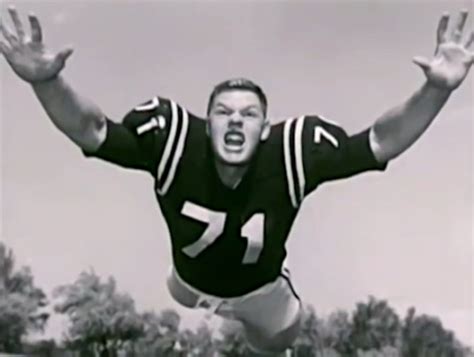
At Utah State from 1959 to 1961, Olsen did something genuinely unusual for a man being recruited by professional football teams in two separate leagues: he graduated summa cum laude. Phi Beta Kappa. Phi Kappa Phi. He won the Outland Trophy in 1961 as the best interior lineman in college football. He earned All-American honors in both his junior and senior seasons.
In 1962, the Los Angeles Rams took him third overall in the NFL Draft. The Denver Broncos, operating in the rival AFL, grabbed him second overall in their own draft. Olsen chose the Rams and signed a two-year contract worth $50,000 – serious money in 1962, when an average American household earned around $6,000 a year.
He was voted Rookie of the Year. Nobody was surprised by the time it happened.
The Los Angeles Rams and 15 Seasons of Calculated Punishment
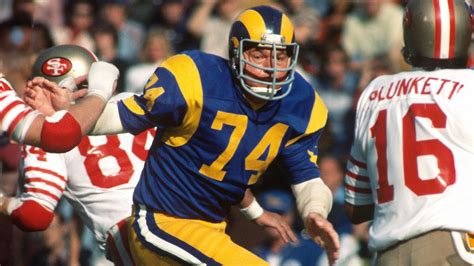
What separates Olsen’s career from most Hall of Fame defensive linemen isn’t a single dominant season or a stat line – it’s duration. He played for the Rams from 1962 to 1976. Every year but his last, he went to the Pro Bowl. Fourteen consecutive selections. Ten first- or second-team All-Pro designations. He retired as the franchise’s all-time leader in tackles with 915, a record that stood long after he left.
He wasn’t a freak athlete in the way the position sometimes produces. He was 6-foot-5 and 270 pounds, quick enough to be dangerous, strong enough to be immovable – but what teammates and coaches consistently pointed to was his mind. “The key to consistency of performance is concentration,” he once said. “I probably held my ability to concentrate over a longer period of time than some athletes. Each game, at the beginning of each play, I thought of it as the most important play of the year.”
The Pro Football Hall of Fame biography describes him, simply, as “a coach’s player.” Punctual. Steady. Never spectacular in the way that generates highlight reels, but never, in 15 years, unavailable or unreliable. He earned his master’s degree in economics during offseasons while active NFL players were doing almost anything else.
The Fearsome Foursome
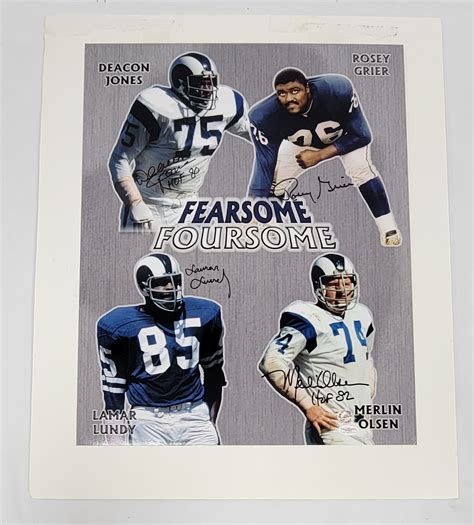
In 1963, the Rams assembled the defensive line that would define the decade. Merlin Olsen at defensive tackle alongside Deacon Jones, Roosevelt “Rosey” Grier, and Lamar Lundy. They became known as the Fearsome Foursome – and the nickname was not hyperbole.
Jones was the face of the unit. He coined the term “sacking the quarterback,” literally invented the vocabulary, and made himself one of the most recognizable players in the sport. But the arrangement only worked because of what Olsen was doing on the inside. Offensive coordinators routinely double- and triple-teamed Olsen, which left Jones one-on-one or with a clear path to the ball carrier. The sack numbers Jones accumulated were, in a meaningful sense, built on Olsen absorbing two blockers so someone else could be free.
That dynamic – the player who makes others better by making himself a problem – doesn’t show up cleanly in any stat. It’s the kind of contribution that gets acknowledged 20 years later in Hall of Fame speeches, if at all. Olsen was elected to the Pro Football Hall of Fame in 1982, his first year of eligibility. The College Football Hall of Fame inducted him in 1980. In 1994, the NFL named him to its 75th Anniversary All-Time Team.
The Fearsome Foursome never won a Super Bowl. The Rams came close more than once but couldn’t finish it. That’s the one thread left unresolved in an otherwise stacked career – though frankly, 14 Pro Bowls and first-year Hall of Fame induction suggest the voters didn’t hold it against him.
After Football: NBC, Dick Enberg, and Five Super Bowls in the Booth
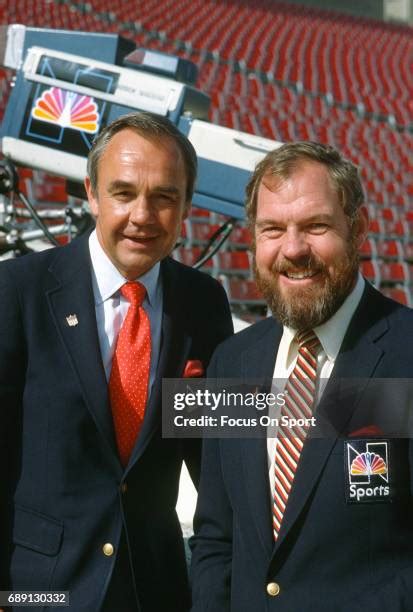
Olsen retired after the 1976 season and moved immediately into broadcasting for NBC. For 16 years he analyzed professional football on television, calling five Super Bowls and nine Rose Bowls alongside Dick Enberg. One critic described the pairing as “wholesome” – which, given that Olsen had spent 15 years as part of the most feared defensive unit in football, captures something odd and accurate about his public image by that point.
The transition wasn’t surprising to people who knew him. His cerebral approach to the game translated directly into analysis. He understood schemes, tendencies, individual matchups. What surprised some was how comfortable he looked on camera – relaxed in a way that most athletes turned broadcasters take years to find, if they find it at all.
Little House on the Prairie and the Jonathan Garvey Years
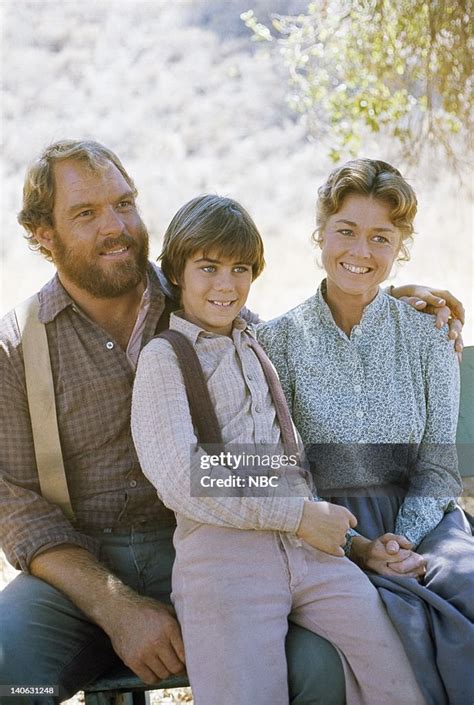
The acting career began during his playing days – he appeared as Little George in John Wayne’s The Undefeated in 1969, alongside Rams teammate Roman Gabriel. A brief appearance on Petticoat Junction in 1970. Nothing that announced a second career.
That came in 1977. Victor French, who played Isaiah Edwards on Little House on the Prairie, left the show to star in his own NBC comedy, Carter Country. Michael Landon needed someone to fill the role of Charles Ingalls’ new friend and neighbor. He cast Olsen as Jonathan Garvey, a farmer – steady, strong, decent, occasionally called upon to be funny. Olsen stayed with the show through 1981, appearing across Seasons 5 through 8 in episodes like “Blind Journey,” “Barn Burner,” and “Men Will Be Boys.”
What made it work was something no casting director could have manufactured: Olsen actually was Jonathan Garvey. He wasn’t performing warmth. The same quality that made coaches trust him unconditionally on the field came through on screen without effort. He was not, by any technical measure, a trained actor – and the show didn’t require one. It required someone real. He was that.
When Little House ended, Landon created a show specifically for Olsen. Father Murphy ran on NBC from 1981 to 1983, with Olsen as John Michael Murphy – a frontiersman who disguises himself as a priest to protect orphans in the Old West. It was well-received, ran two seasons, and confirmed that whatever Olsen had on screen wasn’t tied to one role or one setting.
He also became the longtime spokesperson for FTD Florists. The image – a man who once played on the Fearsome Foursome, endorsing flower delivery – gave him the nickname “Flower Man” in some circles. It says something about his range that nobody found it absurd.
The Person Off the Field
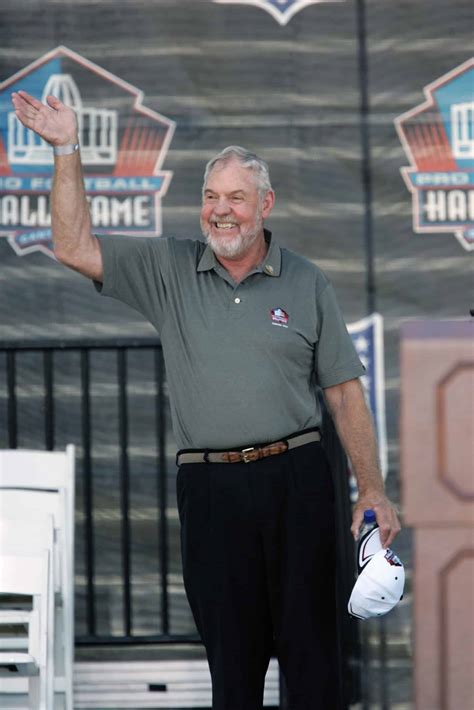
Utah State called Olsen “the greatest athlete in school history.” That’s the kind of designation institutions hand out carefully, because it’s permanent. They named the football field after him in December 2009 – the Merlin Olsen Field – and erected a statue. He received an honorary degree from USU in 2005.
He gave substantial time and personal resources to charitable work throughout his life. When he died, USU described him as “a tireless philanthropist.” Multiple obituaries mentioned it unprompted, which is the kind of evidence that tends to mean something. His brothers Phil and Orrin both played in the NFL – Phil with the Rams and Broncos, Orrin with the Kansas City Chiefs. Phil played alongside Merlin in Los Angeles from 1971 to 1974.
His wife Susan Wakely Olsen survived him after 47 years of marriage. Three children. Four grandchildren at the time of his death.
Mesothelioma, the Lawsuit, and March 11, 2010
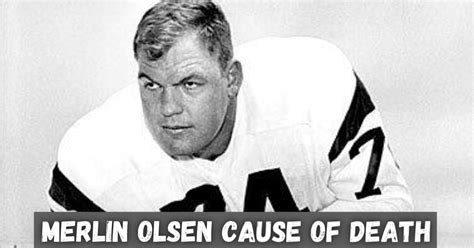
Olsen was diagnosed with mesothelioma in 2009 – a rare cancer that attacks the lining of internal organs, most commonly linked to asbestos exposure. In 2009, he filed suit against NBC Universal, 20th Century Fox, and several other entertainment and production companies, alleging negligent exposure to asbestos during his career in television.
He died on March 11, 2010, at the City of Hope Hospital in Duarte, California. He was 69. A private memorial service was held March 16 at All Saints Church in Pasadena. Utah State University held a separate remembrance for him in Logan.
The NFL had named him one of the 100 greatest players in league history. The New York Times ran his profile in its NFL 100 series, calling him a “gentle giant off the field and relentless on it.” Both halves of that description were accurate, and neither contradicted the other.
What gets overlooked in the career summary is how unusual the combination actually was. Pro Football Hall of Famers who earn master’s degrees in economics during the offseason are not common. Pro Football Hall of Famers who then become household names on a primetime family drama are rarer still. Olsen did both, in the same lifetime, in a way that seemed to require no reinvention at all – as if the football player and the television actor had always been the same person, which they were.
Comments