
Mike Singletary’s Chicago Bears Career: The Linebacker Who Defined a Defense
Early Life and the Road to Football
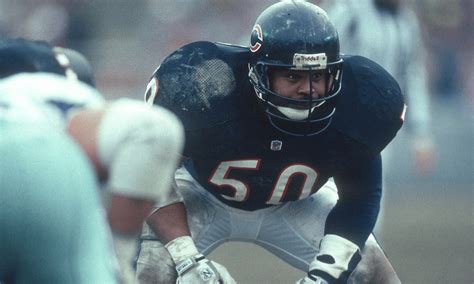
Mike Singletary was born on October 9, 1958, in Houston, Texas, the youngest of ten children raised in a strict religious household. His father was an assistant minister, and football wasn’t allowed in the family. Singletary didn’t put on pads until junior high, which by NFL standards is almost comically late.
He was told repeatedly he was too small. At 6’0″ and around 230 pounds, he wasn’t wrong-sized for a linebacker so much as undersized for the reputation he was building. What he had instead was an ability to deliver hits that broke helmets – sometimes his own – and a football instinct that made size beside the point.
Baylor University: Where the Numbers Got Serious
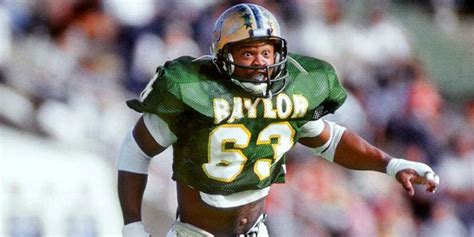
At Baylor, Singletary didn’t just play well. He set records that still define the program. As a sophomore in 1978, he made 232 tackles in a single season – a Baylor record that stood for decades. He finished his college career with 662 total tackles, another school mark. In one game against Arkansas, he had 35 stops. Against Ohio State, 31.
He was a two-time All-American (1979 and 1980), won the Davey O’Brien Award both years – at the time given to the top player in the Southwest Conference – and helped Baylor win the SWC championship in 1980. When he left, the school created the Mike Singletary Award, given annually to the senior player who best represents contribution and character. That award still exists.
Despite all of it, the NFL had questions. Scouts worried about his height. The Chicago Bears took him in the second round of the 1981 Draft, 38th overall. Whatever they were expecting, they got something else entirely.
Arriving in Chicago: From Rookie to Starter in Seven Games
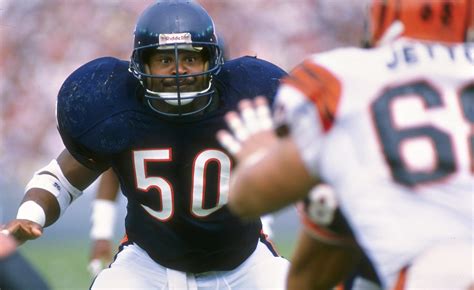
Singletary became a starter in the seventh game of his rookie season. His third start was against the Kansas City Chiefs, and he recorded 10 tackles and forced a fumble. He was a near-unanimous All-Rookie selection by year’s end.
Over the next 12 seasons, he started 172 games for the Bears. That’s second in franchise history, trailing only Walter Payton’s 184. He missed two games total – both in 1986 – in a career that ran from 1981 through 1992. In each of his last 11 seasons, he finished as either the team’s first or second leading tackler.
The career totals: 1,488 tackles (885 solo), 19 sacks, 7 interceptions, 12 fumble recoveries. The Pro Football Hall of Fame HOF Monitor ranks him second among all inside linebackers in NFL history, with a score of 171.28 against an average HOF inside linebacker score of 106.50. That gap is not close.
The 1985 Chicago Bears Defense
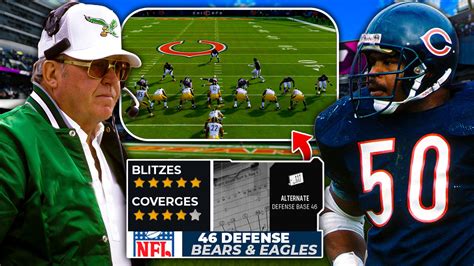
The 1985 Bears finished 15-1. Their defense allowed 12.4 points per game in the regular season. In three playoff games, they gave up a combined 10 points – shutting out the New York Giants 21-0, shutting out the Los Angeles Rams 24-0, and then beating the New England Patriots 46-10 in Super Bowl XX.
The system was Buddy Ryan’s 46 Defense, an aggressive overload scheme that essentially dared offenses to find answers they didn’t have. It put extra pass rushers at the line of scrimmage and left the middle of the field nominally open – which meant the quarterback had to process and throw faster than most could. The defense needed a middle linebacker who could read that confusion and react before the snap, not after.
Singletary was that player. His eyes became almost as famous as his tackling. He had a way of staring across the line that quarterbacks found genuinely unsettling. Gary Fencik, his Bears teammate, described specific moments where Singletary’s pre-snap reads were so accurate that the play was functionally over before it started. What looks like intensity in photographs was actually information processing at an unusual speed.
Ryan’s defense gave up the middle on purpose, which meant Singletary had to be right. Constantly. And he was. The 1985 Bears held opponents to fewer than 11 points per game across what is still widely considered the greatest single-season defensive performance in NFL history. Singletary earned NFL Defensive Player of the Year that season, his first of two.
Super Bowl XX: January 26, 1986
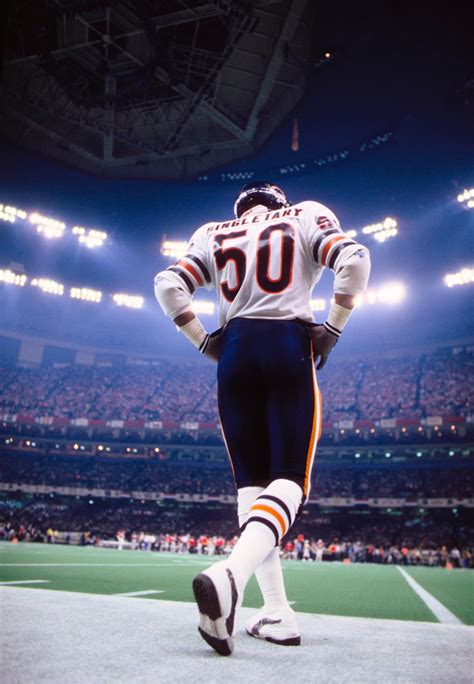
New Orleans. The Patriots came in having upset the Jets, Raiders, and Dolphins on the road to get there. Chicago didn’t care. The Bears’ defense held New England to seven rushing yards – a Super Bowl record that still stands. Singletary recovered two fumbles in the game, tying a Super Bowl record. He also broke up a pass that would have gone for a touchdown in the first half, and he hit running back Craig James so many times that James, who had faced Singletary briefly in college (SMU vs. Baylor), was reportedly already wary of him going in.
Final score: 46-10. The Bears’ offensive line scored a touchdown. The defense made the game unwatchable for anyone rooting for New England by the third quarter.
In the three playoff games leading to that win, Singletary had 13 tackles and a sack. His work in those games was less statistically spectacular than what he did week-to-week during the regular season, but that’s partly because the games themselves weren’t close enough to need more.
Career Stats and Awards
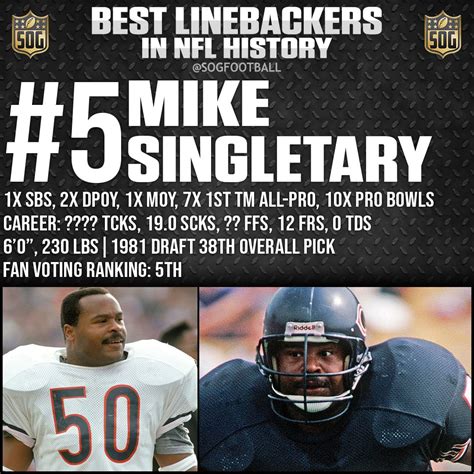
The full accounting is worth laying out cleanly:
Singletary went to 10 consecutive Pro Bowls, from 1983 through 1992. He was named first-team All-Pro seven times, All-NFC every season from 1983 to 1991. He won NFL Defensive Player of the Year in 1985 and again in 1988. He won the Walter Payton NFL Man of the Year Award in 1990. The Bears retired his number 50.
He started 172 games and missed two. His 1,488 career tackles include only the seasons where official tackle counting was tracked; the actual number across his full career, including early seasons before comprehensive stats were kept, is higher. He had 885 solo tackles, 19 sacks, and 12 fumble recoveries across 12 seasons.
The Sporting News ranked him 56th on their list of the 100 greatest NFL players in 1999. For a player whose entire value was defensive, at a position the casual fan often undervalues, that’s a reasonable placement – though anyone who watched him play in 1985 would probably argue upward.
One detail that gets overlooked: Singletary was named team captain for ten of his twelve seasons. That’s not automatic for great players. It reflects something about how his teammates read him, not just his production.
Hall of Fame Induction and Legacy
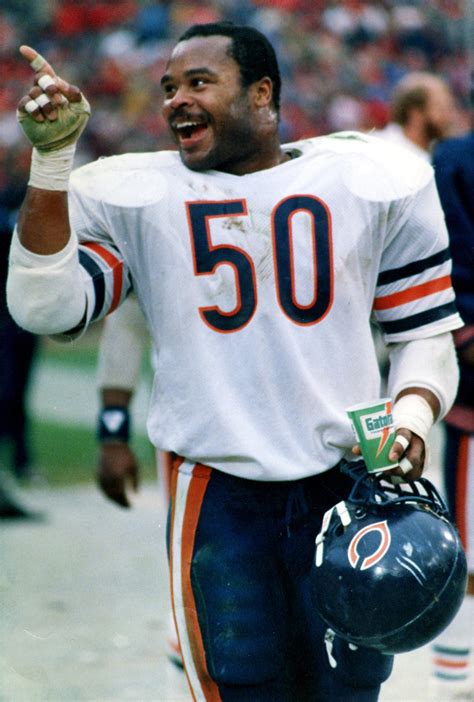
He was inducted into the Pro Football Hall of Fame in 1998, five years after retiring. He’s also in the College Football Hall of Fame, inducted in 1995. The Bears have 32 Hall of Famers – more than any other NFL franchise – and Singletary belongs in the conversation about the five or six most significant among them.
Comparisons to other great middle linebackers are unavoidable. Dick Butkus played for the same franchise. Ray Lewis won two Super Bowls and played 17 seasons in Baltimore. Jack Lambert anchored Pittsburgh’s Steel Curtain defenses of the 1970s. Where Singletary fits in that group depends partly on what you value. He won one championship to Lambert’s four and Lewis’s two. But the 1985 Bears defense, as a single-season unit, doesn’t have a clear peer. Lambert played on better teams. Lewis was more productive statistically across a longer career. Singletary was arguably the best version of his specific skill – reading and reacting inside a complex scheme – of anyone in his era.
What’s harder to quantify is the Bears’ identity during those years. Chicago didn’t win in 1985 because they had Walter Payton, though Payton was extraordinary. They won because nobody could score on them. And nobody could score on them primarily because of how Singletary operated at the center of that defense.
Coaching Career: A Different Story
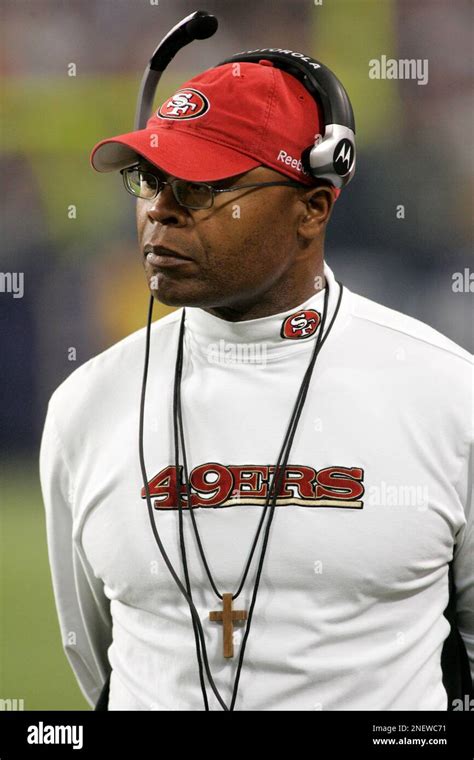
In 2003, after a decade as a motivational speaker and corporate consultant, Singletary went back to football as linebackers coach for the Baltimore Ravens. He moved to the San Francisco 49ers in 2005 in the same role under Mike Nolan.
In October 2008, Nolan was fired and Singletary was named interim head coach. The 49ers went 5-4 in his interim stretch, and he was given the full job for 2009. He went 8-8 that year and 6-10 in 2010, finishing 18-22 overall before being let go. He famously sent tight end Vernon Davis to the locker room during a game in 2008 and addressed the team in a way that became part of NFL lore – though accounts of exactly what was said vary depending on who’s telling it.
After San Francisco, he coached the Memphis Express in the Alliance of American Football in 2019 (2-6 before the league folded), and then became head coach at Trinity Christian Academy in Addison, Texas – a private school in the Dallas area that had been a consistent program in Texas prep football. He went 1-21 over two seasons and resigned after 2019 to return to speaking and consulting.
The coaching record is hard to reconcile with the playing career, and I don’t think there’s a clean explanation. Great players don’t automatically become great coaches – that’s been true often enough to be almost a rule. But Singletary’s case is more extreme than most. The same qualities that made him effective as a player, the intensity, the demand for immediate execution, the intolerance of mistakes, apparently didn’t translate the way he expected. His motivational style worked differently with professional players who had their own careers and leverage than it had when he was a teammate holding everyone accountable on the field.
After Football: Books, Faith, and Speaking

Singletary is an ordained minister, a detail that traces back to his upbringing and has been consistent throughout his adult life. He married Kim Singletary; they have seven children and sixteen grandchildren as of recent reporting.
He authored three books: Singletary on Singletary (a career memoir), Calling the Shots (about leadership and the mental game of football), and Daddy’s Home at Last (focused on faith and family). He co-founded a company called Leadership Zone that does corporate leadership training. His speaking engagements draw on the same themes – discipline, commitment, team structure – that defined his playing career.
In January 2026, he appeared on NFL Network’s Good Morning Football to discuss the current Bears and offer his Super Bowl LX prediction. He remains a recognizable voice on Chicago Bears history and shows up regularly when the franchise’s defensive heritage gets discussed.
What He Meant to the Bears Franchise
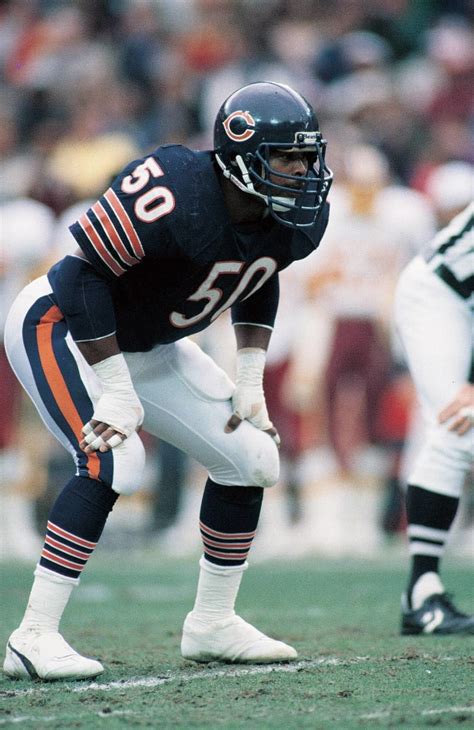
The Bears retired number 50 in Singletary’s honor. He’s one of 32 players from the franchise in Canton – the most of any team in the NFL – and his number sits alongside Butkus’s 51 and Payton’s 34 as the most immediately recognizable retired digits in Bears history.
The 1985 Bears had a cultural presence beyond football that’s unusual for any team from that era. The “Super Bowl Shuffle” video, filmed in December 1985 before the team had even won anything, is the kind of thing that either ages terribly or becomes iconic. It became iconic. Singletary was part of that team and that moment, though his public personality was always more serious than the Shuffle suggested.
Bears fans who were alive in 1985 tend to place that defense in a category by itself. The 2000 Ravens went 34 games without allowing more than 20 points. The 2002 Buccaneers allowed 12.3 points per game in the regular season, slightly better than the 1985 Bears’ 12.4. Those teams have their advocates. But neither has the playoff run the ’85 Bears put together: three games, ten points allowed, two shutouts, one Super Bowl blowout. That sequence belongs to Singletary and the defense he anchored more than to anyone else.
Comments