
Keyshawn Johnson and the New York Jets: Draft Day Drama, 63 Catches, and a Trade That Still Stings
The Morning of the 1996 Draft, Johnson Was Standing on a Stool
Not at Madison Square Garden. Not surrounded by league officials. He was in a Manhattan hotel room, modeling a custom beige suit for his personal tailor, while his agent Jerome Stanley argued contract terms with the Jets’ Pat Kirwan in the corner of the room. The draft was starting in a few hours. The Jets had the first pick. And Johnson told them, through Stanley, not to use it on him.
They did anyway.
That’s the compressed version of how Keyshawn Johnson became a New York Jet – one of the stranger draft-day openers in league history, and a pretty good preview of the four years that followed.
Johnson grew up in South Los Angeles, attended Susan Miller Dorsey High School, and spent two years at West Los Angeles College before USC came calling. At USC he became a different kind of player – not just fast, but physically overwhelming for defensive backs, 6-foot-4 and 211 pounds with hands that made contested catches look routine. In the 1996 Rose Bowl he caught 12 passes for 216 yards, a Rose Bowl record that still stands. Northwestern’s secondary had no answer for him. He was named the game’s MVP. The Paul Warfield Trophy and unanimous All-American honors followed. By the time the 1996 draft arrived, the question wasn’t whether he’d go high – it was whether anyone would go before him.
Nobody did.
Why a Wide Receiver Went First Overall – and Why It’s Never Happened Since
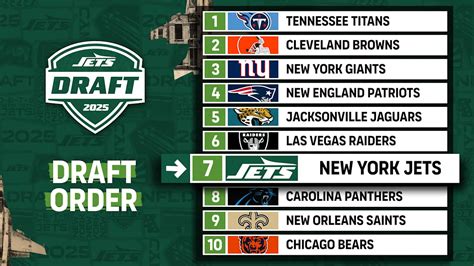
The Jets finished 3-13 in 1995 under Rich Kotite and were last in the NFL in scoring. They had already addressed quarterback by signing Neil O’Donnell in free agency for five years and $25 million. Left tackle wasn’t a need either – they’d just brought in Jumbo Elliott on a five-year, $15 million deal. So when the choice at No. 1 came down to Johnson or UCLA tackle Jonathan Ogden, the Jets went with the guy they thought could change what the offense looked like on the field and what the franchise looked like in the papers.
“Keyshawn was a star player – he was all the things we wanted,” Kirwan, the Jets’ director of player administration at the time, said years later. “We had a lot of good, quiet players. We thought this young star is what we needed in New York.”
Irving Fryar had been the last wide receiver taken first overall, by New England in 1984. Johnson was the third ever at the position to go No. 1. Thirty years later, as of the 2026 draft, it still hasn’t happened again. Quarterbacks and pass rushers have controlled the top spot so thoroughly since 1996 that Johnson now holds a strange, possibly permanent distinction: the last wideout to hear his name called first.
Whether that reflects the position’s declining draft value or just the accident of which quarterback classes were available each year is an argument worth having. But what it does confirm is that the Jets made an unusual bet in 1996. One they’d later decide to cash out.
The 1-15 Season and the Book Nobody Was Supposed to Write
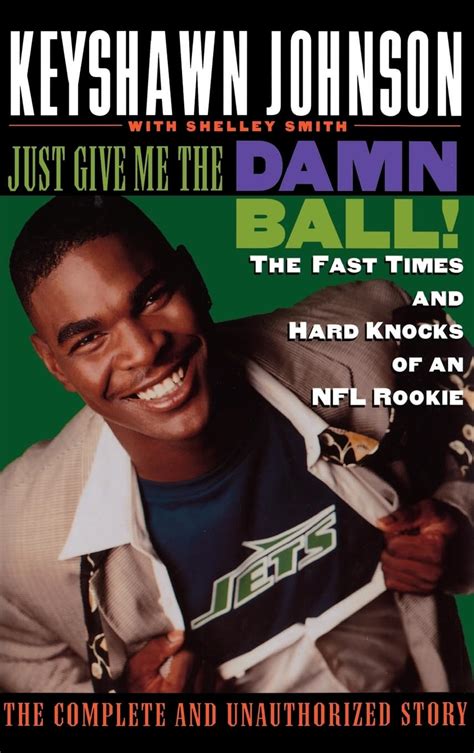
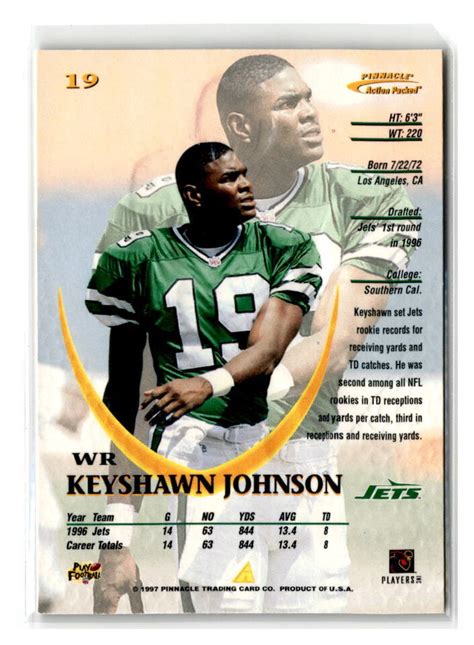
The Jets went 1-15 that year. Johnson caught 63 passes for 844 yards and eight touchdowns, earned a spot on the All-Rookie Team, and then, in the offseason, co-wrote a book with ESPN’s Shelley Smith that named names, aired out teammates, and described the organizational dysfunction in enough detail that everyone in the building probably had a bad few weeks when it dropped.
The book was called Just Give Me the Damn Ball! He was 24 years old.
What’s striking about it, reading coverage from that period, is that Johnson didn’t seem to think he was doing anything particularly unusual. He had opinions. He’d observed things. He wrote them down. The Jets had lost 15 of 16 games – not exactly a state secret – and Johnson’s view was that the problems went deeper than talent. The lack of emotion, the absence of hunger, the weekly predictability of the collapse. He said so.
The Jets front office was not thrilled. Teammates varied. And Johnson spent the next few years under a reputation for being difficult that, fairly or not, shadowed his actual play. What gets lost in that framing is that he was right about most of it. Rich Kotite resigned after the season. The team brought in Bill Parcells. Everything Johnson had diagnosed was treated as a real problem by the people who fixed it.
Three Years Under Parcells: From 1-15 to the AFC Championship
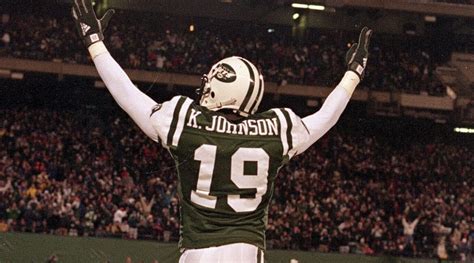
Parcells rebuilt the Jets fast. 9-7 in 1997. Then 12-4 in 1998 – the best record in franchise history, an AFC East title, the first division crown since the AFL-NFL merger in 1970. Johnson made the Pro Bowl both years. He was the receiver Parcells wanted: physical, precise on short and intermediate routes, willing to block, and genuinely hard to tackle after the catch.
The 1998 playoff run produced one of the better individual performances in Jets postseason history. Against Jacksonville in the divisional round – a 34-24 win – Johnson caught nine passes for 121 yards and a touchdown, rushed for 28 yards and another score, recovered a fumble, and intercepted a pass. On defense. He was doing everything on the field that day except selling tickets.
The AFC Championship the following week was less satisfying. Denver won 23-10. Johnson caught five passes for 68 yards but the Jets offense managed just 10 points, and that was the end of what had looked like a genuine Super Bowl run.
In 1999 the team slipped to 8-8 under Parcells, who stepped down after the season. Johnson’s numbers that year included a 194-yard opener against New England – a career high – but the team missed the playoffs and the front office was entering a complicated transition period. Owner Leon Hess died before the season began. The franchise was being sold. Johnson still had a year left on his contract, and he wanted a new one.
The Contract Dispute, the New Owner, and Why the Trade Happened
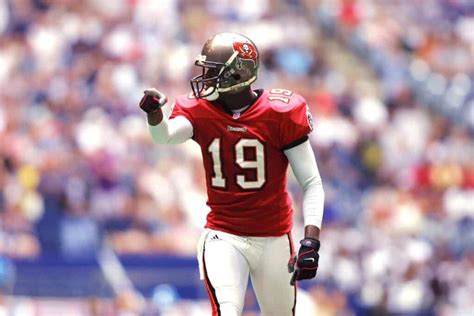
The Jets had a standing policy: no contract renegotiations with more than one year remaining. Johnson and his camp knew this. They also knew he’d outplayed his deal and wanted the money to reflect it. The new owner, Woody Johnson, purchased the team in January 2000. Johnson was traded in April. The two men never spoke.
“He bought the team in January, and I was traded in April,” Johnson said afterward. “He never spoke to me. What a joke. If he would’ve come to me and said, ‘Son, I’m a man of my word, and though we can’t do anything long-term for you now, here’s what we can do,’ then I would’ve listened. But that never happened.”
On April 12, 2000, the Jets sent him to Tampa Bay for two first-round picks in that year’s draft: 13th overall (John Abraham) and 27th overall (Anthony Becht). Johnson watched the Jets’ draft picks from his LA home that Saturday and made some comments about what the team chose to do with its first selection – a defensive player, Shaun Ellis – that he found amusing.
Abraham turned into a five-time Pro Bowler and one of the best pass rushers of the early 2000s. Which makes the trade look smart in isolation. Except the Jets then traded Abraham in 2006 after their own contract dispute with him. Same pattern, different player. Becht was a functional tight end for six Jets seasons but never close to Pro Bowl level. So the return was one genuine star (who didn’t stay either) and a solid rotational piece.
Meanwhile Johnson went to Tampa, caught 106 passes for 1,266 yards in his first season there, and won Super Bowl XXXVII in January 2003. The ring came with the Buccaneers, not the Jets. That’s the part that’s hard to footnote cleanly – because it suggests the Jets traded away a player who still had his best seasons ahead of him, and replaced him with players they’d eventually move on from anyway.
What His Four Jets Seasons Actually Looked Like, by the Numbers
Across 1996 through 1999, Johnson averaged roughly 79 receptions, 1,060 receiving yards, and eight touchdowns per season – the second-most receiving yards accumulated over a four-year span in Jets franchise history. He caught 512 passes in his first 100 NFL games, fourth-most in league history at the time, behind only Marvin Harrison, Sterling Sharpe, and Lionel Taylor. He reached 600 career receptions in just 118 games, tying Herman Moore for the second-fastest to that mark in NFL history.
These are not fringe numbers. They’re the numbers of a legitimate No. 1 wide receiver operating at a high level on a team that, for two of those four years, was genuinely competitive. The reputation – difficult, self-promotional, controversy-adjacent – stuck around long after the production warranted it.
He wore number 19 for the Jets. The franchise has not retired it.
The Hall of Fame Question Nobody Has Settled
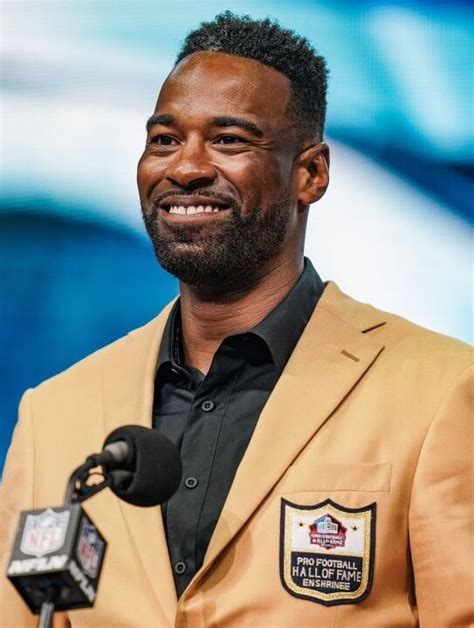
Johnson finished his career in 2006 with the Carolina Panthers. 814 receptions, 10,571 receiving yards, 64 touchdowns, three Pro Bowl appearances, one Super Bowl ring. He’s tied with Henry Ellard at 17th all-time in career receptions and sits 24th in career receiving yards. He has not been elected to Canton.
The honest answer on whether he should be is: probably borderline. His career numbers are strong but not dominant at the position – he played in the same era as Marvin Harrison, Randy Moss, Cris Carter, and Jerry Rice, receivers who set records that made Johnson’s totals look modest by comparison. The argument for him is longevity, consistency, and the fact that he was genuinely effective on multiple teams in multiple systems. The argument against is that his peak lasted roughly three seasons and his counting stats, while good, don’t separate him from the second tier at the position.
What probably doesn’t help his case is exactly what made him famous outside of box scores. The book. The contract disputes. The personality. None of that should matter in a Hall of Fame evaluation, but it has a way of mattering anyway.
After Football: Broadcasting, Mentoring, and the Agent Lawsuit
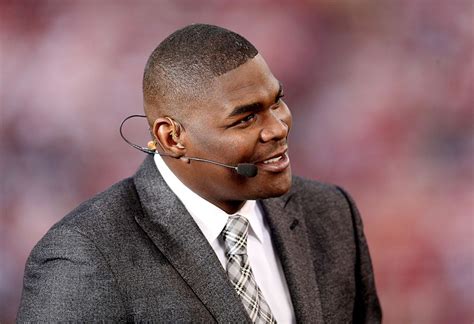
Johnson joined ESPN after retiring and became a recognizable presence across the network’s programming, including a regular role on First Take alongside Stephen A. Smith and a co-hosting spot on “Keyshawn, JWill, and Max,” a morning simulcast that ran for several years. He’s also worked periodically as a mentor for college prospects entering the NFL, trading on the credibility of someone who came up through community college before breaking through at USC.
In 2021 he sued sports agent Chris Ellison in a dispute over roughly $1 million in alleged finder’s fees, claiming Ellison had promised him one-third of a 3% commission on contracts for players Johnson had helped identify and recruit. The case surfaced through a TMZ report. It’s a strange coda to a career that started with a contract dispute and apparently never fully moved away from business friction.
He was also involved in a widely covered 2021 incident at his Calabasas neighborhood in which he followed a neighbor he believed to be driving recklessly, resulting in minor contact between vehicles. The neighbor turned out to be Masai Ujiri, president of the Toronto Raptors. Both men said afterward there was no ill intent.
The Super Bowl ring from Tampa Bay, January 2003, is the career achievement that probably stings Jets fans most when they think about the trade. Johnson was exactly who the Jets thought they were drafting in 1996. He delivered on that for four years. Then someone else gave him the championship game.
Comments