
Earl Thomas: The Rise, the Legion of Boom, and a Legacy That’s Still Being Settled
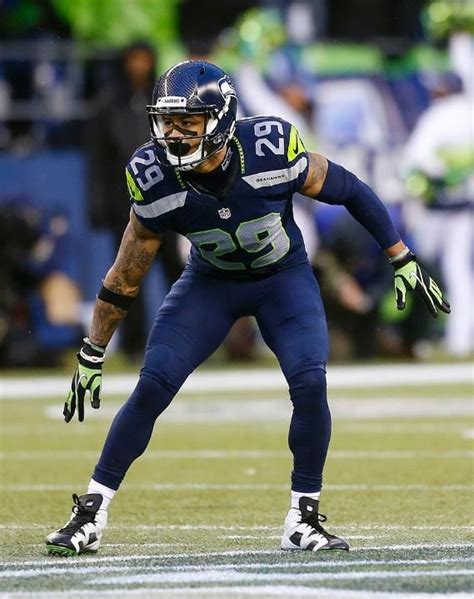
Earl Thomas played 140 games in the NFL and changed how coaches thought about the free safety position. At his peak, between 2011 and 2015 in Seattle, he was the best safety in football. Not arguably. Not among a conversation of candidates. He was the answer every defensive coordinator wanted and almost nobody could find.
He also punched a teammate at practice, got released by two teams under bad circumstances, and has been in the news since retirement mostly for legal reasons that have nothing to do with football.
Both things are true. The Hall of Fame case is real, the biographical complications are real, and anyone writing about Thomas has to hold both at once.
Orange, Texas, and the Early Years
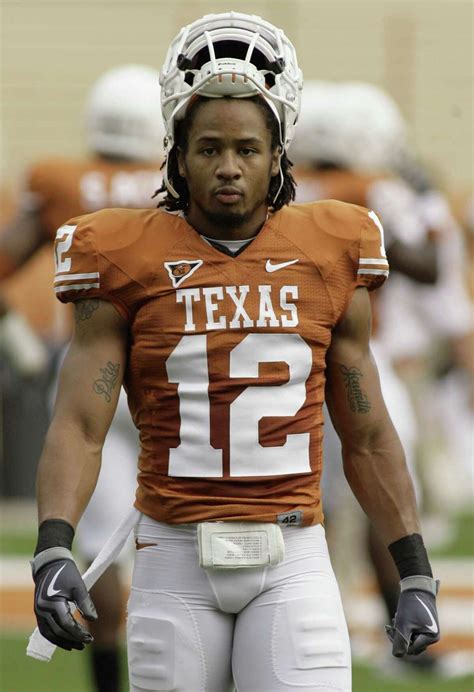
Thomas was born May 7, 1989, in Orange, Texas – a small industrial town near the Louisiana border, roughly 30 miles west of Beaumont. His grandfather, also named Earl Thomas, was a pastor. Football was everywhere in that household, but so was church, and the family’s roots in Orange ran deep enough that the town declared January 23, 2007 as Earl Thomas Day – before he had played a single college snap.
About 18 months before that ceremony, Hurricane Rita hit. The Thomas family came back to find their roof gone, debris across the lot, their grandfather’s church demolished. They spent months in a Super Eight motel while his grandparents stayed two doors down. Thomas talked about those months years later, not as trauma exactly, but as the kind of thing that either breaks a family or doesn’t.
At West Orange-Stark High School, he was already drawing attention from programs across the country. He signed with the University of Texas in that same ceremony the town threw for him.
Two Years at Texas, Then Gone
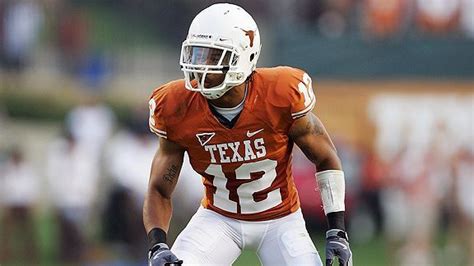
He enrolled in Austin in 2007. Freshman All-American. First-team All-Big 12 in 2009. He helped lead Texas to the Big 12 championship in his sophomore year and to the BCS National Championship Game, where the Longhorns lost to Alabama 37–21.
After two seasons, he left for the draft. Seattle took him 14th overall in 2010, which at the time felt like a slight reach for a safety – the position rarely goes that high. By 2012, it looked like a steal.
Seattle, Pete Carroll, and the Legion of Boom
Thomas’s role in Pete Carroll’s defense was specific and demanding. Carroll ran a single-high safety look, meaning Thomas was responsible for the entire deep middle of the field by himself. No centerfield help. He had to read the quarterback’s eyes, diagnose routes, and cover 50 yards of grass with one player. Most safeties can’t do it. Thomas not only could – he made it look like a reasonable thing to ask.
What that allowed Carroll to do was press at the line of scrimmage. Richard Sherman, Brandon Browner, and later others could jam receivers at the snap because they knew Thomas was behind them, cleaning up anything that got through. The whole structure of that defense rested on the assumption that Thomas wouldn’t give up the deep ball. He usually didn’t.
From 2011 through 2015, he made the Pro Bowl five consecutive times. First-team All-Pro in 2012, 2013, and 2014. Second-team in 2011 and 2017. By the end of his Seattle tenure, he had 664 tackles, 28 interceptions, 67 passes defensed, and 11 forced fumbles in nine seasons. His 71 career passes defensed, across both teams, ranks ahead of John Lynch and Rod Woodson – both in Canton.
The defense hit its absolute ceiling in the 2013 season. Seattle allowed 14.4 points per game that year, lowest in the league by a wide margin. They held opponents to 272.6 yards per game. In Super Bowl XLVIII, they beat the Peyton Manning–led Broncos 43–8, which remains one of the most one-sided championship results in NFL history. Manning had put up 606 points that regular season. Against this defense, he had one of the worst games of his career.
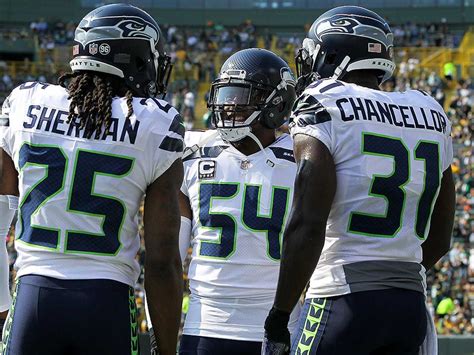
The Legion of Boom – Thomas, Kam Chancellor, Sherman, and the corners – wasn’t just good. It operated on a logic that other defenses couldn’t copy because they didn’t have the same pieces. Thomas at free safety was the irreplaceable piece.
Injuries, the Middle Finger, and the End in Seattle
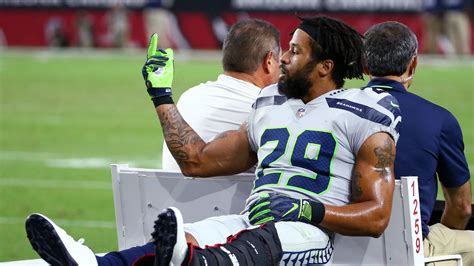
The relationship between Thomas and the Seahawks started fraying around 2017. He wanted a new contract. Seattle was slow to move. He held out of training camp that year, missed time, and came back to play well enough to earn second-team All-Pro again – which made the contract dispute even more loaded.
Week 4 of the 2018 season, in Arizona, Thomas broke his left leg. As he was being carted off the field, Pete Carroll jogged over to show concern. Thomas flipped Carroll off.
He later said he didn’t regret it – that Carroll’s reaction didn’t feel genuine to him. Whether that’s a fair read of Carroll’s character or not, the image existed. Seattle let him walk in free agency after the season.
Baltimore and the Final Season
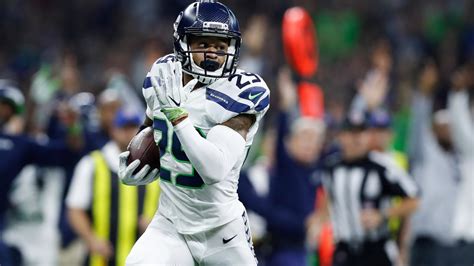
Thomas signed with the Baltimore Ravens on March 12, 2019 – four years, $55 million. He made the Pro Bowl that season on a team that went 14–2. It looked, briefly, like a redemption arc.
In August 2020, at training camp, Thomas punched safety Chuck Clark during practice. Multiple teammates reportedly told the Ravens’ leadership they didn’t want Thomas on the team. Baltimore released him for “personal conduct that has adversely affected the Baltimore Ravens.”
He hasn’t played since. The Texans brought him in for a workout in 2020 but sent him home without a deal. San Francisco’s Kyle Shanahan said the 49ers weren’t interested. Nobody signed him.
Career Numbers, Straight
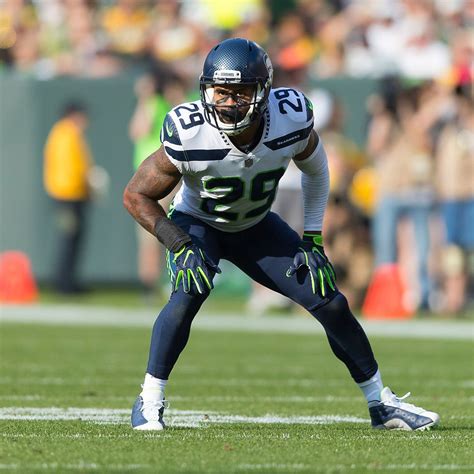
140 games. 713 tackles. 30 interceptions. 71 passes defensed. 12 forced fumbles. 4 defensive touchdowns. One Super Bowl ring. Seven Pro Bowl selections. Five All-Pro designations (three first-team, two second-team). Member of the NFL’s 2010s All-Decade Team.
He went 106 consecutive starts to open his career – third-longest in Seahawks franchise history, behind Chris Gray and Russell Wilson.
What doesn’t show up in those numbers is how the scheme worked because of him. Carroll’s defense generated pressure up front partly because opposing quarterbacks knew they couldn’t take the easy deep ball over the middle. That invisible statistic – the completions and touchdowns that simply didn’t happen – doesn’t appear anywhere on Pro Football Reference.
The Hall of Fame Question
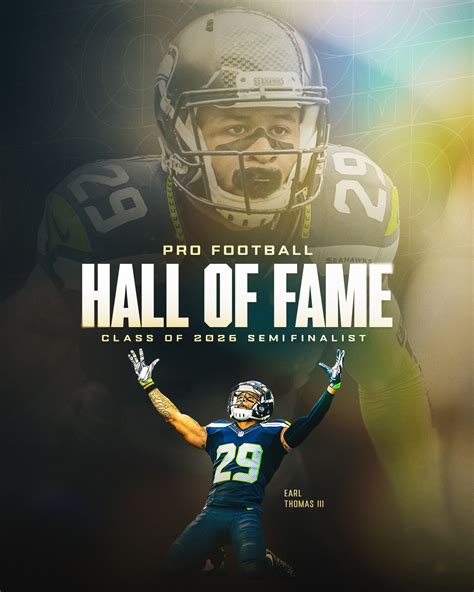
Thomas became eligible for the Pro Football Hall of Fame in 2025. He reached the semifinalist stage that year and again for the Class of 2026 – his second consecutive year getting that far.
The case for him is real. His statistical comps beat several enshrined defensive backs. Seven Pro Bowls. A ring. The All-Decade Team. And a specific kind of impact – structurally essential to one of the best defenses in league history – that numbers alone don’t capture.
The case against him is also real, and it’s mostly about what didn’t happen: his career ended at 30, not 35. He has 30 career interceptions, not 50. The Pro Football Reference Hall of Fame Monitor gives him a score of 78.53. The average for enshrined defensive backs is 99.46. That gap isn’t negligible.
There’s also the off-field history, which Hall voters have handled inconsistently over the years – sometimes it matters, sometimes it doesn’t. Hard to know which way they’ll land on Thomas.
What I find genuinely hard to resolve is this: the argument that his career was cut short by injuries and conduct issues is true, but it’s also circular. You can’t give a player credit for the peak-years games he didn’t play. His counting stats are what they are. The question is whether his rate-of-impact during the games he did play was Hall-of-Fame quality, and by that measure – yes, almost certainly. Whether voters see it that way is something else.
Off-Field: What Actually Happened
The off-field history runs from 2018 to the present and involves several separate incidents.
April 2020: Thomas’s wife Nina Heisser held him at gunpoint at a house in Austin after allegedly catching him with other women. Charges against her were later dropped. In court documents from that incident, Heisser mentioned Thomas had started drinking heavily.
May 2022: An Austin judge issued an arrest warrant after police said Thomas violated a protective order by sending threatening messages to a woman about her and their children. He was arrested after being recognized at a bar in Orange, Texas. He faced a third-degree felony carrying a potential 10-year sentence.
Then, in a development that goes in a different direction entirely: in December 2024, federal prosecutors charged Thomas’s estranged wife and her boyfriend, a New Orleans man named Thompson, with a $2.7 million scheme to use Thomas’s identity fraudulently. The fraud charges were against the ex-wife and her boyfriend – Thomas was the victim in that case, not a defendant. Thompson had already been arrested in June 2023 on separate drug and weapons charges.
These are distinct incidents with different facts and different roles for Thomas in each. They shouldn’t be collapsed into a single narrative, but they do form a pattern of personal instability that ran alongside, and eventually overshadowed, the football.
Where Things Stand Now
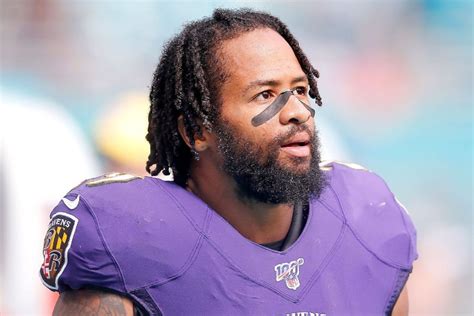
Thomas officially retired after the 2019 season. He kept a low profile for a few years after the Ravens release, which given the circumstances wasn’t surprising.
In April 2025, he returned to Seattle for team festivities and sat down with KING 5 for an interview reflecting on his career and the controversies. He was also included in ESPN’s All Quarter Century team, which recognized players with the most impact from 2000 onward – the recognition came alongside confirmation that football analysts still regard his 2010–2017 peak as the standard for the free safety position.
He was 36 years old as of his 2025 birthday. He hasn’t played since the 2019 playoff run with Baltimore. Given that no team signed him in three separate free-agent windows after his release, his playing career is over.
What remains is the argument about Canton, a complicated personal record, and a body of work that – when you watch the 2012 through 2015 Seahawks tape – still looks like something most defensive coordinators today are trying to build and can’t quite get there.
Comments