
Brian Dawkins: How “Weapon X” Became the Greatest Safety Philadelphia Ever Saw
Brian Dawkins played 224 NFL games, intercepted 37 passes, registered 26 sacks, and forced 36 fumbles. He did all three of those things in a single game once. Nobody else in NFL history has.
From Jacksonville to Clemson: The Making of a Safety
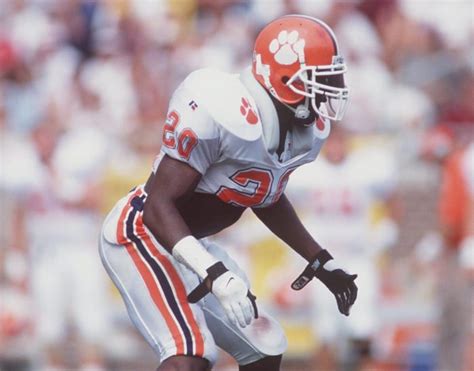
Brian Patrick Dawkins Sr. was born October 13, 1973, in Jacksonville, Florida. He grew up near Yancey Park, which he’s credited for keeping him out of trouble as a kid. “I’m very energetic, devilish type of young man,” he said years later. “That’s where I spent a lot of time. Staying out of trouble, first of all.”
He committed to Clemson, where he became a three-year starter at free safety. By the time he declared for the draft after his junior year, he’d logged 247 tackles and 11 interceptions. First-team All-ACC in 1995. Second-team All-American. The Tigers eventually named an annual award after him – the Brian Dawkins Lifetime Achievement Award, given since 2013 to former players who demonstrated leadership on and off the field.
At the 1996 Scouting Combine, John Wooten, then the Eagles’ director of scouting, watched him take over the entire defensive back workout. “He was ahead of everybody. He was doing everything. Which is the same thing I saw at Clemson,” Wooten said. Philadelphia took him in the second round, 61st overall. He was 22 years old.
Thirteen Seasons in Midnight Green
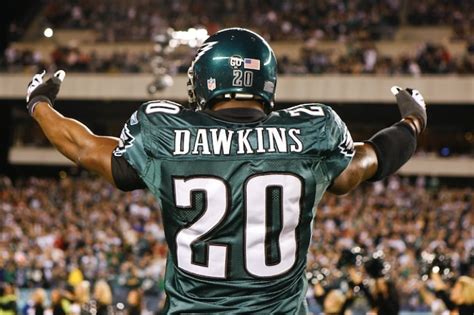
His rookie season: 74 tackles, three interceptions, one sack, two fumble recoveries. That was the floor. The Eagles went 10-6 that year.
For the first couple of seasons Dawkins was good. Good enough to lead the team in interceptions in 1997 and 1998. But what turned him into something else entirely was Jim Johnson, the defensive coordinator the Eagles hired before the 1999 season. The two sat down that summer and, according to Dawkins, Johnson gave him the freedom to do things no one had let him try before. The Eagles went from a franchise that hadn’t made the playoffs in three years to one that appeared in five NFC Championship Games between 2001 and 2008.
Dawkins was named to nine Pro Bowls, four First-Team All-Pro squads, and won five Eagles team Defensive MVP Awards. He still holds, tied, the franchise record for career interceptions with 34.
The Eagles made the Super Bowl after the 2004 season, Dawkins’s only appearance. Philadelphia lost to the New England Patriots in Super Bowl XXXIX, 24-21. It was played in Jacksonville – his hometown.
September 29, 2002: The Quadrafecta
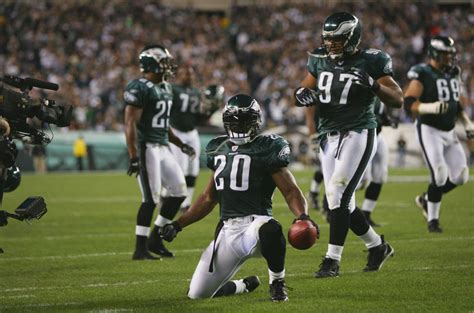
This was week four of the 2002 season. Houston Texans at Lincoln Financial Field. The Eagles won 35-17, but what happened during the game had nothing to do with the score.
In one afternoon, Dawkins recorded a sack, an interception, a fumble recovery, and caught a touchdown pass. No one in NFL history had ever done all four in a single game. The touchdown was particularly absurd: a 57-yard reception on a fake punt, when running back Brian Mitchell tossed him the ball on a shuffle pass. Dawkins also added six combined tackles and two pass deflections. The box score made the stat line look routine. It wasn’t.
The game has been called “the Quadrafecta” ever since, and it remains the statistical high point of his career. He finished third in Defensive Player of the Year voting that season.
The Weapon X Nickname, Explained
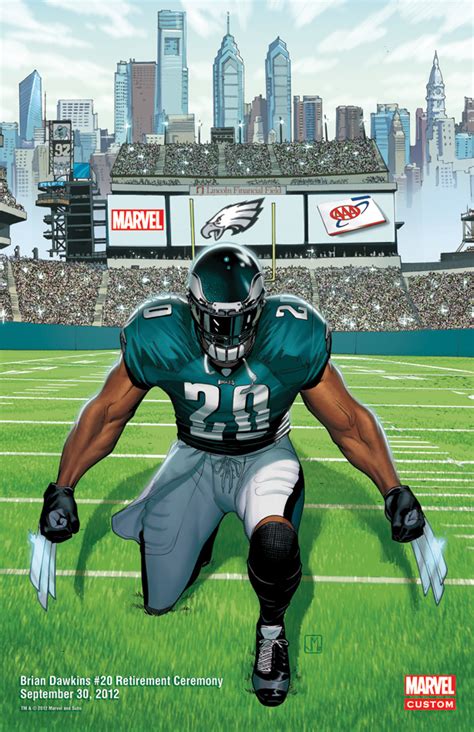
He didn’t start out as Weapon X. His first alter ego – the persona he says he always needed to separate himself from the mild-mannered version of Brian Dawkins who existed during the week – was something he called “Idiot Man.” His word, not anyone else’s.
“I’ve always felt that ‘Brian Dawkins’ never played a down in the National Football League,” he said. “It was always an alter ego.” Eventually he swapped Idiot Man for Weapon X, the Wolverine codename from Marvel Comics. The character’s description in the Uncanny X-Men – ferocious, instinctive, relentless – mapped onto what he was doing on Sundays. “Weapon X was Wolverine before he became Wolverine,” Dawkins explained. “He could do everything you needed him to do.”
Terrell Owens, who played with him in Philadelphia, described the transformation this way: “Coming out of that tunnel, he transforms. It goes from Brian Dawkins during the course of the week to gameday – he’s Wolverine.” Dawkins was later featured on an actual Wolverine #22 variant comic book cover. He watched cartoons with his kids when his playing days ended and said he understood, more or less, what he was.
The Denver Years and a Bitter Departure
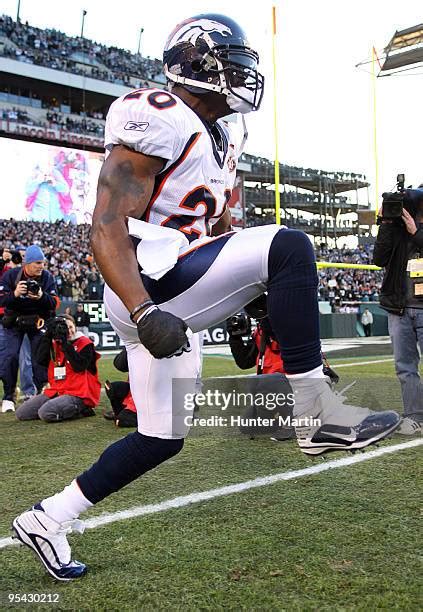
The Eagles let him go in February 2009. They were negotiating a two-year extension when Denver offered a five-year, $17 million deal with $7.2 million guaranteed. Philadelphia didn’t match it. Team president Joe Banner took most of the public heat. Eagles fans were furious.
When the Broncos traveled to Lincoln Financial Field in December 2009, Dawkins didn’t come out for pregame warmups. Andy Reid, still coaching Philadelphia, said later: “His heart was still there even when he was playing for Denver. He was still an Eagle.” The Broncos won that game, 30-27.
Denver got three solid seasons from him. In 2009 he recorded 116 tackles and two interceptions, earned another Pro Bowl nod, and received the Ed Block Courage Award from the Broncos. He made two more Pro Bowls in Denver (2009, 2011), bringing his career total to nine.
He retired on April 23, 2012, via Twitter, then signed a ceremonial one-day contract to officially retire as a member of the Philadelphia Eagles. He thanked both franchises. Then he went to the Broncos offices on his first day of retirement and shook every hand in the building.
Career Numbers That Belong in a Different Category
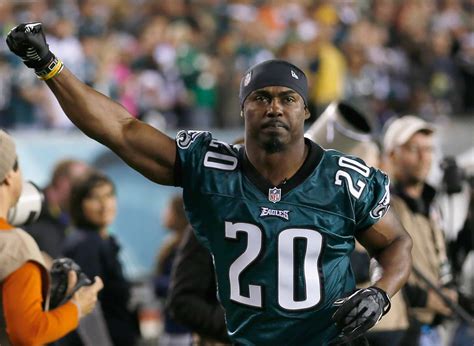
The final line across 224 games: 1,147 tackles (895 solo), 37 interceptions returned for 513 yards and two touchdowns, 26 sacks, 36 forced fumbles, 19 fumble recoveries, 153 passes defended.
That sack-and-interception combination puts him in a group of roughly five players in NFL history to finish with at least 35 interceptions and 20 sacks. He’s the only safety in the history of the sport with 25 or more of each. He had an interception in 15 consecutive seasons, tied for fifth-longest in NFL history. His 36 forced fumbles are the most by a safety since 1980, when the statistic began to be tracked. Those aren’t contextual records that depend on era or team. They’re raw numbers.
He was named to the NFL’s All-Decade Team for the 2000s, alongside players like Ray Lewis, Ed Reed, and Troy Polamalu. He’s a member of the Eagles’ 75th Anniversary Team. His number 20 is retired by Philadelphia.
Hall of Fame: Canton, August 4, 2018
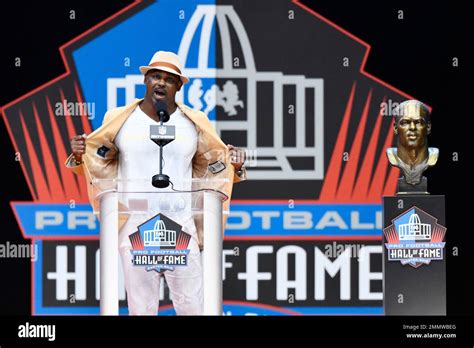
On February 4, 2018, the Hall of Fame announced its class. Dawkins was one of five players selected, joining Randy Moss, Ray Lewis, Brian Urlacher, and his former teammate Terrell Owens. He was the first Clemson player ever inducted.
The ceremony was August 4 in Canton, Ohio. Dawkins had already returned to the Eagles organization by then – he’d worked as an executive of football operations for player development from 2016 through 2018. The Eagles won Super Bowl LII that February, which meant he got his ring, finally, not as a player but as a member of the front office. Eleven years after the Super Bowl XXXIX loss in his hometown.
Where Does He Rank Among Safeties?
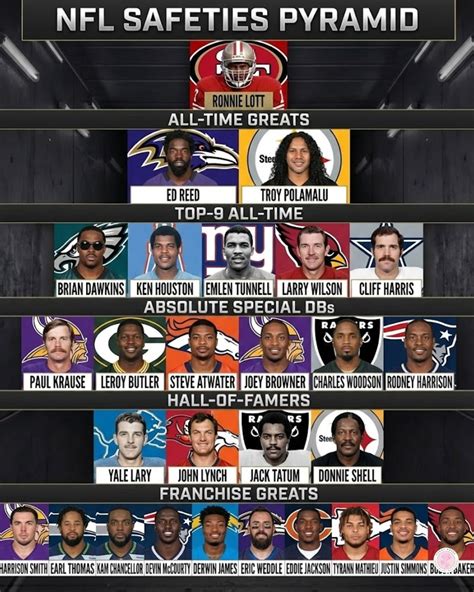
NFL.com analyst Gil Brandt ranked him 11th among all-time safeties. Brandt spent nearly 30 years in the Dallas Cowboys front office, which Philadelphia writers were quick to note.
The more defensible position is somewhere in the top five. Ed Reed finished with 64 career interceptions – 27 more than Dawkins – and was a five-time First-Team All-Pro. Troy Polamalu was a two-time Super Bowl champion with pass instincts that looked genuinely psychic at times. Those are real arguments. But neither Reed nor Polamalu forced 36 fumbles. Neither had Dawkins’s sack total. Neither did what he did against Houston in 2002.
What’s strange, when you actually look at the comparable stats, is how close all three were. Dawkins made nine Pro Bowls; Reed made nine; Polamalu made eight. First-team All-Pro: Dawkins four times, Reed five, Polamalu four. The margin is narrower than the ranking gap of 11th-versus-top-three suggests. The argument that he belongs in the top five isn’t a Philadelphia homer argument. It’s a numbers argument, and the numbers are right there.
He’s the only player in NFL history who did all four things – sack, interception, fumble recovery, touchdown reception – in a single game. Whatever your all-time list looks like, that fact sits there, unchanged.
Comments