
Darren Sproles with the New Orleans Saints: Stats, Records, and the 2011 Season Nobody Saw Coming
Before New Orleans
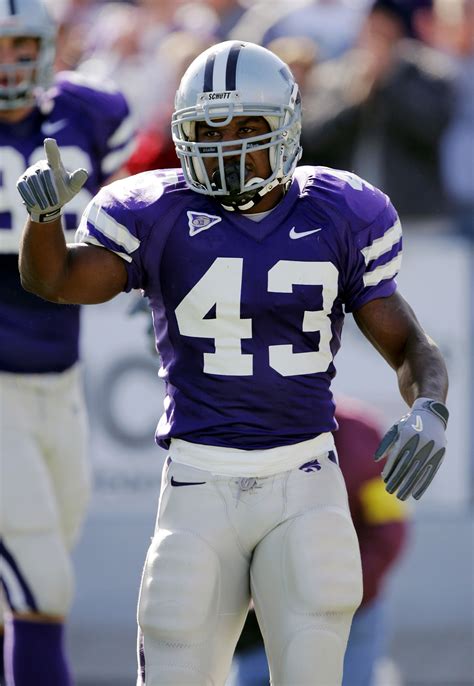
Darren Sproles was born in Waterloo, Iowa, grew up in Olathe, Kansas, and came out of Kansas State in 2005 holding 28 school records. The San Diego Chargers took him in the fourth round, 130th overall. That’s usually where careers go to be average.
He spent six seasons in San Diego as the third option behind LaDainian Tomlinson and then Mike Tolbert – a return specialist who occasionally touched the ball on offense. A good player, clearly. But the Chargers never handed him the keys. He averaged under 50 rushing attempts per season across those six years.
One thing that doesn’t get enough attention: Sproles had already played with Drew Brees. Brees was the Chargers’ starting quarterback from 2001 to 2005, and Sproles’s rookie season in 2005 overlapped with Brees’s final year in San Diego before he tore his labrum and eventually landed in New Orleans. That shared history mattered more than any Saints press release acknowledged when the signing happened in July 2011.
He signed a four-year deal worth $14 million with $6 million guaranteed. At the time, that looked like the Saints paying a premium for a role player. It turned out to be one of the better free-agent values in that entire decade.
Why the Saints Needed Him
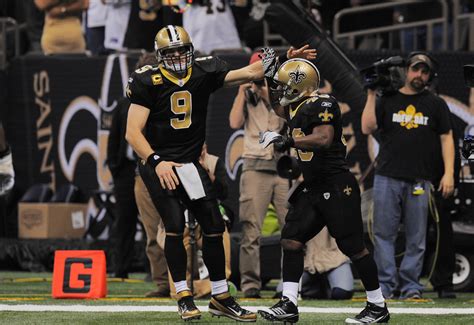
Reggie Bush had just left. Which, if you followed the Saints from 2006 through 2010, was a complicated story. Bush arrived as the second overall pick in 2006 with a Heisman Trophy and enormous expectations for a player who could line up anywhere, return kicks, and cause chaos in space. He never topped 600 rushing yards in five years with New Orleans.
The reason, as Bleacher Report laid out in detail after the 2011 season, wasn’t that Bush was bad. It’s that the Saints tried to turn him into something he wasn’t. Bush was better suited as a feature back running between the tackles – which is what he became in Miami, rushing for over 1,000 yards in his first season there. New Orleans wanted a scat back. They had the wrong guy in the role.
Sproles was the right guy. At 5’6″ and 190 pounds, he was built for exactly the role Payton had designed. The Saints didn’t need a feature back. They had Pierre Thomas and later Mark Ingram for that. What they needed was someone who could be a legitimate weapon on third down, create problems in the passing game, and handle return duties without dropping the ball. Sproles could do all three at an elite level simultaneously, which was, and still is, genuinely rare.
Payton later called him one of the smartest football players he’d ever been around. That quote appeared in the official Saints release when they traded him in 2014 and it didn’t read like a courtesy compliment – Payton’s offense required backs to make quick reads and adjustments at the line, and Sproles processed that faster than almost anyone.
The 2011 Season
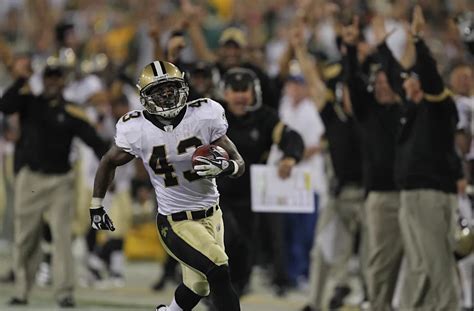
Week 1, September 8, 2011. Saints versus Green Bay Packers. Sproles lined up in punt return formation and took it 72 yards for a touchdown in the second quarter. That was his first play as a Saint. He finished that single game with 257 all-purpose yards.
The rest of the season followed that template. Week 3, against Houston, he generated 193 all-purpose yards on his own – 85 on offense and 108 on special teams. By December, ESPN’s NFC South blog was running pieces noting that Sproles had already become the first player in NFL history to combine 1,200 yards from scrimmage with 1,200 kick and punt return yards in a single season.
The record fell on January 1, 2012, in the final regular-season game against Carolina. Sproles broke it on an 8-yard run in the fourth quarter. His final total: 2,696 all-purpose yards, clearing the old mark of 2,690 set by Derrick Mason in 2000. On the same afternoon, Drew Brees broke the NFL single-season passing yards record. Two records, same game, same team.
What’s strange, and genuinely hard to explain, is that Sproles wasn’t voted to the Pro Bowl despite those numbers. He was passed over entirely. The Pro Bowl voting that year was its usual mess of reputation-based selections, but still – 2,696 all-purpose yards and no Pro Bowl is an outcome that makes more sense as a trivia question than a reasonable judgment.
The full 2011 breakdown: 603 rushing yards at 6.9 yards per carry, 710 receiving yards on 86 receptions, and a combined nine touchdowns. He led the league in all-purpose yards. Drew Brees led the league in passing yards with a then-record 5,476. That Saints offense, coordinated by Pete Carmichael under Payton’s direction, might be the most statistically complete single-season unit in franchise history.
2012 and 2013: Still Productive, Then Gone
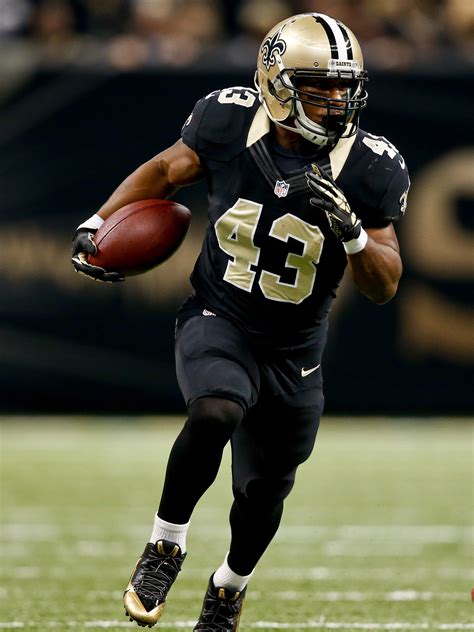
The 2012 season hit a wall in early November. Sproles fractured his hand against the Philadelphia Eagles – the team that would acquire him two years later – and had surgery that week. He missed time, came back, and still finished with 667 receiving yards and seven receiving touchdowns. Running back receiving leaders that season league-wide: Sproles was near the top despite missing games.
In 2013, he played 15 games, touched the ball 165 times total between rushing, receiving, and returns. Ran 53 times for 220 yards, caught 71 passes for 604 yards. Scored six total touchdowns. The Saints’ offense that year was dealing with the aftermath of the Bountygate suspensions and a generally disrupted organizational environment, yet Sproles was one of the most dependable players on the roster.
Across his three Saints seasons combined: 232 receptions for 1,981 yards and 16 receiving touchdowns. Those three numbers led all NFL running backs over that span. He also carried the ball 188 times for 1,067 rushing yards at 5.7 yards per carry, plus 81 punt returns for 671 yards and 70 kickoff returns for 1,827 yards. Total all-purpose yards as a Saint: 5,546.
The Saints traded him to Philadelphia on March 13, 2014, for an undisclosed draft pick, clearing $3.5 million in cap space. General Manager Mickey Loomis framed it in the official announcement as a salary cap decision, which it was. Lance Moore got released the same day. The Saints were doing triage on their roster finances.
Whether it was the right call depends on what you think the Saints owed him versus what they owed their own cap flexibility. Sproles went on to have four more productive seasons in Philadelphia, won Super Bowl LII with the Eagles in February 2018, and retired after the 2019 season. The Eagles got years of elite production out of a player the Saints decided they couldn’t afford. That particular transaction aged better for Philadelphia than New Orleans.
What the Numbers Actually Mean
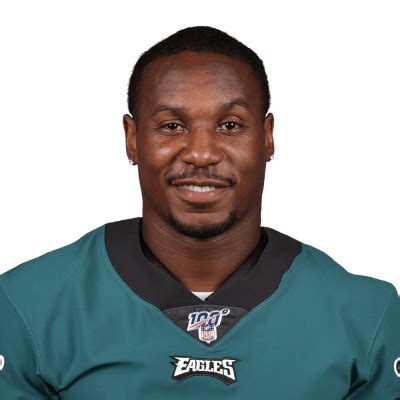
There’s a version of this story that presents Sproles as a nice complementary player who happened to have one extraordinary season. That framing undersells what he actually did.
The all-purpose yardage record he set in 2011 still stands. He’s the only player in NFL history to record 2,200 or more all-purpose yards in four consecutive seasons, which he did from 2008 through 2011 across two different teams. He shares the NFL record for most receptions in a single playoff game with 15, which he set in the 2011 postseason against the 49ers when he had 328 all-purpose yards across the two playoff games that January. He finished his career with 3,552 rushing yards, 4,840 receiving yards, 11,313 return yards, and 64 total touchdowns over 15 seasons.
He was named to the NFL 2010s All-Decade Team. He was inducted into the College Football Hall of Fame. He’s been nominated for the Pro Football Hall of Fame, first appearing on the modern-era ballot for the Class of 2025.
The Hall of Fame argument has a reasonable complication built into it: Sproles was never the primary back on any team, and voters historically discount players who accumulated production in a distributed role. But the single-season record and the four-consecutive-season mark are both legitimate claims on historical significance, and neither is the product of a system or a supporting cast – both required Sproles to personally generate yardage in three different phases of the game at once.
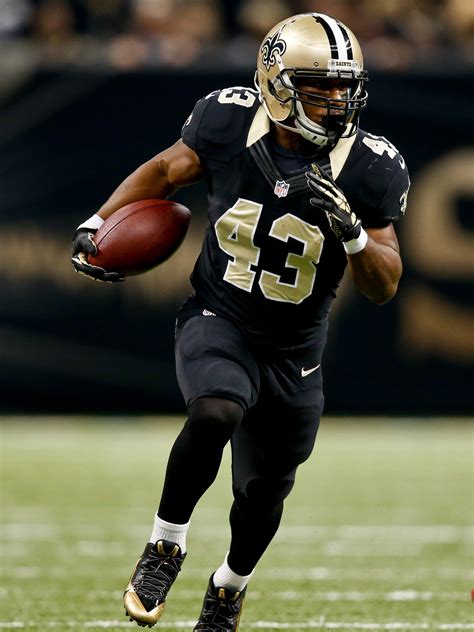
His career after the Saints reinforced what New Orleans saw from 2011 to 2013. He earned three Pro Bowl selections as an Eagle (2014, 2015, 2016), won a Super Bowl ring, and remained productive into his mid-30s. The Saints years, though, were the best of it. The 2011 season specifically was the kind of performance that gets remembered in franchise history for a long time – or should, anyway. He wore number 43 in New Orleans. That jersey sold well enough that you still see it occasionally in the Superdome.
Sproles vs. Reggie Bush in the Same Role
It’s worth spending a moment on the comparison because it explains why the Sproles signing worked so well and why the Bush era in New Orleans never quite delivered what everyone expected.
Bush ran for a career-high 1,042 yards in his first season with the Dolphins in 2011 – the same year Sproles broke the all-purpose record. In Miami he averaged 5.0 yards per carry and scored six rushing touchdowns. In New Orleans he never exceeded 590 rushing yards in a single season. Same player, wildly different outcomes in the same league in the same era.
The Saints used Bush as a scat back and return man, which was never his natural fit. He was most effective running between the tackles with space in front of him, as a traditional runner. The Saints’ offensive design required lateral quickness, pass-catching in traffic, and return excellence simultaneously. Bush could do those things, just not as naturally as Sproles.
Sproles, by contrast, was built from the ground up for exactly this role. His 6.9 yards per carry in 2011 wasn’t a product of open lanes – it came largely from broken tackles and acceleration in tight spaces, the things that define a true scat back. The fit between player and system was almost too clean. Payton had clearly identified what the position needed and found the best possible person for it.
A Few Things People Often Get Wrong
The all-purpose yardage record is sometimes described as a receiving record or a rushing record. It’s neither. All-purpose yards count rushing, receiving, and all return yardage combined. The 2,696 figure in 2011 included 603 rushing yards, 710 receiving yards, and 1,383 return yards. Returning the ball was about half the record. Remove the return game entirely and the season is still excellent but no longer historically singular.
Some accounts say the Saints released Sproles. They traded him. There’s a difference: the Saints got a draft pick back, and Sproles’s contract stayed intact through the transaction. He wasn’t cut; he was moved for value.
The 2011 Pro Bowl snub is often described as a mistake the NFL acknowledged or corrected. It wasn’t. Sproles went to the Pro Bowl in 2014, 2015, and 2016 as an Eagle, but never received retroactive recognition for 2011. The omission stands in the record books exactly as it happened.
One last thing: Sproles had a speech impediment throughout his childhood and career that he was open about in interviews. It’s mentioned occasionally in profiles but usually as a brief aside. He described it himself as something he managed rather than overcame in any tidy narrative sense. That detail appears in the American Football Database biography and a few early feature pieces from his Chargers years. I mention it because the standard career summary – record, awards, trades – tends to strip out the parts of a player’s story that make them an actual person.
Comments