
Dameon Pierce Signed with the Eagles. Here’s the Full Picture on Where His Career Stands.
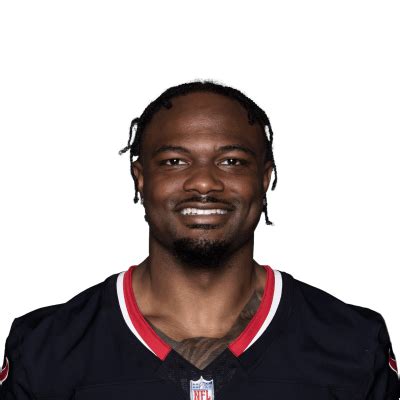
Dameon Pierce is a running back for the Philadelphia Eagles, signed on March 19, 2026, to a one-year deal. He’s 26, listed at 5-foot-10 and 215 pounds (some Eagles roster pages put him at 218, so expect the official figure to settle during camp), and he’ll spend the 2026 season competing with Tank Bigsby and Will Shipley for whatever work isn’t going to Saquon Barkley. His career rushing total through four NFL seasons is 1,684 yards. He had 939 of those as a rookie.
That gap between 2022 and everything after it is the whole story.
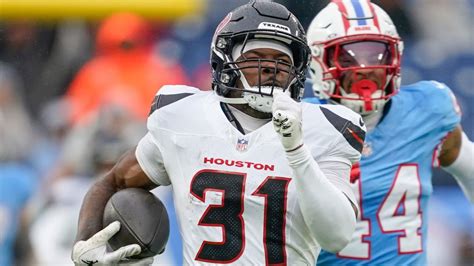
From Bainbridge to Gainesville: The Background
Pierce grew up in Bainbridge, Georgia, and played four years of varsity football at Bainbridge High School. By the time he was a senior, he had run for 6,779 career yards and 92 touchdowns, including 2,123 yards and 32 scores on 227 carries his final year, which works out to 9.4 yards per carry. On October 20 of that season, he passed Herschel Walker on Georgia’s all-time high school rushing list. He was a two-time Class 5A All-State selection.
At Florida, he never really had a featured role until his final two seasons. As a junior he led the Gators with 503 rushing yards and four touchdowns, plus 17 catches for 156 yards. His senior year (2021) was the one that put him on draft boards: 100 carries for 574 yards and 13 rushing touchdowns, with 19 receptions for 216 yards and three receiving scores. For his full college career, he ran for 1,806 yards on a 5.5-yard average and caught 422 receiving yards, adding five touchdown grabs. That receiving production as a senior is worth keeping in mind, because it largely disappeared once he got to the NFL.
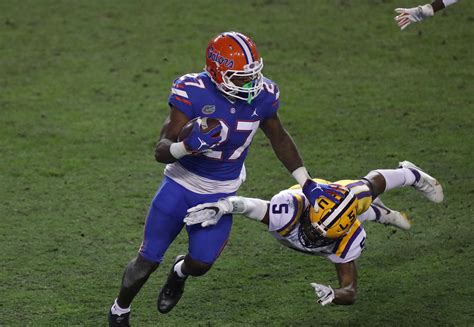
The 2022 Draft and a Rookie Season Nobody Saw Coming
The Texans selected Pierce with the 107th overall pick in the fourth round of the 2022 NFL Draft. That pick came to Houston as part of the Deshaun Watson trade package, so Pierce was, in a loose organizational sense, a product of one of the most consequential transactions in franchise history. After final roster cuts, the team named him the first-string running back. For a fourth-round pick, that’s not typical.
He rewarded it. Week 4 against the Chargers: 14 carries, 131 yards, one touchdown that covered 75 yards. He had caught 30 passes for 165 yards by the time an ankle injury sent him to injured reserve in December, ending his season. Final rookie line: 939 yards, four rushing touchdowns, one receiving score, in 13 games. His yards-per-carry average sat at 4.3. The Texans had found something.
Then they didn’t use it.
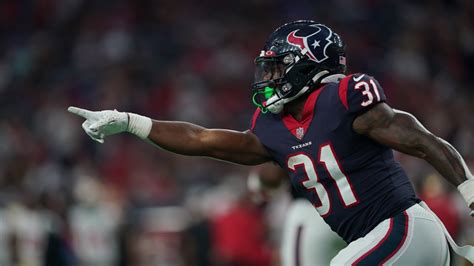
Three Seasons of Diminishing Returns
In 2023, Houston brought in Devin Singletary and Pierce lost the starting job. He finished with 416 rushing yards on a 2.8-yard average, two touchdowns, and 13 catches for 101 yards. The efficiency numbers alone tell you the situation wasn’t working. The most memorable play of his season was a 98-yard kickoff return touchdown against the Cleveland Browns in late December, which, given that he was supposed to be an offensive starter, says everything about how far his role had shrunk.
In 2024, Joe Mixon arrived and Pierce became the backup behind him. He played in 11 games, got 40 carries, ran for 293 yards and two touchdowns. The receiving role had essentially disappeared: two catches for two yards on four targets all season. But Week 18 against the Titans, with Houston resting starters, gave a different number. Nineteen carries, 176 yards, one touchdown. That’s the game Pierce’s agents put on film for every team that evaluated him this offseason, and it’s a legitimate data point, not just a garbage-time outlier. He outran the entire Tennessee defense on a 92-yard touchdown run.
Then 2025 happened. He went into training camp as the third-string back in Houston behind Woody Marks and Nick Chubb, was placed on the Physically Unable to Perform list on July 23, activated August 4, and managed 26 yards on 10 carries in four Texans games before being waived on November 20. The Chiefs signed him to their practice squad three days later. He was promoted to the active roster on December 20, held inactive for Weeks 16 and 17, then got four carries for 10 yards in the Week 18 season finale against the Raiders. That was his entire 2025.
The Kansas City situation became genuinely strange. Andy Reid’s comments about Pierce’s usage were vague enough that Kansas City fan media spent two weeks trying to decode them. Nothing got decoded. He just didn’t play.
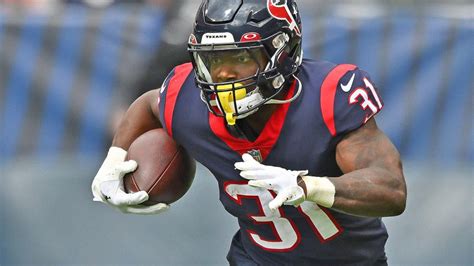
Career Statistics by Season
The numbers in one place, because most of the top search results don’t present them cleanly:
2022 (Houston Texans): 13 games, 939 rushing yards, 4.3 yards per carry, 4 rushing touchdowns, 30 receptions, 165 receiving yards, 1 receiving touchdown.
2023 (Houston Texans): 15 games, 416 rushing yards, 2.8 yards per carry, 2 rushing touchdowns, 13 receptions, 101 receiving yards, 0 receiving touchdowns, 1 kickoff return touchdown.
2024 (Houston Texans): 11 games, 293 rushing yards, 7.3 yards per carry on 40 attempts, 2 rushing touchdowns, 2 receptions, 2 receiving yards.
2025 (Houston Texans/Kansas City Chiefs): 5 games total, 36 rushing yards on 14 attempts, 0 touchdowns.
Career totals through 2025: 1,684 rushing yards, 419 attempts, 4.0 average, 8 rushing touchdowns, 45 receptions, 268 receiving yards, 1 receiving touchdown, 656 return yards, 1 return touchdown.
One number that gets overlooked: the receiving yards. He caught 30 passes as a rookie and 13 in year two, then his target share cratered. By 2024, he was essentially invisible in the passing game. Whether that’s a coaching decision, an injury affecting his route running, or something about how Houston used its backs under different coordinators, no source has explained it clearly. It’s worth flagging because pass-catching ability from the backfield is exactly what makes a depth back useful to a team like Philadelphia.
What the Eagles Signing Actually Means
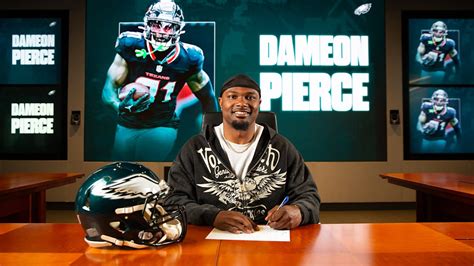
Pierce signed his one-year deal with Philadelphia on March 19. He held a Zoom media availability the same afternoon and was direct about where he’s been mentally. “Coming from an athletic standpoint, coming from just being a competitor, you know, it sucks,” he said, referring to the last few years of limited opportunities. “But I find ways to persevere and I’m here in Philly ready to get back on brand.”
He cited Barkley’s presence specifically as a reason to choose Philadelphia. “A great guy who’s done an incredible job in every year he’s played in his league. That’s a great guy to be around and learn from.” That’s the right answer in a press conference setting, but it’s also not wrong. Pierce will spend practice reps alongside the best running back in the NFC, and in a run-first organization with a legitimate offensive identity.
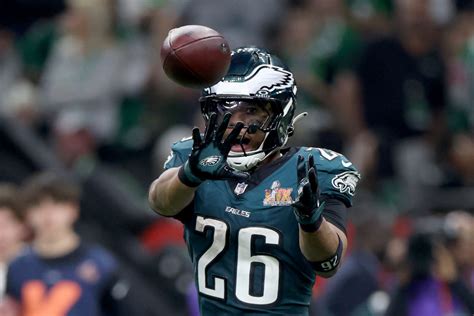
The Eagles backfield entering 2026 is Saquon Barkley, Tank Bigsby, Pierce, Will Shipley, and Carson Steele. Bigsby and Pierce are competing for essentially the same roster spot. RotoWire’s assessment is that they have similar builds and similar skill sets, and there may be room for only one of them on the 53-man roster as a short-yardage option when Barkley needs a break. That’s the competition Pierce has to win before he even thinks about carries.
His 2026 Fantasy Outlook Is Short
FantasyPros projects Pierce for roughly 35 rush attempts, 161 yards, and one touchdown across the entire 2026 season. His expert consensus ranking sits at RB 108, with a range of RB 93 to RB 112 depending on the analyst. He’s rostered in essentially zero percent of leagues right now.
His schedule strength isn’t the problem. His first 2026 matchup is against Washington, ranked the fourth-easiest opponent for running backs. The problem is volume. Barkley averaged 20-plus carries per game last season. There isn’t a scenario where Pierce sees meaningful work unless Barkley misses significant time, and even then Bigsby or Shipley might get the first look.
In most fantasy formats, he’s an emergency pickup if Barkley gets hurt. In deeper dynasty leagues, his draft rank sits around RB 113. He’s not worth a roster spot in standard 12-team leagues at the moment. If he beats out Bigsby for the backup role and Barkley misses a week, that changes. But that’s a lot of conditions stacking up.
His strength as a football player, the thing the stats don’t fully capture, is contact. He breaks tackles. RotoWire describes him as a solid early-down back with a good tackle-breaking profile since entering the league, though none of the sources quantify that with an actual broken-tackles-per-attempt number, which would be the useful figure here. He’s not fast enough to be a home-run threat on his own, and his passing-down utility has eroded to the point where it barely registers. What he is: a physical, short-yardage back who earns yards after contact when he gets the ball.
Can He Actually Make This Work in Philadelphia?
Pierce is 26. His one-year deal gives him a season to prove he belongs on an active roster, and Philadelphia is a better place to do that than most. The Eagles win games. They run the ball. Barkley gets dinged up occasionally. The 176-yard performance against Tennessee in 2024 showed Pierce still has functional NFL ability when given carries, and that game happened in a context (starters resting, controlled environment) that’s at least partially similar to the role he’d fill here.
The harder question is why his production fell so steeply from 2022 onward. Some of it is injuries. Some of it is depth chart decisions outside his control. He went from starting in 2022 to backing up Singletary, then Mixon, then Woody Marks and Nick Chubb, then nobody in Kansas City. Three different organizations in four years found reasons not to play him much. That pattern is worth noting, because even generous context can’t fully explain away how rarely he’s seen the field since his rookie year.
His receiving role is the thing I keep coming back to. Thirty catches as a rookie, then a steady slide to essentially nothing by 2024. A running back who can’t be trusted in pass protection or as a receiving outlet has a much narrower use case on a modern NFL offense. If Pierce has addressed whatever caused that decline, his value to Philadelphia goes up considerably. If he hasn’t, he’s a straight-line power back competing for six or eight carries a game behind the best back in the conference.
He told the Eagles media he wants consistency. “Whether that’s taking care of my body, whether that’s the playbook, whether that’s just staying after practice, whatever I got to do. I just got to find it.” That’s the right framing. He’s had the talent the whole time. Four years of evidence suggests the opportunity hasn’t been the problem as often as the results have.
Comments